

A content intelligence platform turns scattered data into strategic marketing decisions that directly impact revenue.
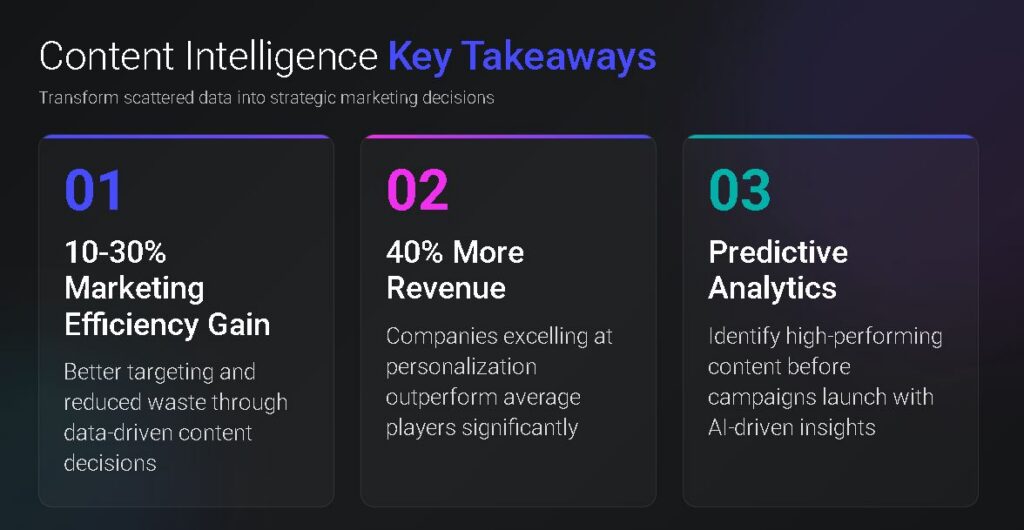
- Organizations using content analytics software can improve marketing-spend efficiency by 10–30% through better targeting and reduced waste.
- AI-driven insights reveal exactly which content resonates with specific audiences, eliminating guesswork from content strategy.
- Predictive and content performance analytics identify high-performing assets before campaigns launch.
- Integrating behavioral data with content operations creates a closed-loop system where every piece of content improves the next.
If your marketing team still relies on intuition over intelligence, your competitors using data-driven strategies are already outpacing you.
Marketing teams produce more content than ever before, yet many struggle to identify what’s actually working. Companies that excel at using data to understand their customers generate 40% more revenue from those activities than average performers. The gap between data-rich organizations and those still flying blind is widening every quarter.
A content intelligence platform bridges this gap by transforming raw content performance data into actionable marketing decisions. Rather than guessing which assets will resonate or manually tracking metrics across disconnected systems, marketing teams can leverage AI and machine learning to understand audience behavior, predict content performance, and optimize strategy in real time. The result is marketing that responds to what customers actually want rather than what teams assume they want.
What Is a Content Intelligence Platform?
A content intelligence platform combines data analytics, AI, and content management capabilities into a unified system that helps marketers understand how their content performs across every channel and touchpoint. It’s the analytical brain behind your content operations, continuously processing engagement data, audience behavior signals, and performance metrics to surface insights that would take humans weeks to uncover manually.
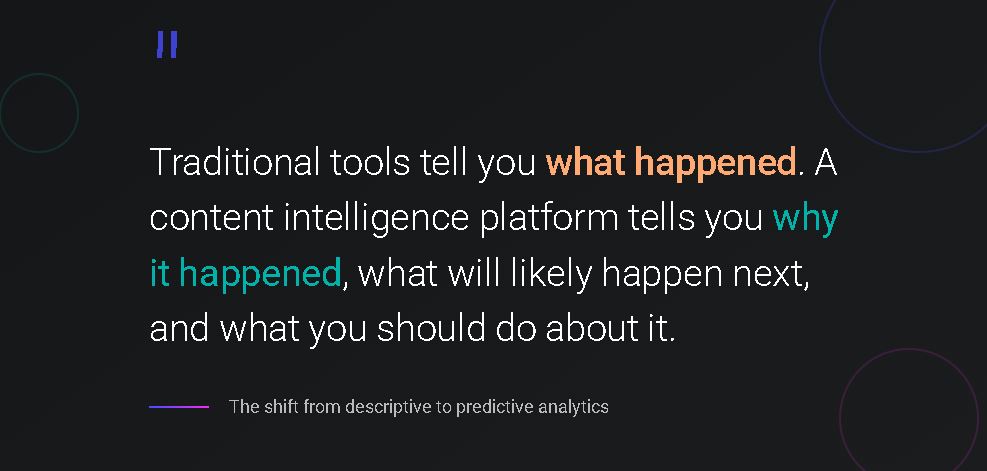
The technology goes far beyond basic analytics dashboards. Traditional tools tell you what happened. A content intelligence platform tells you why it happened, what will likely happen next, and what you should do about it.
How Content Analytics Software Transforms Raw Data Into Strategy
Content analytics software aggregates data from multiple sources, including website behavior, email engagement, social interactions, CRM systems, and third-party platforms, to create a comprehensive view of how audiences interact with your content. Machine learning algorithms analyze this data to identify patterns that humans might miss, such as correlations between content format and conversion rates or optimal publishing times for specific audience segments.
A few key mechanisms are at work here. First, the platform ingests and normalizes data from disparate sources, creating a unified data layer. Then, AI models identify trends, anomalies, and opportunities. Finally, the system presents these insights in actionable formats that marketers can use to immediately adjust strategy. Understanding what content intelligence means for your organization starts with recognizing that every piece of content you create generates valuable data. Content analytics software helps you effectively capture and use it.
How Does Content Performance Analytics Improve Marketing Decisions?
Content performance analytics provides the evidence marketers need to make confident decisions about resource allocation, creative direction, and channel strategy. Instead of relying on opinions or historical assumptions, teams can point to specific data showing which content types drive conversions, which topics generate engagement, and which formats waste budget.
Improving marketing decisions happens in several ways. First, content performance analytics eliminates confirmation bias by presenting objective data regardless of who championed a particular campaign or creative direction. Second, it enables rapid iteration by shortening the feedback loop between publishing content and understanding its impact. Third, it creates accountability by tying content investments directly to measurable outcomes.

The Metrics That Actually Matter for Content Success
Effective data-driven content strategies focus on metrics that connect to business outcomes rather than vanity numbers that look impressive but don’t drive revenue. A content intelligence platform helps marketers distinguish between these two categories and focus their attention on what matters.
Engagement metrics like time on page, scroll depth, and interaction rates reveal whether content captures attention and delivers value. Conversion metrics track whether content moves audiences toward desired actions, whether that’s downloading a resource, requesting a demo, or making a purchase. Attribution metrics connect content touchpoints to revenue outcomes, showing which pieces influence deals and which contribute nothing to the bottom line.
The most sophisticated platforms also track efficiency metrics that reveal the operational impact of content intelligence. These insights include time savings from automated tagging and organization, reduction in duplicate content creation, and improvements in asset utilization rates. Understanding both the strategic and operational impact of your content operations provides a complete picture of content intelligence ROI.
What Role Does AI Play in Content Intelligence?
Artificial intelligence transforms content intelligence from a reporting function into a strategic capability. AI summarizes what happened, predicts what will happen, recommends actions, and automates optimization.
AI in content intelligence platforms covers several categories. Natural language processing enables semantic search and content analysis, allowing marketers to find relevant assets based on meaning rather than exact keywords. Machine learning models predict content performance before publication, helping teams prioritize assets. Computer vision analyzes visual content to generate metadata, ensure brand compliance, and identify elements that correlate with engagement.
AI Agents That Work Alongside Marketing Teams
The most advanced content intelligence platforms incorporate AI agents that function as intelligent digital team members. These agents handle time-consuming analytical tasks that would otherwise slow teams down or simply never get done.
Planning agents analyze performance data and audience insights to recommend content topics, formats, and channels likely to drive results. Librarian agents automatically organize and tag assets, ensuring that valuable content remains discoverable rather than buried in digital archives. Critic agents evaluate content against brand guidelines, compliance requirements, and performance benchmarks before publication. These autonomous capabilities free marketing teams to focus on strategy and creativity while ensuring that data-driven intelligence informs every decision.
Production agents handle the heavy lifting of content transformation, creating variants, resizing assets, and adapting content for different channels without requiring manual intervention for each version. This combination of human creativity and AI efficiency is the future of content operations.
How Can Organizations Maximize Content Intelligence ROI?
Implementing a content intelligence platform is an investment, and organizations naturally want to ensure they realize its full potential. Maximizing ROI requires attention to three key areas: data foundation, organizational adoption, and continuous optimization.
The data foundation determines what insights are even possible. Organizations need to ensure they’re capturing data from all relevant touchpoints and that data flows cleanly into their platform. Gaps in data collection create blind spots that limit the ability to surface meaningful insights.
Building a Data-Driven Content Culture
The real value emerges when organizations adopt a data-driven mindset across their content operations. This cultural shift requires training teams to interpret and act on insights, establishing processes that incorporate data into decision-making, and celebrating wins that result from analytics-driven strategies.
Successful organizations treat content intelligence as a shared resource rather than a tool for a specialized analytics team. Marketers, creative teams, and executives all access the platform to answer questions relevant to their roles. When insights are democratized across the organization, the cumulative impact on decision quality multiplies.
The most effective implementations start with specific use cases that demonstrate clear value before expanding to broader applications. For example, a team might begin by using content performance analytics to optimize email campaigns, then extend the same approach to web content, social media, and paid advertising. This phased approach incrementally builds confidence and capability.
Personalization at Scale Through Intelligent Content Decisions
One of the most rewarding applications of content intelligence is enabling AI-driven content personalization at scale. Traditional personalization requires manual segmentation and content mapping, limiting how precisely organizations can target individual preferences. Content intelligence automates this process by analyzing behavioral signals and matching content to individual users in real time.
Personalization typically drives a 10–15% revenue lift, with top performers achieving 5–25% improvements depending on their sector and execution capabilities. It can also improve marketing-spend efficiency by 10–30% by eliminating waste on content that doesn’t resonate with target audiences. These numbers represent substantial returns for organizations willing to invest in the infrastructure and processes required to personalize effectively.
What Features Should You Look For in a Content Intelligence Platform?
Selecting the right content intelligence platform requires understanding which capabilities align with your organization’s needs and maturity level. Not every feature matters for every organization, and the most expensive platform isn’t necessarily the best fit.
The evaluation should start with identifying your most pressing content challenges. Are you struggling with content discoverability? Look for platforms with strong semantic search and automated tagging. Do you need to prove content ROI to leadership? Prioritize platforms with robust attribution and reporting capabilities. Are you trying to scale personalization? Focus on platforms with real-time behavioral analysis and dynamic content delivery.
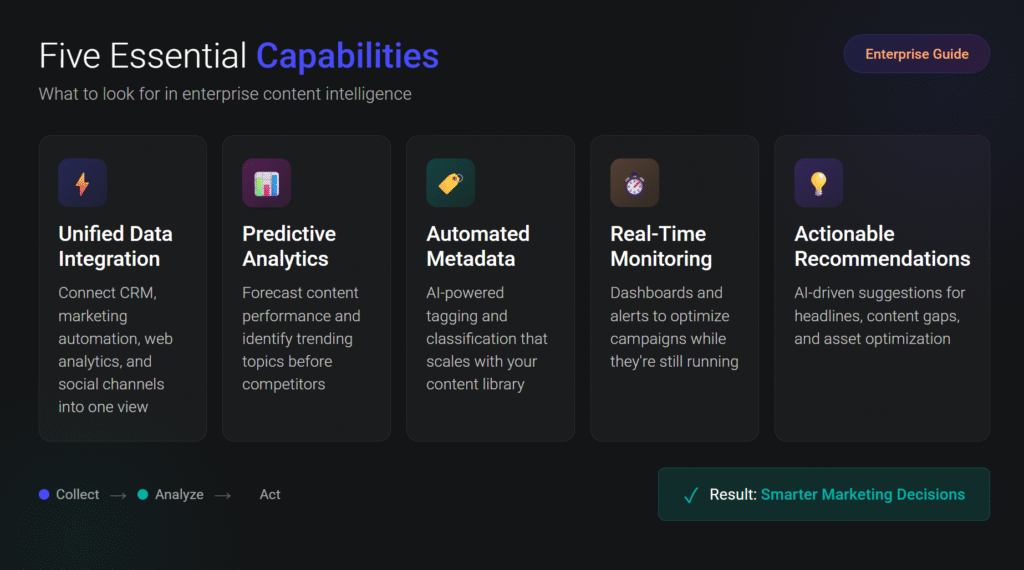
Five Essential Capabilities for Enterprise Content Intelligence
- Unified Data Integration: The platform should seamlessly connect with your existing marketing technology stack, pulling data from CRM systems, marketing automation platforms, web analytics tools, and social media channels. Siloed data creates incomplete pictures that lead to poor decisions.
- Predictive Analytics: The platform should predict what will happen. Predictive models that forecast content performance, identify trending topics, and recommend optimal publishing strategies separate adequate solutions from exceptional ones.
- Automated Metadata and Tagging: Manual tagging doesn’t scale. Look for AI-powered metadata generation that automatically classifies and tags assets based on visual and textual analysis, ensuring content remains findable as your library grows.
- Real-Time Performance Monitoring: Content moves fast, and insights that arrive days after publication have limited value. Real-time dashboards and alerts enable marketers to optimize campaigns while they’re still running.
- Actionable Recommendations: The best platforms recommend specific actions based on data. AI might suggest headlines likely to perform well, identify content gaps worth filling, or flag underperforming assets that should be retired or refreshed.
How Is Content Intelligence Reshaping Marketing Strategy?
Teams with access to comprehensive performance data make fundamentally different strategic choices than teams operating on intuition.
One significant shift involves moving from calendar-based to demand-based publishing. Traditional content calendars reflect internal planning cycles rather than audience needs. Content intelligence reveals when audiences are actually seeking specific information, allowing teams to align publishing with demand signals rather than arbitrary dates.
Another strategic shift involves moving from channel-centric thinking to audience-centric thinking. Content intelligence shows how individual audience members interact with content across multiple channels, enabling strategies that orchestrate consistent experiences rather than treating each channel as an independent silo. This holistic view of the customer journey transforms how teams plan, create, and distribute content.
The Competitive Advantage of Intelligence-Led Content
Organizations that embrace content intelligence gain advantages that compound over time. Each piece of content generates data that improves future content decisions. Each campaign teaches the system what works and what doesn’t for specific audiences. Over months and years, this accumulated intelligence becomes a competitive asset.
The global content intelligence market is projected to reach $28.86 billion by 2034, growing at a 30.34% CAGR. This growth reflects enterprise recognition that content without intelligence is ineffective when audiences expect relevant, personalized experiences across every interaction.
Early movers in content intelligence are establishing advantages that late adopters will struggle to overcome. The learning curve for implementing these platforms takes time, and the data foundation required for meaningful insights takes years to build. Organizations delaying their content intelligence investments are essentially giving competitors a head start that they may never close.

Frequently Asked Questions
What’s the difference between content intelligence and traditional content analytics? Traditional content analytics focuses on reporting historical performance metrics, showing you what happened after content was published. Content intelligence goes further by using AI and machine learning to predict future performance, recommend strategic actions, and automate optimization decisions. It transforms data from a passive report into an active decision-making tool.
How long does it typically take to see ROI from a content intelligence platform? Most organizations begin seeing measurable improvements within three to six months of implementation, with full ROI typically realized within 12–18 months. Initial wins often come from improved content discoverability and reduced duplication, while larger strategic benefits, such as improved personalization and predictive optimization, develop as the platform accumulates more data about your audiences.
Can content intelligence replace human marketers and content creators? Content intelligence augments human capabilities rather than replacing them. AI excels at analyzing large datasets, identifying patterns, and automating repetitive tasks. Humans remain essential for creative strategy, emotional resonance, brand voice, and the judgment calls that require understanding context beyond what data can capture. The most successful implementations leverage AI for analytical heavy lifting while freeing humans to focus on creative and strategic work.
How does content intelligence help with compliance and brand governance? Advanced platforms include AI agents that automatically check content against brand guidelines, regulatory requirements, and quality standards before publication. This ensures consistency across distributed teams and reduces the risk of off-brand or non-compliant content reaching audiences.
Start Making Smarter Content Decisions Today
The gap between organizations using content intelligence and those relying on intuition grows wider every quarter. While competitors invest in platforms that transform content data into strategic advantage, teams without these capabilities continue guessing at what works, wasting budget on underperforming assets, and missing opportunities to connect with audiences at precisely the right moment with exactly the right content.
Aprimo’s Agentic DAM platform delivers the content intelligence capabilities enterprises need to compete, combining AI-powered analytics, automated workflows, and intelligent agents that work alongside your team to optimize every aspect of content operations. Request a demo to see how Aprimo can transform your content strategy from guesswork into intelligence-driven decisions that deliver measurable results.