

Key Takeaways
Agentic DAM transforms digital asset management from passive storage into an intelligent content operations engine powered by AI Agents.
- Traditional DAM systems struggle to keep pace with enterprise content demands, while agentic DAM automates tagging, search, and workflows using agentic AI
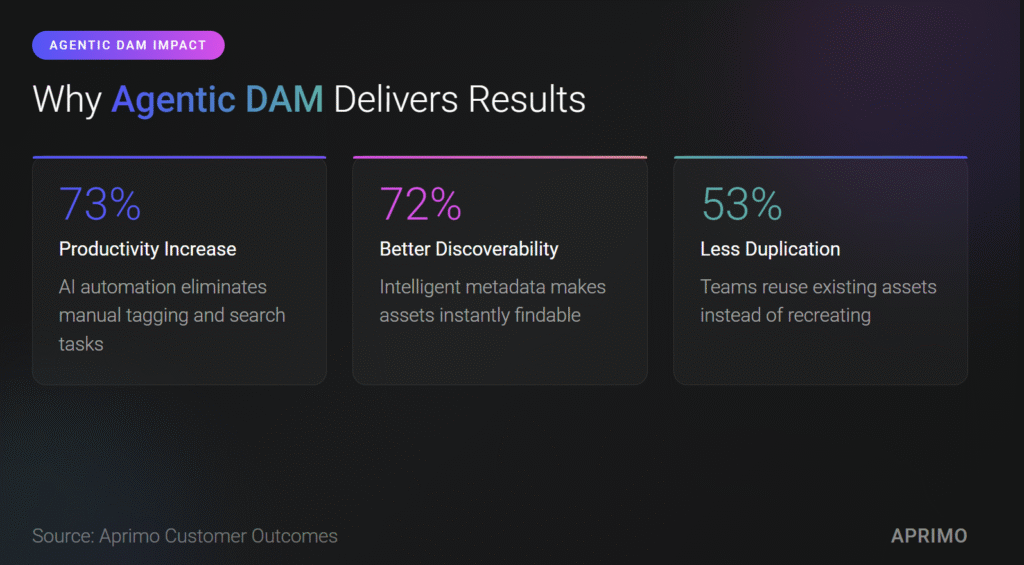
- Organizations using AI-enhanced DAM report 73% productivity increases and 72% improvement in asset discoverability
- The shift from basic file storage to intelligent content operations requires purpose-built platforms that learn, adapt, and optimize
Evaluate your current DAM against agentic DAM criteria to identify automation opportunities that reduce manual effort and accelerate content velocity.
The global digital content creation market reached $32.28 billion in 2024 and is growing at nearly 14% annually. For enterprise marketing teams, this explosion in content volume has exposed a fundamental weakness in how organizations manage digital assets. Traditional storage solutions cannot handle the complexity of modern content operations where thousands of assets flow across multiple channels, regions, and campaigns every day.
Agentic DAM represents the evolution from static file repositories to intelligent content operations platforms. Rather than simply storing files, these systems leverage artificial intelligence to automate repetitive tasks, surface the right content at the right time, and provide insights that drive better business decisions. This transformation is powered by agentic AI technology that operates as an extension of your team rather than a passive tool waiting for instructions.
What Makes a DAM System “Agentic”?
Agentic DAM goes beyond organizing files into folders. A truly intelligent digital asset management system incorporates AI, machine learning, and automation to enhance every stage of the content lifecycle. Where traditional systems wait for human input, these platforms proactively analyze, categorize, and optimize assets the moment they enter your library.
The intelligence comes from several core capabilities working together. Machine learning algorithms analyze visual and textual content to generate metadata automatically. Natural language processing enables conversational search so users can type queries like “product photos from Q3 campaign with blue background” and get relevant results. Computer vision identifies objects, faces, text, and brand elements within images and videos without requiring manual tagging.
How Agentic DAM Differs from Traditional Approaches
Traditional DAM platforms operate as enhanced storage systems. Users upload files, manually add tags, organize assets into folder structures, and search using exact keyword matches. This approach works for small libraries but breaks down quickly as content volume grows. Teams end up recreating assets because they cannot find existing versions and spending hours on administrative tasks instead of creative work.
Agentic DAM flips this model. Instead of requiring humans to adapt to the system’s limitations, intelligent platforms adapt to how teams actually work. The system learns from user behavior, recognizing which assets get used together and which search patterns indicate specific needs.
| Capability | Traditional DAM | Agentic DAM |
| Metadata Creation | Manual entry required | AI-generated tags and classifications |
| Search Functionality | Exact keyword matching | Contextual, visual, and natural language search |
| Workflow Automation | Rule-based triggers only | Adaptive routing based on content context |
| Brand Compliance | Manual review processes | Automated detection of off-brand elements |
| Performance Insights | Basic usage statistics | Predictive analytics and content gap identification |
The Role of Agentic AI in Modern DAM
The most advanced agentic DAM platforms incorporate AI Agents that function as intelligent digital team members. Unlike basic automation that follows predetermined rules, AI Agents can make contextual decisions, adapt their approach based on outcomes, and execute multi-step processes without constant human oversight.
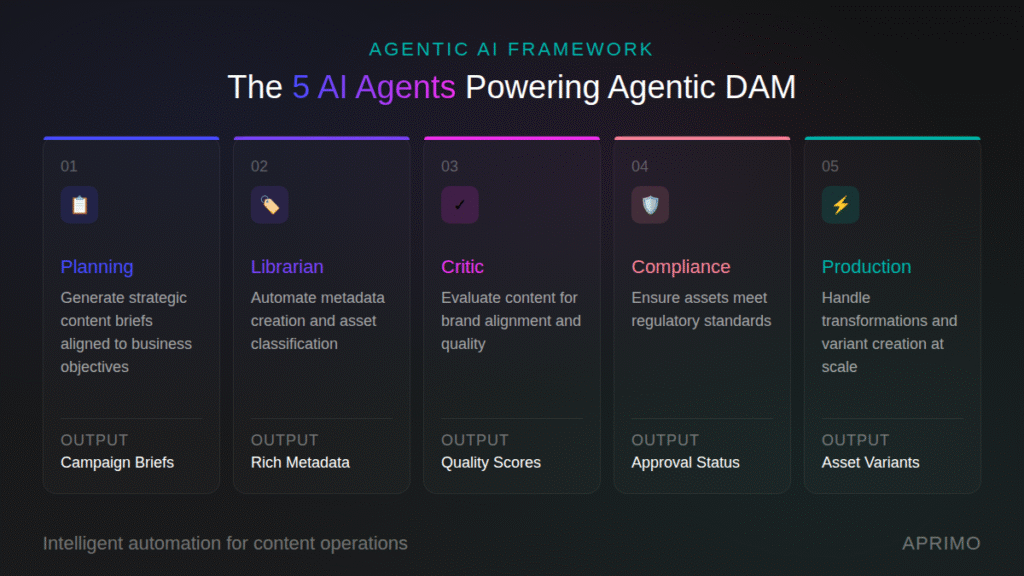
These agents operate across five primary categories. Planning Agents generate structured content briefs aligned to business objectives. Librarian Agents automate metadata creation and asset classification. Critic Agents evaluate content for brand alignment and quality requirements. Compliance Agents ensure assets meet regulatory standards before distribution. Production Agents handle transformations, translations, and variant creation at scale.
Why Organizations Need Agentic DAM Capabilities
Content demands have accelerated beyond what traditional approaches can support. McKinsey research reveals that organizations can capture 25 to 40 percent of their cost base in efficiencies through AI-enabled workflow reimagination. Yet many enterprises still allocate 60 to 80 percent of their technology budgets to maintaining legacy systems rather than transformation. This gap between AI’s potential and current reality means teams continue wasting time on manual processes that intelligent systems could handle instantly.
The Hidden Costs of Inefficient Asset Management
Every hour spent searching for assets represents direct cost to the organization. Creative professionals hunting through folders cannot focus on producing new content. Campaign launches delay while teams track down approved materials. Brand inconsistencies slip through when marketers cannot verify they have the correct logo version.
Beyond time waste, inefficient asset management creates compliance risks. Regulated industries face significant consequences for using unapproved content in customer communications. Without intelligent systems to flag expired licenses or outdated brand elements, organizations rely on human vigilance that inevitably fails under production pressure.
Agentic DAM addresses these challenges through continuous automation. Assets receive rich metadata the moment they upload, making them immediately discoverable. Rights information triggers automatic restrictions when licenses expire. Brand guidelines inform AI analysis that catches inconsistencies before they reach customers.
Scaling Content Operations Without Scaling Costs
Organizations implementing comprehensive digital asset management workflows achieve significant time savings while realizing meaningful return on investment. These efficiency gains compound across the organization as more teams adopt the system. The DAM learns from every interaction, becoming more useful over time rather than more burdensome.
5 Core Capabilities of Agentic DAM Systems
Evaluating agentic DAM platforms requires understanding which capabilities deliver the most value for your specific use case.
1. Intelligent Metadata Automation
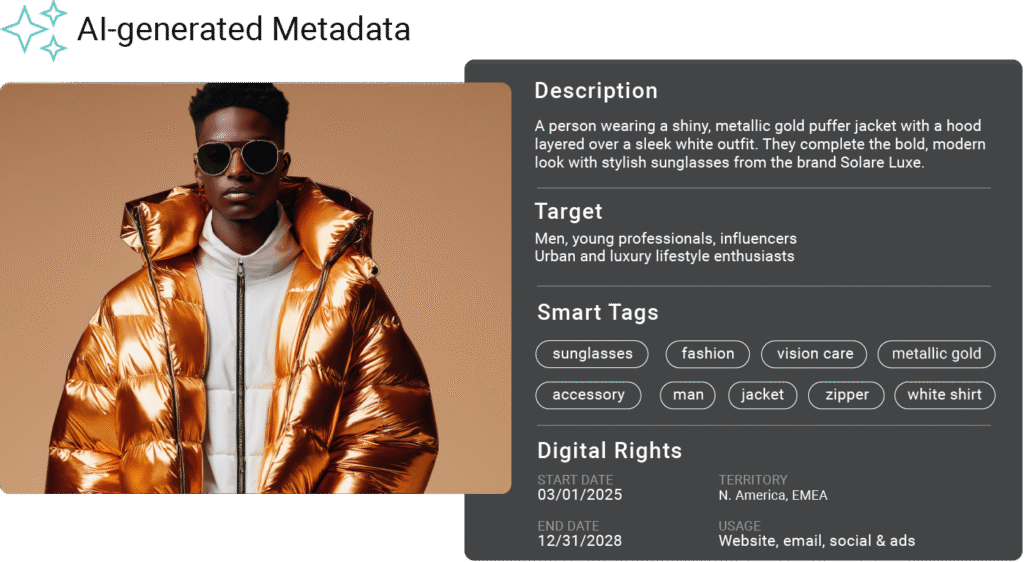
Manual tagging cannot scale. Agentic DAM platforms use AI to analyze every asset and generate comprehensive metadata automatically. The best systems offer predictive metadata that learns from your specific taxonomy and organizational terminology.
2. Advanced Search and Discovery
AI-driven search understands context beyond keywords. A search for “happy customers” surfaces images tagged with relevant emotions even if “happy” never appears in the metadata. The system learns from search patterns to surface frequently needed assets more prominently.
3. Automated Workflow Orchestration
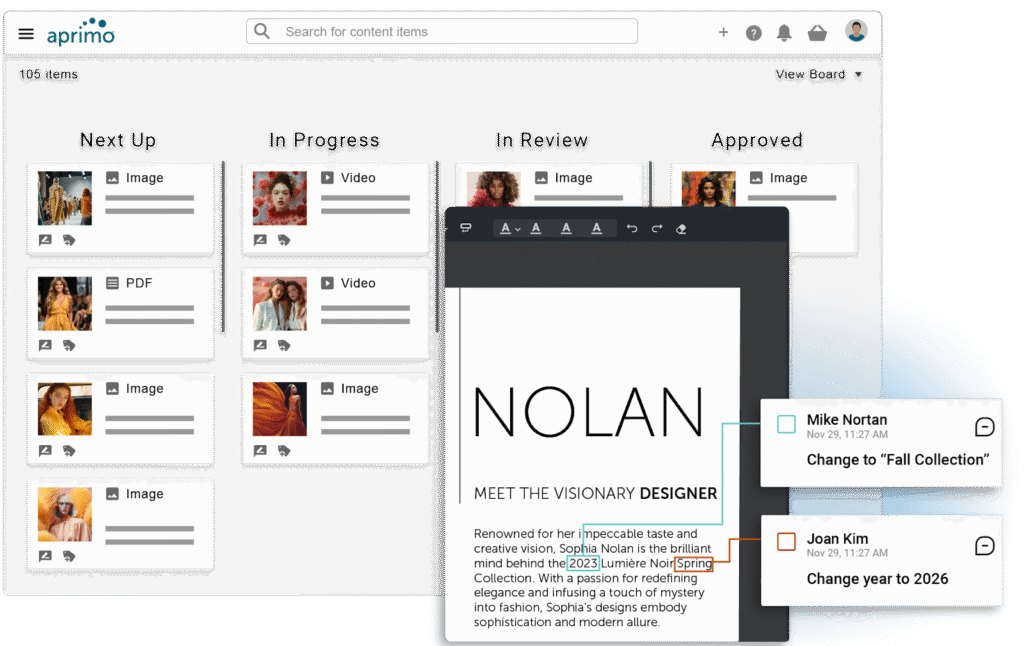
Content moves through predictable stages from creation through approval to distribution. Agentic DAM platforms automate this journey based on content type, campaign assignment, and compliance requirements. When an AI Agent detects potential compliance issues, it routes assets to specialized reviewers before standard processes begin.
4. Brand Governance and Compliance
Agentic DAM embeds brand rules into automated processes that catch violations before they reach customers. For regulated industries, compliance automation reduces risk significantly by routing only genuinely problematic content for human evaluation.
5. Content Intelligence and Analytics
Agentic DAM platforms track both what assets exist and how they perform across channels. Advanced systems identify content gaps where audience needs exist but appropriate assets do not, enabling teams to proactively create content that fills identified opportunities.

Agentic DAM vs. Cloud Storage: Understanding the Difference
Some organizations attempt to manage digital assets using general-purpose cloud storage platforms like Dropbox or Google Drive. Cloud storage comparison reveals fundamental differences. Storage platforms organize files into folder hierarchies that users must navigate manually. DAM platforms organize assets by rich metadata that enables multidimensional discovery.
The governance gap matters most for enterprise organizations. Cloud storage platforms offer minimal control over how assets get used once shared. DAM platforms track usage, enforce restrictions, and provide visibility into content distribution. For regulated industries, this represents the line between compliance and risk.
How AI Agents Transform DAM Operations
The introduction of AI Agents into content operations represents the most significant advancement in DAM technology since cloud deployment. Unlike traditional automation, AI Agents reason through problems and continuously improve their performance based on outcomes.
Planning Agents accelerate campaign starts by generating detailed specifications aligned to strategic goals. Librarian Agents deliver substantial value through metadata automation alone, improving asset discoverability immediately. Critic and Compliance Agents catch issues early when corrections are least expensive.
Production Agents automate content transformation for different channels, regions, and formats. This capability enables content personalization that would be impractical through manual processes. Organizations can deliver relevant content to specific audience segments without creating every variation from scratch.
How to Evaluate Agentic DAM Platforms
Choosing the right agentic DAM solution requires evaluating factors beyond feature checklists. Start by understanding when the vendor introduced AI features. Production-ready AI that has operated in customer environments demonstrates maturity that experimental capabilities cannot match.
Integration depth matters significantly. Evaluate how the platform connects with your specific creative tools, content management systems, and marketing technology stack. Surface-level connections that require manual steps defeat the purpose of workflow automation.
Key evaluation criteria include:
- AI Maturity: Production-ready capabilities versus experimental features
- Agent Framework: Specialized AI Agents for different operational needs
- Integration Ecosystem: Depth of connection with existing tools
- Industry Compliance: Support for specific regulatory requirements
- Metadata Flexibility: Ability to customize taxonomy and classification
- Analytics Depth: Insights that inform content strategy decisions
Frequently Asked Questions About Agentic DAM
What is the difference between traditional DAM and agentic DAM?
Traditional DAM systems function primarily as storage repositories where users manually organize, tag, and search for digital assets. Agentic DAM incorporates artificial intelligence, machine learning, and automation to handle these tasks automatically. Key differences include AI-generated metadata instead of manual tagging, contextual search instead of exact keyword matching, and intelligent workflow routing instead of rule-based automation.
How does agentic DAM improve search functionality?
Agentic DAM enables multiple search approaches including natural language search, visual similarity search, and contextual search that understands intent behind queries. These capabilities combine to dramatically reduce time spent searching for assets by surfacing relevant results even when exact terminology does not match metadata.
What AI capabilities should I look for in a DAM platform?
Prioritize platforms with production-ready AI that has demonstrated results in customer environments. Key capabilities include automated metadata generation, intelligent search across multiple modalities, workflow automation that adapts to content context, brand compliance checking, and AI Agents that can execute multi-step processes autonomously.
Can agentic DAM handle enterprise-scale content libraries?
Yes, agentic DAM platforms designed for enterprise deployment can manage millions of assets across global organizations with cloud-native architecture that scales automatically. Performance actually improves as the AI learns from larger volumes of content and user interactions.
How does agentic DAM support regulatory compliance?
Agentic DAM automates compliance workflows by analyzing content against industry-specific requirements, flagging potential issues before formal review stages, and ensuring appropriate routing based on content type and risk level. Comprehensive audit trails document every action for regulatory reporting.
What is the typical ROI timeline for agentic DAM implementation?
Organizations typically see initial value within the first quarter as automated metadata and improved search reduce time spent on asset discovery. Full ROI realization usually occurs within 12 to 18 months as teams adopt workflows and the AI learns organizational patterns.
Build a Smarter Content Operations Foundation
Agentic DAM reflects a fundamental shift in how organizations approach content operations, moving from manual processes that constrain growth to intelligent automation that enables scale. Organizations that delay adoption continue accumulating technical debt. Manual processes become more difficult to sustain as content volume grows, while competitors with intelligent platforms produce more content and respond faster to market opportunities.
Aprimo delivers the intelligent content operations platform that transforms how enterprises manage digital assets. With AI Agents that have been production-ready since 2023 and recognition as a Leader across major analyst evaluations, Aprimo provides the foundation for content operations that scale with your business. Request a demo to see how agentic DAM can accelerate your content operations.