
Enterprise content operations have become more complex than ever. Teams are managing more assets, more channels, and more personalized experiences, often without a clear understanding of what content actually performs. The challenge is no longer just creating content. It is understanding which content drives engagement, which can be reused, and where gaps exist.
This is where content intelligence becomes critical.
Content intelligence helps organizations move from content production to data-driven content optimization. It connects performance data, metadata, and user behavior to guide decisions across the content lifecycle. As Aprimo highlights on its Content Intelligence platform, modern content intelligence goes beyond basic metrics to measure impact on conversions and revenue, helping teams optimize strategy in real time.
TL;DR
Content intelligence uses AI, data, and analytics to help teams understand, optimize, and scale content across the lifecycle.
- It connects performance data, metadata, and workflows to improve decision-making and content reuse.
- DAM acts as the core of the content operations process that makes content intelligence actionable and governed.
- Content intelligence enables personalization by identifying what content works for different audiences.
The real value comes from combining intelligence with structured content operations and workflow integration.
What does Content Intelligence refer to?
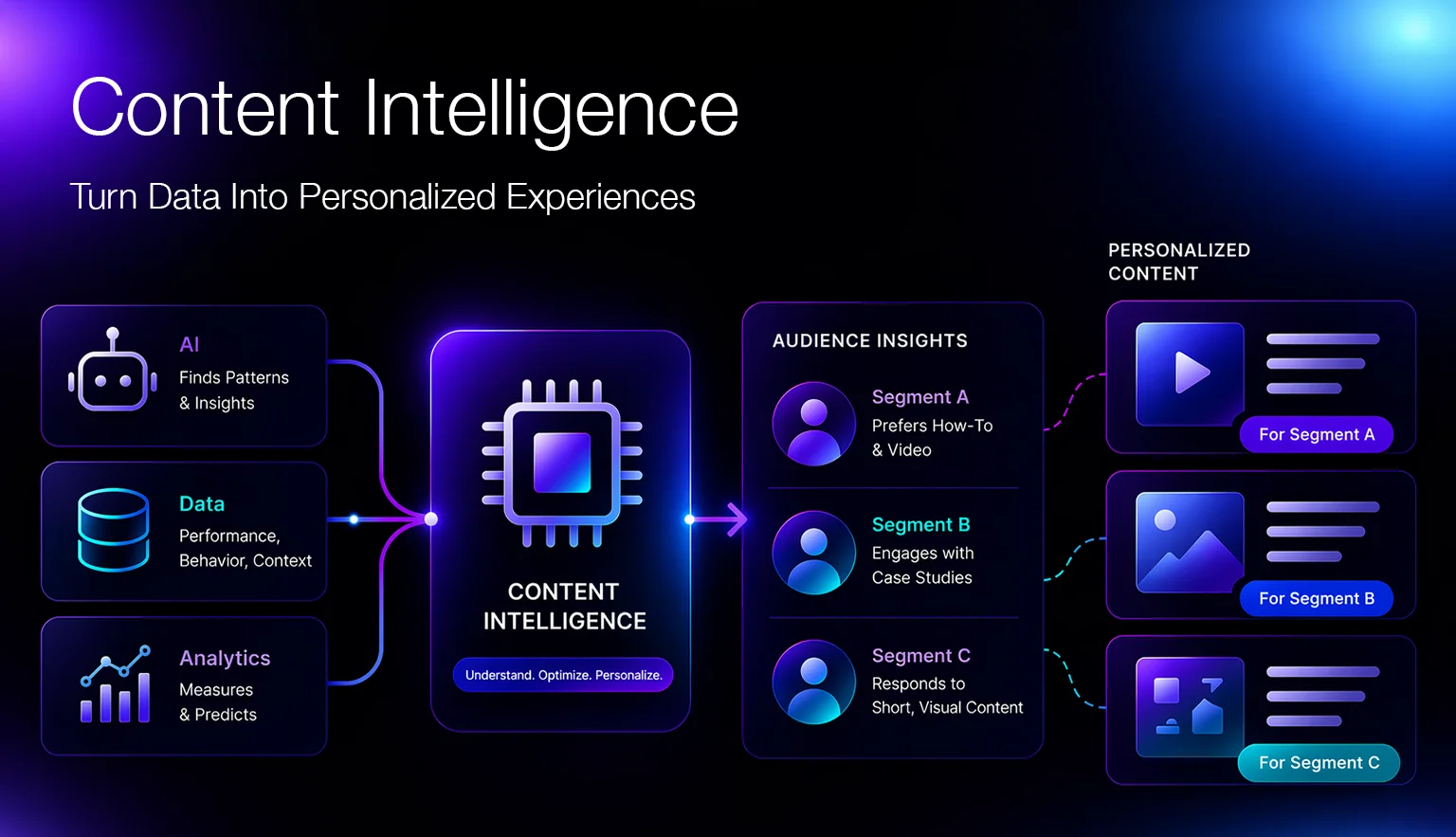
Content intelligence is the practice of using data, AI, and analytics to understand, manage, and optimize content across its lifecycle. It combines information about content performance, usage patterns, metadata, and audience behavior to help teams make better decisions about content creation, distribution, and reuse.
At a basic level, content intelligence answers key operational and strategic questions:
- What content performs best across channels and audiences?
- Which assets are underused, duplicated, or outdated?
- What content should be reused, adapted, or retired?
- How does content contribute to business outcomes like engagement and conversion?
At an enterprise level, content intelligence becomes part of the operating model. It shapes workflows, informs strategy, and connects content efforts directly to measurable outcomes. Instead of reacting to performance after the fact, teams can proactively optimize content based on real data.
Why Content Intelligence Matters for Enterprise Teams
Most organizations already have a large volume of content, but they lack visibility into how that content performs or how it should be used. Without structured insight, teams often overproduce low-value assets, miss opportunities for reuse, and struggle to align content with business outcomes.
Content intelligence solves this by turning content into a measurable, optimizable asset.
Instead of relying on assumptions, teams can use data to identify high-performing assets, uncover content gaps, and prioritize what to create next. As Aprimo explains in its blog on scaling DAM content for personalization, the shift is from static content production to dynamic, data-driven content delivery powered by real-time insights.
This becomes especially important in personalization. Modern personalization is no longer based on static segments. It is driven by behavior, context, and real-time signals that determine what content is most relevant at any given moment.
How Content Intelligence Works
Content intelligence operates as a continuous loop that connects data, AI, and workflows into one system.

Data Collection
The process begins by collecting data from multiple sources, including DAM, CMS, analytics platforms, and customer engagement tools. This data includes performance metrics, usage patterns, metadata, and audience behavior. This foundation allows organizations to understand how content is being used across channels and touchpoints.
AI and Analysis
AI analyzes this data at scale, identifying patterns that would be difficult to detect manually. This includes recognizing high-performing content, detecting duplication, and enriching assets with metadata. As outlined in Aprimo’s guide to organizing digital assets using metadata and taxonomy, structured metadata is essential for making content usable. Content intelligence builds on that structure by adding deeper analysis and insight.
Insights and Recommendations
The next step is turning analysis into actionable insights. Content intelligence platforms provide recommendations on what to reuse, what to optimize, and where gaps exist. This helps teams shift from reactive decisions to proactive content strategies.
Workflow Integration
The most important step is integrating insights into workflows. Content intelligence should not live in dashboards alone. It should influence how content is created, reviewed, approved, and distributed. As Aprimo explains in its article on DAM integrations with CMS, PIM, and ERP, connected systems ensure that insights can be applied directly within operational workflows.
The Role of DAM in Content Intelligence
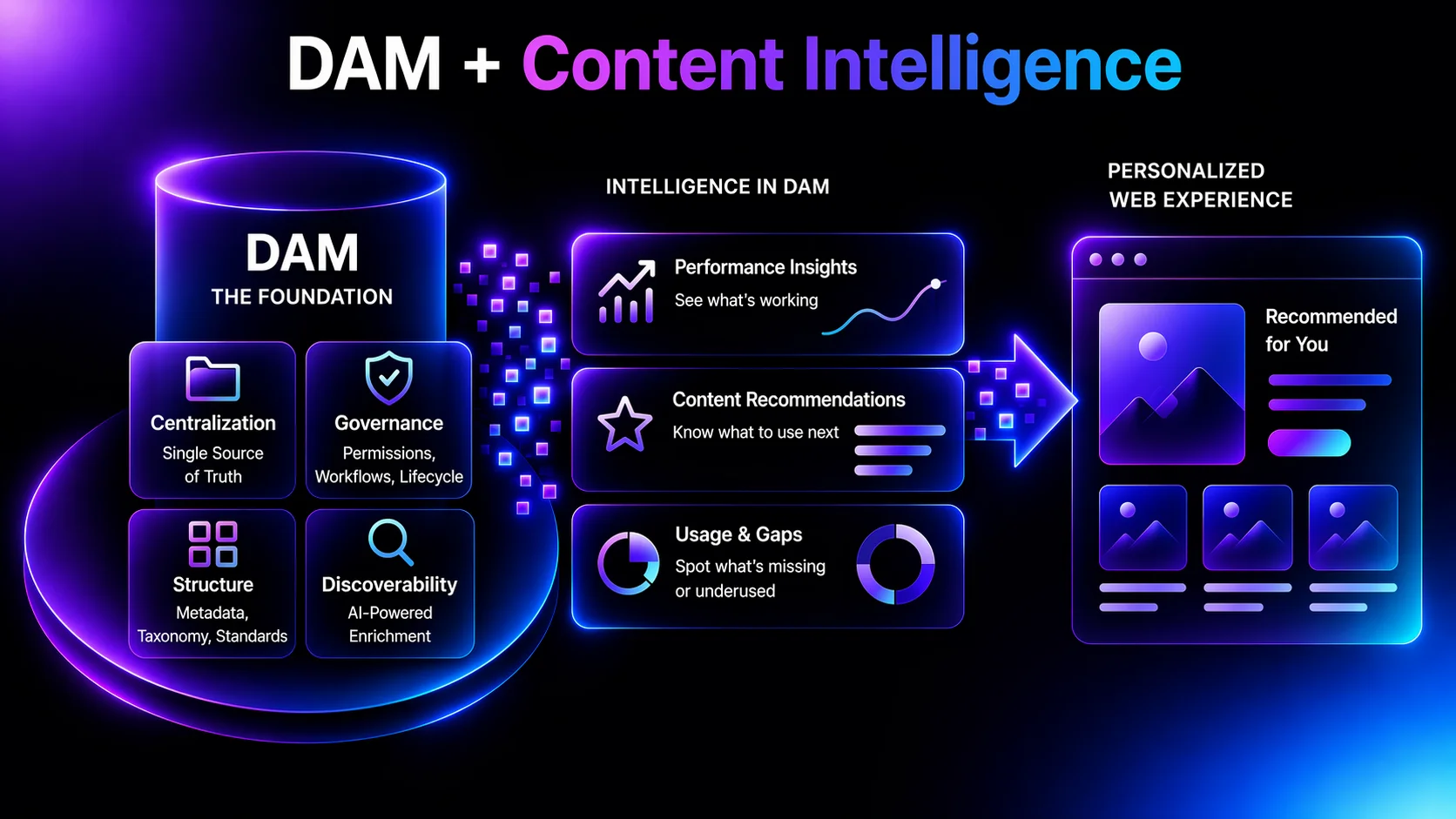
Digital asset management is a foundational layer for content intelligence. It provides the structure, governance, and centralization needed to make insights actionable across the organization. When combined with content intelligence, DAM evolves from a storage system into a system of insight.
As Aprimo explains on its Content Intelligence vision, organizations can understand not just what content exists, but what content is actually working and why. This includes identifying high-performing assets, uncovering underused content, and guiding teams toward more effective strategies.
This combination allows teams to:
- Reduce low-value content production by focusing on high-impact assets
- Increase reuse of approved, high-performing content across campaigns
- Improve discoverability through AI-driven metadata enrichment
- Maintain governance through permissions, workflows, and lifecycle controls
Without DAM, content intelligence lacks structure. Without intelligence, DAM lacks direction.
Content Intelligence and Personalization
Content intelligence and personalization are deeply connected. One provides the insight, while the other applies that insight in real time.
Content intelligence identifies what content works and why. Personalization uses that information to deliver the most relevant content to each user based on behavior, context, and intent.
Aprimo’s content personalization solution highlights how AI-driven personalization uses behavioral data and real-time decisioning to deliver more relevant experiences across channels.
This combination enables organizations to:
- Adapt content dynamically based on user behavior and preferences
- Deliver consistent experiences across web, email, and digital channels
- Optimize engagement through continuous testing and learning
- Scale personalization without increasing operational complexity
AI-driven personalization transforms content from static assets into dynamic experiences that evolve with each interaction.
Key Use Cases of Content Intelligence
Content intelligence supports a range of high-impact use cases across enterprise content operations.
Improving Content Reuse
Teams can identify high-performing assets and reuse them across campaigns instead of creating new content from scratch. This reduces duplication, improves efficiency, and increases return on content investment.
Enhancing Content Performance
By analyzing engagement and performance data, content intelligence helps teams understand what works and what does not. This allows for continuous optimization based on real insights rather than assumptions.
Supporting Real-Time Personalization
Content intelligence enables dynamic personalization by identifying what content is most relevant for each user. This allows organizations to deliver more meaningful and engaging experiences at scale.
Strengthening Governance
Content intelligence supports governance by identifying outdated, noncompliant, or underperforming assets. It helps ensure that only approved and relevant content is used across the organization.
Content Intelligence vs Traditional Content Analytics
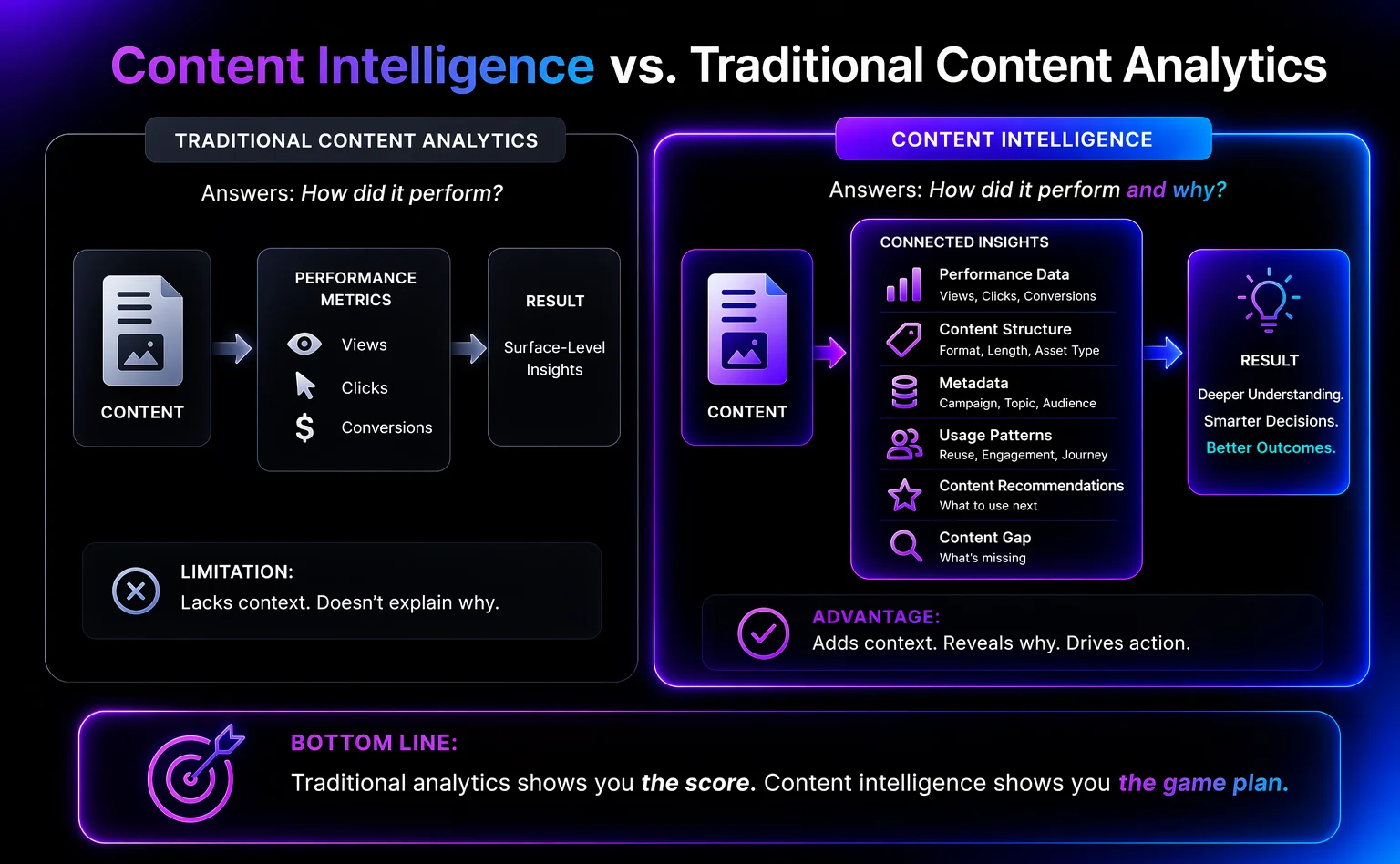
Traditional content analytics focuses on performance metrics such as clicks, views, and conversions. While valuable, these metrics often lack context about the content itself.
Content intelligence goes further by connecting performance data with content structure, metadata, and usage patterns. It provides a more complete view of content operations, helping teams understand not just how content performs, but why.
This makes content intelligence more actionable and more aligned with enterprise content strategies.
Common Challenges in Implementing Content Intelligence
Implementing content intelligence is not without challenges. One common issue is fragmented data across systems, which makes it difficult to generate meaningful insights. Another challenge is inconsistent metadata, which reduces the effectiveness of analysis and search.
Organizations also face adoption challenges. Content intelligence requires teams to trust data-driven insights and integrate them into workflows. Without alignment across teams, insights may not translate into action.
Finally, governance remains critical. Without clear governance structures, content intelligence can create as much confusion as it solves.
The Future of Content Intelligence
Content intelligence will continue to evolve as AI becomes more advanced and more deeply integrated into enterprise systems.
Future capabilities will likely include real-time optimization, predictive insights, deeper personalization, and tighter integration with AI-driven workflows. As these capabilities grow, organizations will need stronger governance and structure to manage them effectively.
Content intelligence will not replace content operations. It will enhance them, making them more efficient, more scalable, and more aligned with business outcomes.
Conclusion
Content intelligence is not just about analytics. It is about transforming content into a measurable, optimizable business asset.
By combining AI, data, and structured systems like DAM, organizations can move from reactive content management to proactive content optimization. They can reduce inefficiencies, improve performance, and deliver more relevant experiences at scale. The real value comes from integration.
When content intelligence is embedded into workflows, connected to DAM, and aligned with personalization strategies, it becomes a powerful driver of business impact.
FAQ
What is content intelligence?
Content intelligence is the use of data, AI, and analytics to understand and optimize content across its lifecycle. It helps organizations make informed decisions about how content is created, managed, and used.
How does content intelligence work with DAM?
Content intelligence works with DAM by using structured metadata and centralized assets to generate insights and recommendations. This allows teams to improve discoverability, reuse content more effectively, and maintain governance.
Why is content intelligence important for enterprises?
Content intelligence is important because it helps enterprises manage large volumes of content more efficiently and strategically. It improves visibility, reduces duplication, and ensures that content aligns with business goals and customer needs.
What are the benefits of content intelligence?
The benefits include improved content reuse, better performance insights, stronger governance, and more effective personalization. It also enables organizations to scale content operations without increasing complexity.
What is the difference between content intelligence and analytics?
Content analytics focuses on performance metrics, while content intelligence connects those metrics with content structure, context, and usage. This makes content intelligence more actionable and relevant for operational decision-making.