

Modern digital asset management software succeeds when it combines intelligent automation with enterprise-grade governance to transform content chaos into streamlined efficiency.
- Advanced search capabilities powered by AI reduce asset discovery time.
- Automated workflows and metadata generation eliminate manual tagging bottlenecks that slow content velocity.
- Enterprise security and compliance features ensure brand governance while enabling creative freedom.
- Seamless integrations with creative tools and business systems create unified content operations.
Choose the right DAM features to upgrade your asset management practices with efficiency and grace.
The digital asset management (DAM) market is growing, with organizations investing $4.59 billion globally and projections reaching $16.18 billion by 2032. Enterprises are changing their approach to content operations, moving toward intelligent, AI-powered platforms that drive real outcomes.
Modern DAM features have evolved far beyond simple digital file storage. Leading digital asset management software combines sophisticated automation, enterprise-grade security, and seamless workflow integration to solve the content challenges that cost organizations millions in lost productivity and missed opportunities.
What Makes Digital Asset Management Software Essential for Modern Enterprises?
Enterprise content operations face complexity. Marketing teams manage thousands of assets across dozens of channels while maintaining brand consistency, regulatory compliance, and creative velocity. Traditional file storage solutions create information silos, version control nightmares, and security vulnerabilities that can derail entire campaigns.
The best digital asset management platforms address these challenges through purpose-built features that centralize, organize, and automate content workflows. Unlike generic cloud storage, enterprise DAM tools include specialized capabilities for metadata management, rights tracking, automated compliance checking, and performance analytics that turn content from a cost center into a strategic growth driver.
Which Core DAM Features Must Every Enterprise Platform Include?
As enterprise content volumes soar, AI-driven DAM capabilities are vital. Modern DAM systems can cut asset search time through intelligent automation and metadata generation, reducing asset discovery from minutes to seconds.
As enterprise content volumes continue to multiply, AI-driven DAM capabilities are becoming essential for efficiency and scalability. Firms report 8–9% gains per AI use case, with one organization projecting as much as 70% efficiency improvements and 100,000 hours saved annually through intelligent automation.

Intelligent Search and Discovery Capabilities
Advanced search functionality is the foundation of effective digital asset management. Modern DAM platforms leverage artificial intelligence to understand natural language queries, visual similarity, and contextual relationships.
The most effective DAM features include facial recognition, object detection, and automated content analysis that eliminate the guesswork from asset discovery. Teams can find specific content by describing what they need rather than remembering exact file names or folder structures. This intelligent search typically reduces content discovery time up to 40% compared to traditional folder-based systems.
Teams can upload reference images and find similar assets within their library using visual search. This feature proves particularly valuable for maintaining consistency across campaigns and identifying existing assets that could be repurposed rather than recreated.
Automated Metadata Generation and Smart Tagging
Manual metadata creation is one of the biggest productivity bottlenecks in traditional content workflows. The best DAM platforms with AI-powered automation generate comprehensive metadata tags, descriptions, and taxonomies based on image analysis and business rules.
Smart tagging systems analyze visual content to automatically identify objects, colors, themes, and brand elements, then apply relevant tags according to your organization’s taxonomy. Automation ensures consistent metadata standards while eliminating the manual work that often prevents teams from properly organizing their content libraries.
Advanced DAM solutions also include customizable metadata schemas that adapt to industry-specific requirements. Whether you’re managing pharmaceutical compliance documentation or retail product catalogs, the platform accommodates your unique categorization needs without extensive customization.
Version Control and Digital Rights Management
Content governance is essential as asset libraries scale and multiple teams collaborate on campaigns. Enterprise DAM features must include sophisticated version control that tracks every change, maintains approval history, and prevents outdated assets from reaching public channels.
Digital rights management ensures teams understand usage restrictions, expiration dates, and licensing requirements for every asset. Your platform should automatically flag when licenses expire, track usage against contractual limitations, and provide clear guidance on approved usage scenarios.
Modern DAM systems include automated approval workflows that route content through appropriate review channels based on asset type, intended usage, and organizational policies. Your organization benefits from reduced compliance risks while accelerating time-to-market for approved content.
Enterprise Asset Tools: Advanced Platform Capabilities
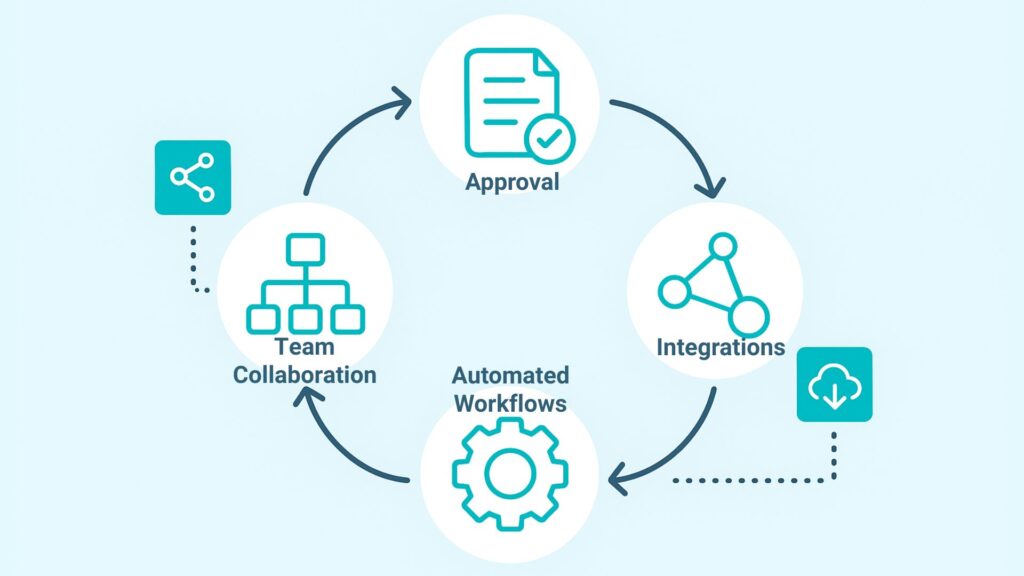
Modern content ecosystems require intelligent systems that connect people, processes, and data. Enterprise asset tools combine automation, integration, and analytics to streamline complex workflows, enhance collaboration, and transform content operations into a measurable business advantage.
Workflow Automation and Process Intelligence
Large organizations require enterprise asset tools that eliminate manual bottlenecks while maintaining governance standards. With workflow automation, teams can create sophisticated approval processes, automated asset distribution, and intelligent content routing based on metadata, user roles, and business rules.
The most effective platforms include visual workflow builders that allow non-technical users to design complex approval processes without IT involvement. These workflows can automatically assign review tasks, escalate overdue approvals, and notify stakeholders when content becomes available for use.
Process intelligence features provide visibility into workflow performance, identifying both bottlenecks and optimization opportunities. Teams can track average approval times, identify frequently delayed content types, and adjust processes to improve overall efficiency.
Integration Ecosystem and API Capabilities
Modern content operations depend on seamless connectivity between creative tools, marketing platforms, and business systems. The best DAM platforms provide pre-built integrations with leading software applications while offering robust APIs for custom connections.
Essential integrations include creative design tools like Adobe Creative Suite and Figma, enabling designers to access approved assets directly within their workflows. Marketing automation platforms, content management systems, and e-commerce platforms require bidirectional data flow to ensure content consistency across all customer touchpoints.
API capabilities are clutch for organizations with complex technology stacks or unique workflows. The platform should provide comprehensive API documentation, webhook support, and developer resources that enable custom integrations without extensive technical overhead.
Performance Analytics and Content Intelligence
Data-driven content optimization requires DAM features that track asset usage, performance metrics, and engagement patterns across all distribution channels. Advanced analytics provide insights into which content drives results, identify underutilized assets, and inform future content strategy decisions.
Content intelligence features analyze usage patterns to recommend similar assets, suggest optimization opportunities, and predict content performance based on historical data. These insights allow teams to maximize content ROI while identifying gaps in their asset library.
Modern enterprise asset tools also include real-time reporting capabilities that track content distribution, usage compliance, and system performance. These insights prove valuable for demonstrating DAM ROI and optimizing content operations over time.
Content Governance: Security and Compliance Features
In enterprise content operations, trust is built on control. Modern DAM platforms safeguard every asset through layered security, automated compliance, and brand governance frameworks that protect intellectual property while empowering teams to create confidently.

Enterprise-Grade Security Architecture
Content security is non-negotiable for enterprise DAM platforms. Advanced security features must include role-based access controls, encryption for data at rest and in transit, and comprehensive audit trails that track every user interaction with digital assets.
Multi-factor authentication, single sign-on integration, and IP restrictions provide additional layers of security for sensitive content. The platform should include granular permission settings that control not just who can access content, but what actions they can perform with each asset.
Compliance capabilities are must-have features in regulated industries. The DAM system should track content lineage, maintain approval documentation, and generate compliance reports that satisfy audit requirements.
Brand Governance and Consistency Controls
Maintaining brand consistency across global organizations requires sophisticated governance features that prevent off-brand content from reaching public channels. The best DAM platforms include automated brand compliance checking, style guide integration, and approval workflows that maintain consistency without slowing velocity.
Content governance features include asset expiration controls that automatically remove outdated materials, usage restrictions that prevent inappropriate asset usage, and approval hierarchies that ensure appropriate review for different content types.
Advanced platforms feature brand guideline integration, providing context-sensitive guidance to users selecting assets for specific campaigns or channels. This proactive approach prevents brand inconsistencies rather than trying to correct them after publication.
How Do the Best DAM Platforms Compare on Essential Features?
When evaluating digital asset management software, prioritize platforms that combine comprehensive feature sets with proven scalability and user experience. The leading solutions distinguish themselves through several key capabilities:
AI-Powered Automation Excellence: Top-tier platforms leverage artificial intelligence not just for search and tagging, but for predictive content recommendations, automated compliance checking, and intelligent workflow optimization. These features reduce manual work while improving content quality and consistency.
Integration Depth and Flexibility: The best DAM platforms provide both extensive pre-built integrations and flexible API capabilities for custom connections. This dual approach ensures seamless workflows regardless of your technology stack.
Scalability Without Performance Degradation: Enterprise-grade solutions must handle millions of assets and thousands of concurrent users without compromising search speed, upload performance, or system responsiveness. Cloud-native architectures typically provide the best scalability characteristics.
User Experience Across Technical Skill Levels: Effective DAM adoption requires platforms that serve both technical power users and occasional content consumers. The best solutions provide intuitive interfaces for basic tasks while offering advanced capabilities for sophisticated workflows.
Organizations implementing comprehensive DAM solutions achieve faster content retrieval, reduction in asset duplication, and faster campaign launches. These improvements result from the combination of intelligent automation, streamlined workflows, and enhanced collaboration.
What DAM Features Drive the Highest ROI for Content Operations?
The features that deliver the most return on investment focus on automation, intelligence, and integration. AI-powered metadata generation alone can save content teams hundreds of hours monthly while improving asset discoverability. Automated workflow capabilities reduce approval cycles from days to hours while maintaining governance standards.
Advanced search functionality eliminates the productivity drain of manual content discovery, while intelligent recommendations help teams maximize existing asset value rather than creating redundant content. Integrations that connect DAM with existing business systems create efficiency gains that multiply across the entire content lifecycle.
Analytics and reporting features enable continuous optimization of content operations, identifying opportunities for process improvement and demonstrating clear business value. Organizations that leverage these data-driven insights typically see continued ROI improvements as their DAM maturity increases.
Frequently Asked Questions
What’s the difference between DAM features for small businesses versus enterprises? Enterprise DAM features focus on scalability, advanced governance, and complex integrations, while small business solutions prioritize ease of use and core functionality. Enterprises require sophisticated user management, compliance tracking, and API capabilities that smaller organizations typically don’t need.
How do AI features in DAM software improve content workflows? AI capabilities automate time-consuming tasks like metadata tagging, enable natural language search, and provide intelligent content recommendations. These features reduce manual work while improving content discoverability and usage optimization.
Which DAM integrations are most important for marketing teams? Marketing teams benefit most from integrations with creative tools, marketing automation platforms, CMS systems, and social media management tools. These connections facilitate seamless content workflows from creation through distribution.
How do enterprise security features protect digital assets? Enterprise DAM security includes role-based access controls, encryption, audit trails, watermarking capabilities, and compliance tracking. These features protect against unauthorized access while maintaining detailed records of asset usage and distribution.
What analytics capabilities should DAM software include? Effective DAM analytics track asset usage patterns, user engagement, content performance across channels, and workflow efficiency metrics. These insights enable data-driven optimization of content operations and demonstrate clear ROI from DAM investments.
Start Doing Digital Asset Management the Right Way
Organizations that invest in comprehensive DAM platforms with advanced automation, robust governance, and seamless integration position themselves to maximize content value while minimizing operational complexity.Aprimo’s intelligent content operations platform combines all these essential features with proven scalability and industry-leading AI capabilities. Our solution transforms content chaos into a competitive advantage through automation that eliminates manual work while ensuring brand consistency and governance standards across global organizations. Book a demo today to get all the features you need for effective digital asset management.