
How to Identify Your Digital Asset Management Requirements
Most organizations do not start by looking for a digital asset management platform. They start by feeling the friction caused by disorganized content, inefficient workflows, and inconsistent asset usage across teams, brands, regions, or agency partners. As content volumes grow, these issues become harder to manage and begin to impact productivity, brand consistency, and speed to market.
This is why identifying the right DAM requirements is critical.
A DAM implementation is not just about selecting software. It is about defining how content should be organized, governed, and used across the business. Without a clear understanding of requirements, organizations risk implementing systems that do not align with their workflows or scale with their needs.
As Aprimo explains in its guide on how to build a business case for DAM, successful DAM initiatives begin with understanding the broader operational challenges behind content management. Those same challenges should guide how requirements are defined.
TL;DR
- Identifying DAM requirements starts with understanding content challenges across teams, workflows, and systems.
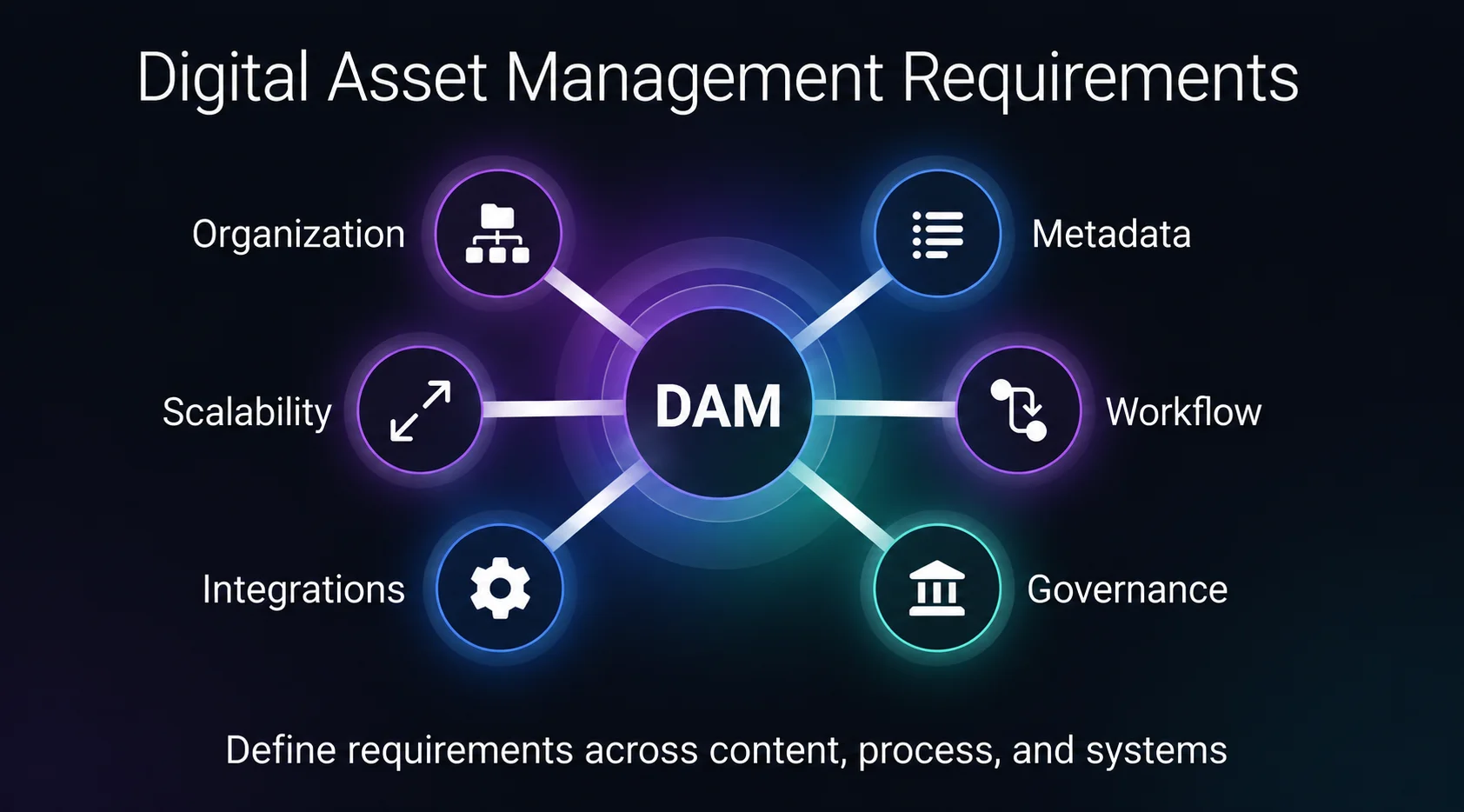
- Key requirements include asset organization, metadata, governance, workflows, and integrations.
- DAM must support scalability, personalization, and AI-driven content operations.
- Cross-functional alignment is critical to defining realistic and effective requirements.
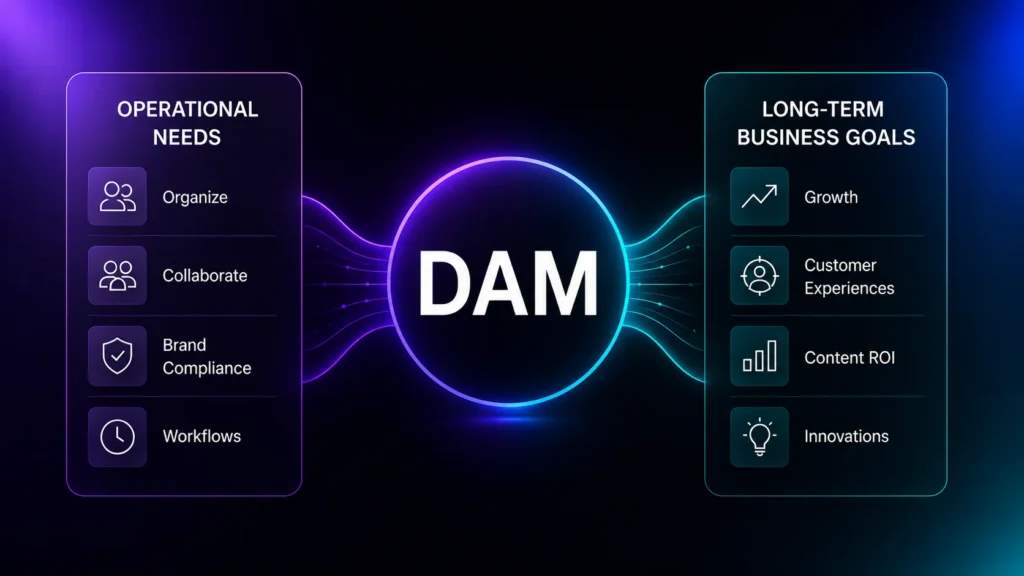
- The best DAM requirements connect operational needs with long-term business goals.
- Download the DAM Buyers’ Guide.
Why Defining DAM Requirements Matters
Defining DAM requirements is not a technical exercise alone. It is an operational and strategic process that determines how content will move through the organization.
Without clearly defined requirements, organizations often face common issues such as low adoption, inconsistent usage, and limited return on investment. Teams may continue to rely on disconnected tools, manual processes, or duplicated content, even after a DAM is implemented.
A well-defined set of requirements ensures that DAM supports real business needs.
It helps organizations align content operations with goals such as faster time to market, improved content reuse, stronger governance, and better collaboration across teams. This is particularly important as content operations become more complex and more integrated with AI, personalization, and omnichannel delivery.
Start with Your Current Content Challenges
The first step in identifying DAM requirements is understanding the current state of your content operations. This means looking beyond tools and focusing on how content is actually created, managed, and used.
Common challenges often include difficulty finding assets, inconsistent naming conventions, duplication of content, slow approval processes, and lack of visibility into asset status. These issues are not isolated problems. They are symptoms of broader operational gaps.
By documenting these challenges, organizations can begin to define what their DAM needs to solve.
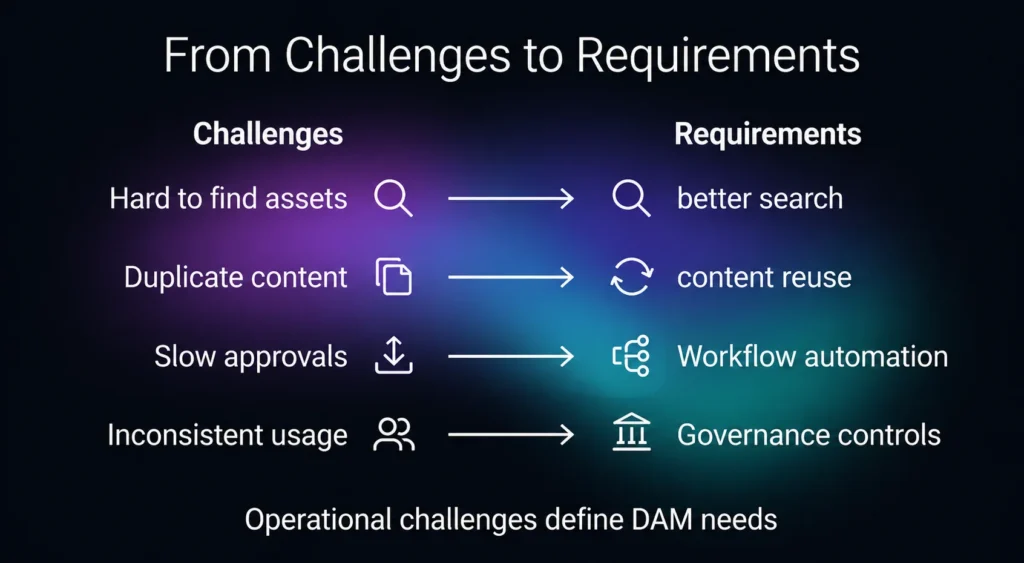
For example, if teams struggle to find assets, discoverability becomes a key requirement. If approvals are slow, workflow automation becomes critical. If content is duplicated, metadata and taxonomy need to be strengthened.
This step ensures that requirements are grounded in real operational needs rather than assumptions.
Define Core DAM Capabilities
Once current challenges are clear, the next step is defining the core capabilities required from a DAM platform.
Asset Organization and Search
At its core, DAM must enable teams to find and use content efficiently. This requires strong metadata, taxonomy, and search capabilities.
As outlined in Aprimo’s guide to organizing digital assets using metadata and taxonomy, structure is essential for making content usable at scale. Without it, even a centralized system can become difficult to navigate.
Workflow and Collaboration
Content rarely moves in a straight line. It passes through multiple stages, including creation, review, approval, and distribution.
DAM requirements should include workflow capabilities that support these stages. This includes task assignment, approval routing, version control, and visibility into asset status.
Governance and Compliance
Governance is a critical requirement for enterprise DAM.
Organizations need to control who can access content, how it is used, and whether it complies with legal and brand guidelines. This includes managing permissions, approvals, and usage rights.
Aprimo’s blog on managing digital rights and usage expiration in DAM highlights how governance helps reduce risk and ensure content is used appropriately across the business.
Identify Integration Requirements
DAM does not operate in isolation. It needs to connect with other systems in the content ecosystem.
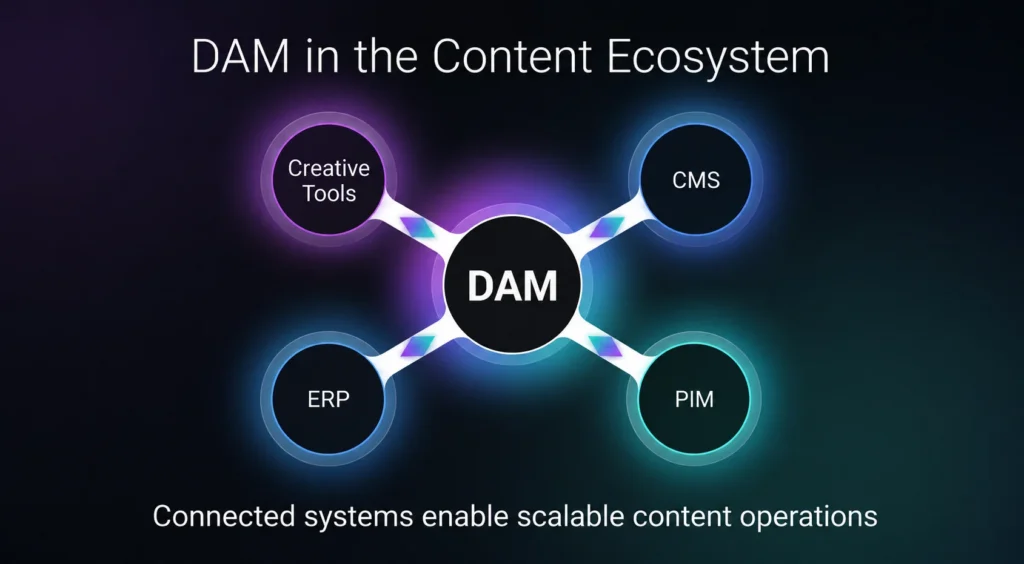
These typically include:
- CMS platforms for publishing content
- PIM systems for product data
- ERP systems for operational workflows
- Creative tools for content creation
As explained in Aprimo’s article on how DAM integrates with CMS, PIM, and ERP systems, integration is essential for reducing manual work and maintaining consistency across systems.
When defining requirements, organizations should identify which systems need to connect with DAM and how those connections should function.
Consider Scalability and Future Needs
DAM requirements should not only address current needs but also future growth.
Content volumes will increase. Teams will expand. New channels and use cases will emerge. DAM must be able to scale with these changes.
This includes supporting:
- Increased asset volumes
- More users and teams
- Expanded workflows
- New integrations and technologies
As content operations evolve, DAM also needs to support emerging capabilities such as AI, content intelligence, and personalization.
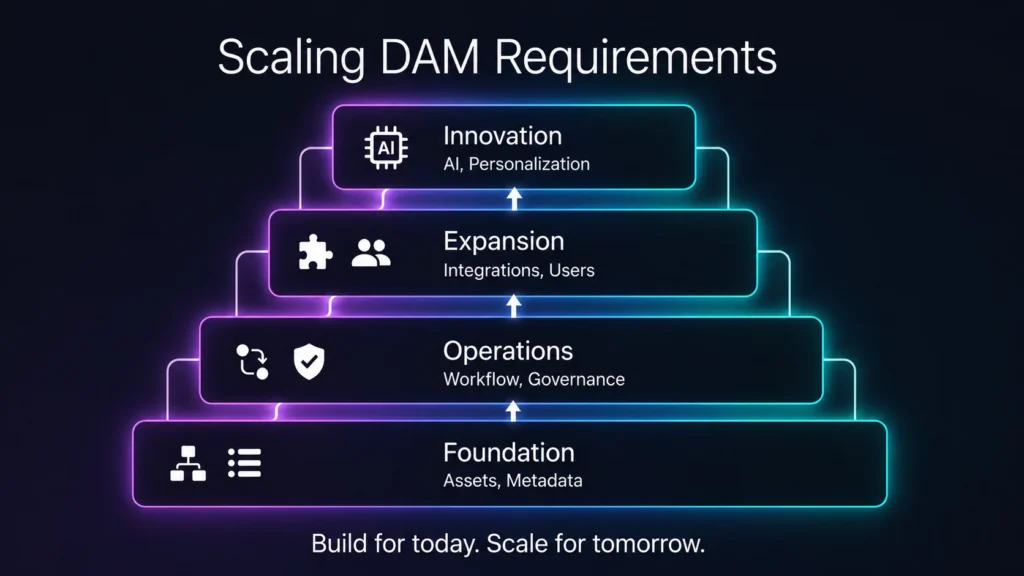
For example, organizations looking to adopt AI-driven workflows should ensure that DAM can support these use cases. Aprimo’s perspective on generative AI readiness in DAM highlights how modern DAM platforms are evolving to support AI-driven content operations.
Align Requirements Across Teams
DAM is a cross-functional platform. It impacts multiple teams, including marketing, creative, operations, IT, and compliance.
Each of these teams has different requirements and priorities.
Marketing teams focus on speed and content reuse. Creative teams need version control and collaboration tools. Compliance teams prioritize governance and risk management. IT teams focus on integrations and scalability.
A successful DAM implementation requires alignment across these stakeholders.
This means gathering input from different teams, identifying shared needs, and resolving conflicting priorities. It also helps ensure adoption, as teams are more likely to use a system that reflects their requirements.
Define Success Metrics
Identifying DAM requirements also involves defining how success will be measured.
This includes both operational and strategic metrics.
Operational metrics may include time saved in asset search, reduction in duplicate content, and improvements in workflow efficiency. Strategic metrics may include faster campaign execution, improved content reuse, and better brand consistency.
Defining these metrics early helps ensure that DAM delivers measurable value.
Common Mistakes to Avoid
Organizations often make several mistakes when identifying DAM requirements.
- One common mistake is focusing too much on features rather than outcomes. While features are important, they should be tied to specific business needs.
- Another mistake is underestimating governance requirements. Without strong governance, DAM can become difficult to manage over time.
- A third mistake is ignoring integration needs. Disconnected systems create inefficiencies and reduce the value of DAM.
- Finally, organizations sometimes fail to consider scalability. A DAM that meets current needs may not be sufficient as content operations grow.
External Perspective: Why DAM Requirements Matter
Industry research reinforces the importance of defining DAM requirements carefully.
According to Gartner, organizations that align technology implementations with business processes are significantly more likely to achieve desired outcomes. Similarly, Forrester highlights that DAM success depends on governance, metadata, and integration rather than just storage capabilities.
These insights support the idea that DAM requirements should be driven by operational needs and long-term strategy.
Conclusion
Identifying your digital asset management requirements is a critical step in building effective content operations.
It requires understanding current challenges, defining core capabilities, aligning stakeholders, and planning for future growth. It also requires connecting DAM to broader systems and workflows to ensure that content can move efficiently across the organization.
The goal is not just to implement a system.
The goal is to create a foundation for scalable, governed, and efficient content operations that support business growth.
FAQ
How do you identify digital asset management requirements?
You identify DAM requirements by analyzing current content challenges, workflows, and business needs across teams. This helps ensure that the platform supports real operational requirements rather than assumed ones.
What are the most important DAM requirements?
The most important DAM requirements include asset organization, metadata, workflow automation, governance, and integrations. These capabilities ensure that content can be managed efficiently and used effectively across the organization.
Why is metadata important in DAM requirements?
Metadata is important because it enables search, organization, and governance of digital assets. Without it, content becomes difficult to find, manage, and reuse.
How do integrations impact DAM requirements?
Integrations ensure that DAM works seamlessly with other systems such as CMS, PIM, and ERP. This reduces manual work and improves consistency across content workflows.
When should a company define DAM requirements?
A company should define DAM requirements before selecting a platform or vendor. This ensures that the chosen solution aligns with business needs and supports long-term content operations.