
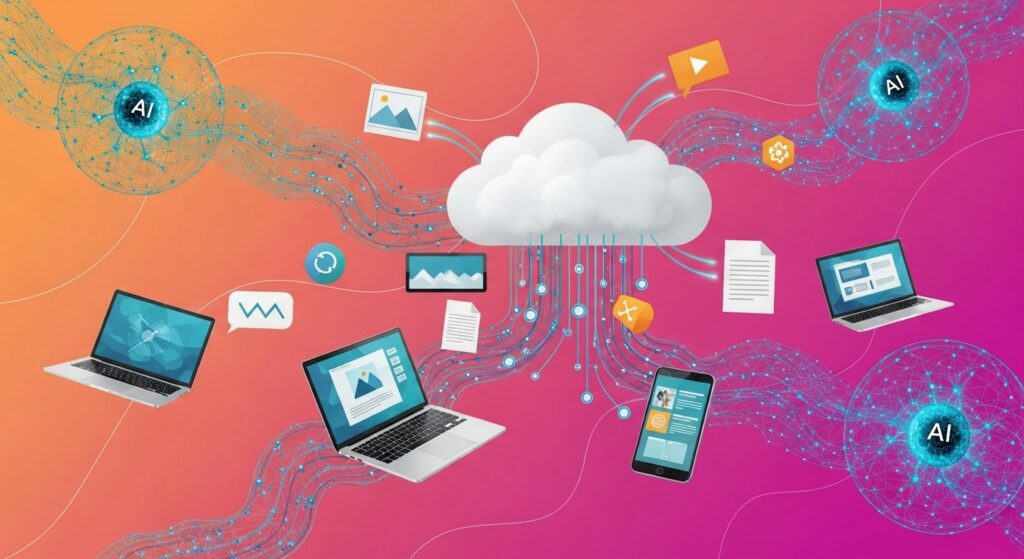
Cloud-based DAM software now captures 64% of market revenue and is growing as organizations recognize superior scalability and innovation delivery.
- Seamless AI integration enables automated metadata generation, intelligent search, and predictive content recommendations.
- Global accessibility supports distributed teams with instant access to approved assets from anywhere, eliminating geographic barriers.
- Continuous innovation delivery provides automatic feature updates and security patches without IT overhead or costly upgrade cycles.
- Lower total cost of ownership eliminates infrastructure maintenance while delivering measurable ROI through operational efficiency gains.
Organizations choosing SaaS DAM position themselves for intelligent content operations that adapt and scale with evolving business demands.
Traditional digital asset management isn’t cutting it anymore. While teams struggle with exploding content volumes, distributed workforces, and customers who expect personalized experiences at every touchpoint, legacy on-premise DAM software has become more of a roadblock than a solution.
Cloud installations represent 64% of revenue because updates flow seamlessly and costs scale naturally with usage. This shift reflects a recognition that digital asset management success depends on platforms built for continuous evolution, not static deployment.
Organizations evaluating DAM software face a crossroads: stick with traditional infrastructure that demands constant maintenance and manual updates, or embrace cloud-native solutions that evolve automatically with technological advancement and changing business needs.
What’s Really Driving the Mass Migration to SaaS DAM Software?
The move to Software-as-a-Service digital asset management isn’t just a trend—it’s responding to real changes in how businesses actually operate. Multiple forces are converging to make cloud-first content operations not just smart but essential.
Here’s the scale we’re dealing with. Large enterprises dominate the market share, while small and medium enterprises are recording the highest projected growth. Cloud-based solutions solve problems across all business sizes.
Modern work demands real-time coordination across distributed teams, external vendors, and global stakeholders. Traditional on-premise systems create barriers that slow everything down through VPN headaches, file transfer limits, and regional server issues. SaaS DAM eliminates these friction points. Creative agencies in London, marketing teams in New York, and regional offices across the Asia Pacific can all access the same brand-compliant content instantly.
Then there’s the IT pressure cooker. Departments are expected to support more applications with fewer resources while digital transformation accelerates. Market projections show the global DAM market growing from $5.3 billion in 2024 to $10.3 billion by 2029, reflecting widespread recognition that content operations need specialized platforms, not makeshift file storage solutions.
The investment model makes sense too. SaaS providers pour resources into platform innovation, security enhancements, and integration capabilities that individual organizations can’t economically develop internally. Smaller teams get enterprise-grade capabilities while larger organizations redirect IT resources toward revenue-generating initiatives instead of infrastructure babysitting.

Understanding what digital asset management truly encompasses helps clarify why cloud-based solutions provide strategic advantages that go far beyond improved file storage.
How SaaS DAM Outperforms Legacy On-Premise Solutions
The technical advantages of cloud-based DAM software go way beyond basic accessibility improvements. These capabilities determine whether your current system positions you for content operations success or creates growing disadvantages.
Infrastructure That Actually Scales With Your Needs
SaaS DAM platforms automatically adjust storage, processing power, and bandwidth based on real usage patterns. When your campaign goes viral or seasonal content demands spike, the system scales seamlessly. Traditional on-premise setups? You’re scrambling with capacity planning, hardware procurement, and hoping your infrastructure can handle the load.
Security and Compliance That Stays Current
Cloud-based platforms receive continuous security patches, compliance updates, and regulatory adjustments without requiring your IT team to lift a finger. With cybersecurity threats continuing to escalate, automated security management is essential for protecting your digital assets and maintaining compliance standards.
Global Content Delivery That Works
Advanced SaaS DAM solutions include content delivery networks that automatically optimize asset performance based on where users are, what device they’re using, and their connection quality. Rural mobile users get compressed versions, while desktop users with high-speed connections access full-resolution assets. On-premise systems require separate CDN contracts and complex configuration management just to attempt similar functionality.
Integration Ecosystem That Eliminates Manual Work
Modern platforms offer pre-built connections to hundreds of marketing, creative, and business applications through standardized APIs and marketplace partnerships. These connections create automated workflows between design tools, content management systems, marketing automation platforms, and analytics solutions without custom development. Organizations can explore essential DAM integrations to understand which connections deliver the greatest impact.
How AI Integration Transforms Content Operations
Here’s where cloud-based DAM software truly separates itself from traditional solutions. The computational requirements, data processing capabilities, and continuous model training that AI demands align perfectly with cloud infrastructure advantages.
Investments in AI enhancements for DAM platforms are expected to reach approximately $1.2 billion, and that investment is transforming content operations from manual processes into intelligent business capabilities. Organizations are increasingly leveraging AI agents to transform content operations toward truly intelligent content orchestration.
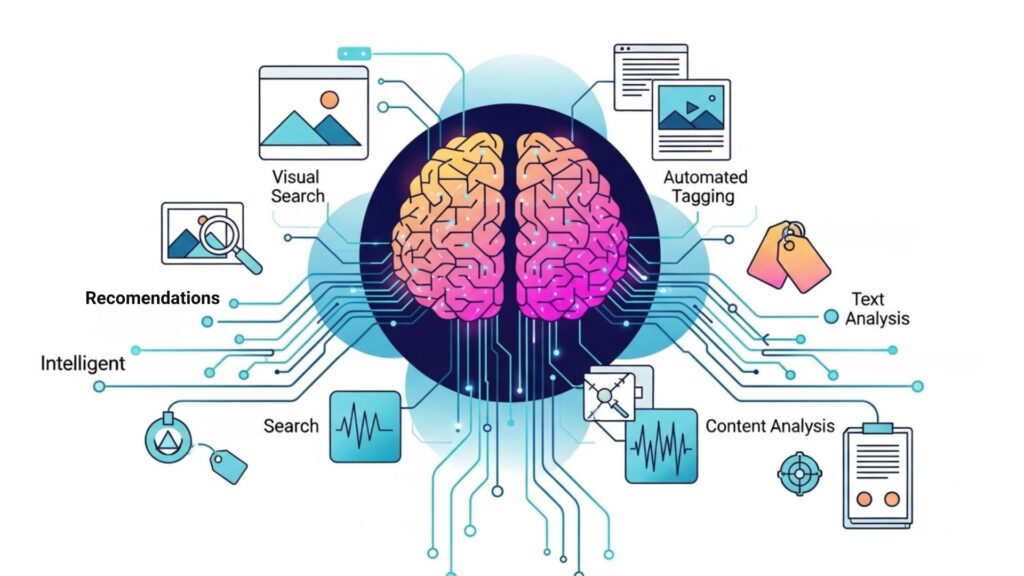
Automated Metadata That Actually Makes Sense
Advanced platforms use computer vision and natural language processing to automatically analyze uploaded assets, generating detailed metadata descriptions, identifying objects and people, transcribing audio content, and suggesting appropriate tags based on visual and contextual analysis. You’re eliminating the manual tagging bottleneck that’s historically prevented organizations from properly organizing large content libraries.
Smart Recommendations That Improve Campaign Performance
Machine learning algorithms analyze asset usage patterns, campaign performance data, and audience engagement metrics to recommend optimal content for specific campaigns, audiences, and channels. These intelligent recommendations save time, but here’s the bigger win: they improve campaign effectiveness by surfacing content that actually resonates with your target audience.
Search That Understands What You Want
Natural language search lets users find assets using conversational queries like “product images for spring campaign featuring diverse models” instead of hoping exact keyword matches work. Visual similarity search identifies related assets based on composition, color palette, and subject matter, helping creative teams discover content variations and alternatives they might never have found otherwise.
Automated Brand Safety That Prevents Problems
AI-powered content analysis automatically detects potential compliance issues, brand guideline violations, and rights management concerns before assets reach publication channels. These automated safety checks reduce legal risk while enabling creative teams to experiment with confidence, knowing problematic content will be flagged for review.
What ROI Can Organizations Realistically Expect?
Understanding the financial impact of DAM software helps justify investment decisions and measure success. Recent industry research gives us specific metrics showing the business value cloud-based solutions deliver across operational efficiency, cost reduction, and revenue enhancement.
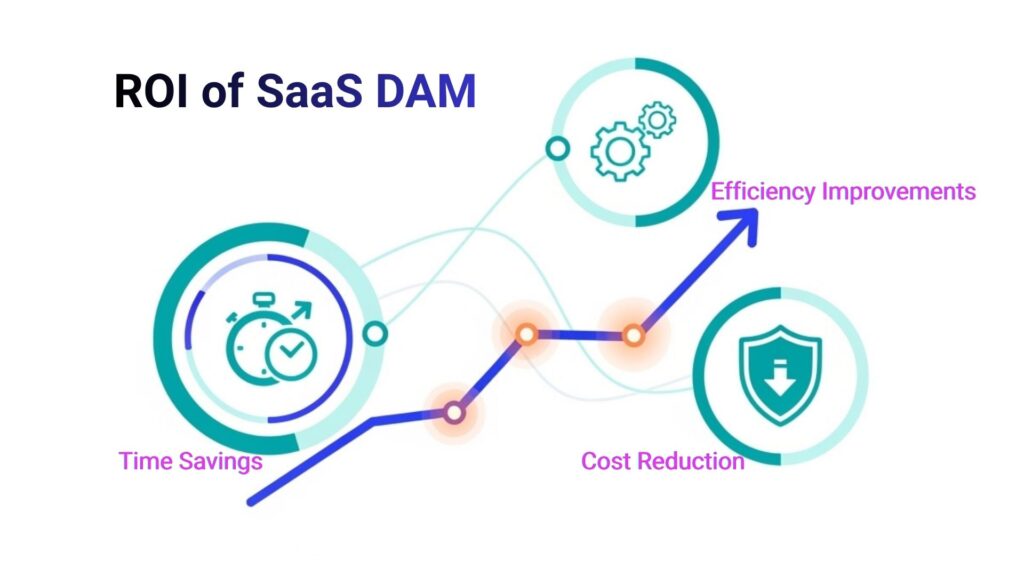
Approximately 61% of organizations currently leveraging DAM systems report an average 30% ROI from implementations, with leading organizations achieving faster value realization through strategic approaches that prioritize high-impact use cases and workflow automation.
Time Savings That Add Up
Organizations using AI-powered DAM features report dramatic reductions in manual content management tasks. Teams that previously spent hours searching for appropriate assets can locate relevant content efficiently through intelligent search, while automated metadata generation eliminates time-consuming manual tagging processes.
Creative teams benefit from streamlined approval workflows that automatically route content through appropriate stakeholders, reducing approval cycle times and enabling faster campaign execution. Marketing departments gain instant access to campaign-ready assets without requiring design team intervention for simple modifications or format variations.
Cost Reductions Through Better Asset Discovery
Platforms with robust search and content recommendation capabilities help organizations discover existing assets suitable for new campaigns, reducing unnecessary content creation and stock photography licensing expenses. Organizations implementing comprehensive DAM systems see improved asset discoverability and reuse rates.
Advanced platforms enable automatic asset variations and transformations, allowing teams to create multiple campaign versions from single source files without additional production costs. This feature proves particularly valuable for multi-channel campaigns requiring assets optimized for different platforms, devices, and audience segments.
Brand Consistency That Reduces Risk
Centralized asset governance ensures teams have access to current, approved content while preventing the usage of outdated or off-brand materials. Organizations implementing DAM achieve stronger brand consistency across channels and touchpoints.
Automated compliance monitoring reduces legal risk associated with rights violations, trademark infringement, and regulatory non-compliance. Organizations in regulated industries benefit from built-in approval workflows and audit trails that demonstrate due diligence for compliance purposes.
Why Global Teams Choose Cloud-Based Collaboration
Modern business is distributed, and that creates unique challenges for content collaboration, version control, and brand consistency across geographies, time zones, and organizational boundaries. SaaS DAM software addresses these challenges through design principles that prioritize accessibility, real-time synchronization, and collaborative workflow management.
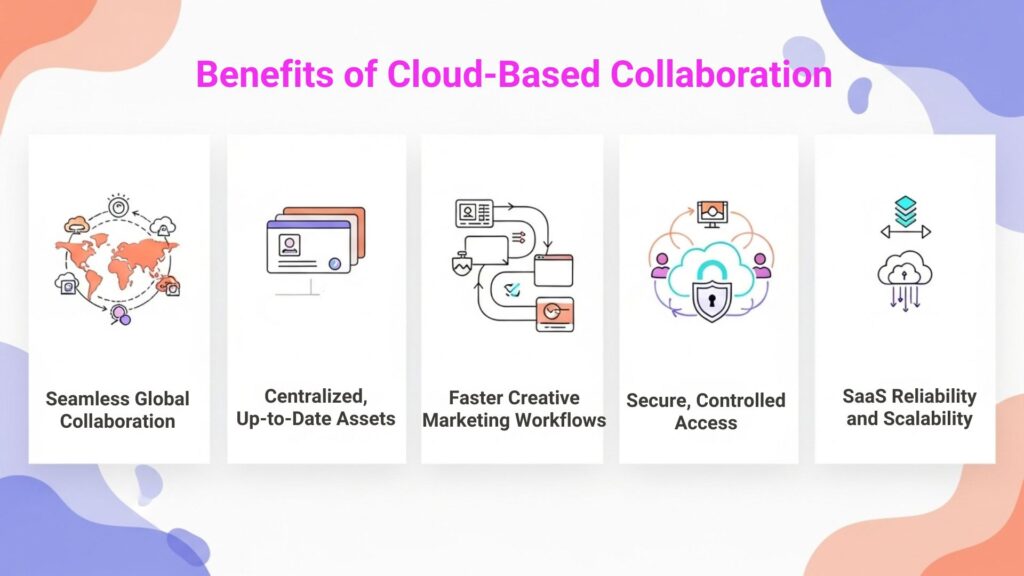
A cloud-based system enables seamless collaboration by providing secure access to digital assets from anywhere with an internet connection, enhancing productivity for distributed workforces. Teams no longer face VPN constraints, file transfer limitations, or regional server capacity issues that historically complicated international collaboration.
Remote creative teams can access high-resolution source files instantly, while marketing departments in different regions collaborate on campaign development without file-sharing complications. External agencies and vendors gain controlled access to relevant assets without requiring complex IT provisioning or security clearance processes.
Cloud-based platforms maintain single-source versions of all assets while enabling simultaneous access for multiple users. Automated version control prevents confusion and errors from teams working with outdated files, while real-time notifications keep stakeholders informed about content updates and approval status changes.
Advanced platforms provide granular permission controls that grant appropriate access levels to internal teams, external vendors, and temporary contractors without compromising security. Role-based access ensures marketing teams can access campaign assets while preventing unauthorized access to sensitive corporate materials.
How Cloud DAM Delivers Superior Security and Compliance
Enterprise security requirements have evolved, requiring comprehensive data protection, access control, and compliance management. Cloud-based platforms deliver these capabilities through shared security model advantages and specialized infrastructure investments.
Leading SaaS providers invest in security certifications and compliance frameworks that individual organizations can’t match independently. SOC 2 compliance ensures core infrastructure like storage, access controls, and monitoring prevent unauthorized access, while ISO 27001 certification demonstrates systematic information security management practices.
These certifications require regular third-party audits, continuous monitoring, and documented security procedures that exceed most internal IT department capabilities. Organizations benefit from enterprise-grade security without associated infrastructure investments and specialized expertise.
Cloud platforms utilize machine learning algorithms to automatically identify unusual access patterns, potential security threats, and compliance violations. These systems analyze user behavior, access patterns, and content interactions to detect anomalies that might indicate security breaches or inappropriate access attempts.
International organizations face complex data residency requirements, privacy regulations, and industry-specific compliance obligations varying by jurisdiction. Advanced platforms provide geographic data storage options, automated compliance reporting, and audit trail capabilities that simplify regulatory adherence.
The European Accessibility Act mandates accessible digital assets, prompting organizations to upgrade metadata capabilities and automated captioning. Cloud-based platforms automatically implement these regulatory requirements across customer accounts, ensuring compliance without requiring individual organizational effort.
How Organizations Can Future-Proof Their Content Strategy
Content marketing keeps evolving, customer expectations keep rising, and technology keeps advancing. Organizations need to ask themselves whether their current DAM software positions them for emerging opportunities or creates limitations that will compound over time.
AI and Machine Learning Integration continues to advance. Tagging automation allows companies to apply tags to assets based on unique metadata structures, while advanced platforms develop capabilities for automated content generation, optimization recommendations, and predictive performance analytics. Organizations using platforms without robust AI capabilities face increasing manual workload as content volumes and complexity grow.
Omnichannel Personalization Requirements are intensifying. Future content operations success depends on delivering personalized experiences across multiple touchpoints simultaneously, using AI to map customer behavior and predict needs while tailoring content accordingly. Static content management approaches can’t support the real-time optimization and automated personalization requirements emerging across customer experience strategies.
Integration Ecosystem Growth continues to expand marketing technology. Organizations utilize increasingly complex combinations of specialized tools for different functions. Platforms designed with API-first architecture provide flexibility to integrate with emerging technologies, while legacy systems create challenges that limit innovation.
Compliance Automation and Risk Management are critical as regulatory requirements expand across industries and jurisdictions, while AI-generated content introduces new considerations for rights management and brand safety. Governance and compliance deliver reliable and consistent user experiences beyond legal obligations. Automated compliance monitoring and risk detection become essential capabilities rather than optional enhancements.
Leading organizations position their content operations for success by choosing platforms that deliver current business value while providing technological foundations for emerging opportunities and requirements. Comprehensive DAM implementation strategies position teams for long-term success.
Modern content personalization demands drive this technological evolution. McKinsey research shows that 71% of consumers expect personalization, while AI-enabled personalization capabilities become essential for meeting escalating customer expectations. SaaS DAM software enables the real-time content adaptation and automated personalization required to meet these demands.
Frequently Asked Questions
Is SaaS DAM secure enough for enterprise organizations with sensitive content? Modern SaaS platforms exceed enterprise security requirements through SOC 2 Type II certification, ISO 27001 compliance, and automated threat detection capabilities. Leading providers invest in security infrastructure that surpasses what most organizations can achieve independently, with continuous monitoring, regular third-party audits, and automatic security updates that eliminate common vulnerabilities.
How quickly can organizations expect to see ROI from cloud implementation? Industry research indicates that organizations implementing DAM systems report an average 30% ROI, with many organizations seeing measurable benefits within the first quarter of implementation. Organizations save significant time on asset-related tasks while reducing content creation costs through improved discoverability and asset reuse capabilities.
What integrations are most critical for success? Essential integrations include creative tools (Adobe Creative Suite, Figma), content management systems, marketing automation platforms, and collaboration tools. Advanced platforms offer pre-built connections to hundreds of applications, while API-first architecture enables custom integrations as organizational needs evolve.
How SaaS DAM Unlocks Intelligent Content Operations
The transition to SaaS DAM software shows us that modern content operations require platforms designed for continuous innovation, global collaboration, and intelligent automation. Organizations still relying on legacy on-premise systems face escalating challenges as content volumes grow, teams become more distributed, and customer expectations for personalized experiences keep rising.
Aprimo brings together AI, automation, and enterprise-grade governance to help organizations modernize how they manage and deploy content at scale. Our SaaS DAM delivers the agility, security, and continuous innovation teams need to keep pace with digital demands. Discover how Aprimo’s AI-powered SaaS DAM delivers the capabilities your team needs to succeed.