

Marketing teams drowning in content demands need AI workflow automation tools that actually understand their work. The best solutions are integrated content operations platforms that combine workflow intelligence with deep content knowledge.
Key findings:
- Standalone tools create workflow silos that limit AI effectiveness and require constant manual coordination.
- Integrated content operations platforms provide unified intelligence across creation, approval, and distribution.
- Agentic AI works best when it has full context about content, brand standards, and performance data.
- Teams using AI automation save hours per week with higher productivity rates.
Start with a content operations platform that includes intelligent workflows, then add specialized tools only where gaps exist.
If you’re a marketing professional juggling content creation, brand compliance, and campaign execution across multiple channels, you know the frustration of managing workflows across disconnected tools. Email automation in one platform, asset approvals in another, social scheduling somewhere else entirely. It’s exhausting, and frankly, it’s limiting your team’s potential.
AI workflow automation tools promise relief, but the biggest wins come from platforms that understand your content as deeply as your workflows. Teams using AI automation save up to 3.6 hours per week while reporting 66% higher productivity rates compared to teams relying on manual processes.
The difference is intelligence. When your workflow automation can actually “see” your brand guidelines, understand content context, and optimize based on real performance data, that’s when the magic happens.
Why Most Marketing Teams Get AI Workflow Automation Wrong
Most marketing teams approach AI workflow automation backwards. They start by connecting existing tools with general app automation platforms, thinking they’ll create seamless processes by linking apps together. Instead, they often create more complexity.
The problem isn’t the tools themselves. It’s treating workflow automation as separate from content intelligence. When your automation system doesn’t understand what makes good content, can’t assess brand compliance, or lacks context about audience preferences, you end up with sophisticated plumbing connecting shallow pools of data.
Real workflow intelligence happens when AI systems understand the full context of your content operations. They know which assets need legal review, can predict campaign performance based on historical data, and automatically optimize distribution timing based on audience behavior patterns. This level of sophistication requires integrated platforms built specifically for content-driven marketing.
What Sets Content Operations Platforms Apart from Basic Automation Tools?
Content operations platforms offer a different approach to marketing automation. Instead of connecting disparate systems, they provide unified environments where content intelligence drives workflow decisions.
Traditional automation tools excel at moving data between applications, but they can’t make intelligent decisions about content quality, brand compliance, or audience relevance. They trigger actions based on simple rules but don’t understand the nuanced context that marketing decisions require.
Integrated content operations platforms combine deep content understanding with workflow automation, creating AI agents that can evaluate creative assets, route them through appropriate approval processes, and optimize distribution strategies based on comprehensive performance data.
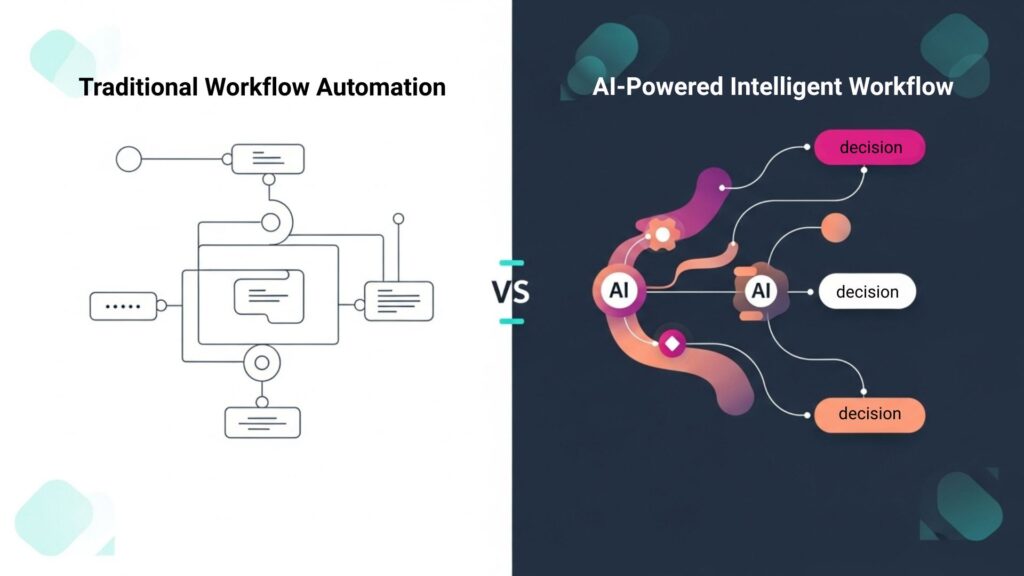
The difference becomes obvious when handling complex scenarios. Imagine launching a global product campaign across twelve markets with localized creative assets. A basic automation tool might schedule posts and send notifications, but an intelligent content operations platform understands regulatory requirements by region, automatically applies appropriate brand guidelines, and optimizes messaging based on local audience preferences.
Which Integrated Platforms Deliver the Most Sophisticated AI Workflows?
The most sophisticated AI workflow automation requires understanding marketing context at every level. These systems make intelligent decisions about content routing, optimization, and distribution.
Advanced content intelligence platforms use agentic AI workflow tools that operate as autonomous digital workers. They understand content characteristics, predict approval requirements, and automatically route assets through appropriate workflows while maintaining detailed audit trails for compliance.
These platforms excel at handling the complexity that breaks basic automation tools. They can simultaneously manage brand compliance across global markets, optimize content for different audience segments, and coordinate approval processes across distributed creative teams. The AI agents learn from every interaction, continuously improving their decision-making capabilities.
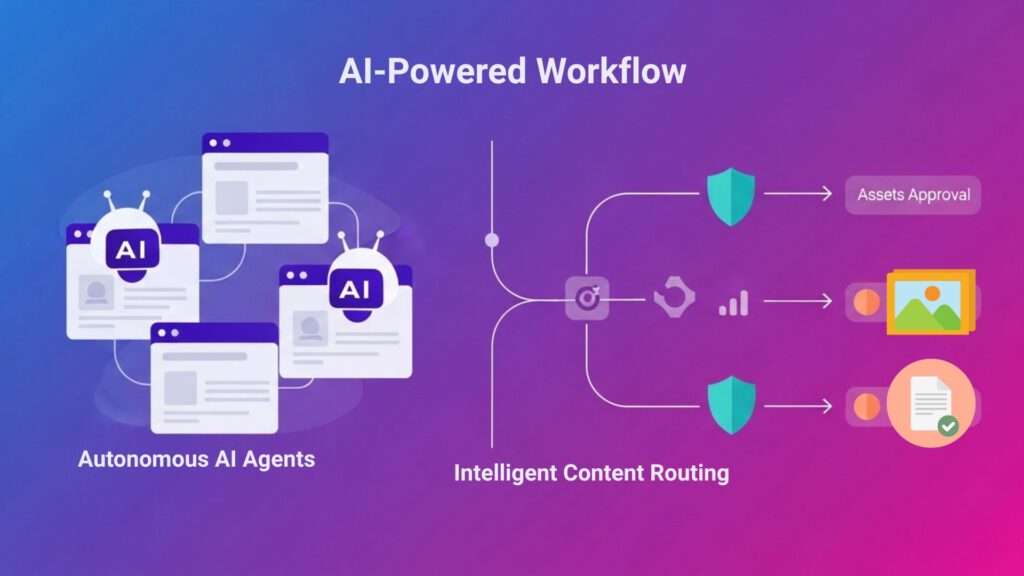
What makes integrated platforms special? They combine digital asset management with workflow intelligence, creating systems that understand both the content and the business processes around it. Teams report scaling content creation by over 80% while maintaining quality standards and reducing time-to-market.
Marketing Automation Platforms with AI-Driven Workflows
Many traditional marketing platforms now include AI-enhanced workflow capabilities, though they vary widely in sophistication. The key difference lies in how well these platforms understand content context versus simply moving data between systems.
Platforms with integrated CRM data can make smarter workflow decisions by considering customer journey stages and behavioral patterns. However, teams managing complex creative assets often find themselves needing additional systems for comprehensive content ops.
These platforms typically excel at communication workflows and lead-nurturing sequences. They work well for behavioral-based automation in email marketing and customer engagement, though they’re built for communication workflows rather than comprehensive content operations.
Supplementary Automation Tools
Many organizations use lightweight automation platforms to connect legacy systems or handle narrow tasks. Zapier now incorporates GPT-powered logic and AI-driven data processing to accelerate routine handoffs between tools, but these workflows remain transactional in nature.
Gumloop represents a newer class of AI-native automation solutions built around large language model interactions. These platforms work well for specific content creation or transformation tasks, but they lack the governance, compliance controls, and end-to-end visibility required for enterprise content lifecycle management.
These tools can fill operational gaps, but they aren’t substitutes for a platform designed to manage the full content lifecycle. Marketing organizations ultimately need deeper content intelligence, workflow automation, and governance capabilities to operate at scale.
How Should Teams Think About Building Intelligent Content Workflows?
The smartest approach starts with understanding your content lifecycle as a whole. Most teams focus on individual pain points (slow approvals, inconsistent posting, compliance issues) without seeing how these challenges connect to broader workflow inefficiencies.
Start with content intelligence, then add automation. Platforms that understand your content characteristics, brand requirements, and audience preferences can make much smarter workflow decisions than systems that simply move tasks between people.
Prioritize integration depth over breadth. A comprehensive content operations platform that handles 80% of your workflows intelligently beats connecting 20 different tools that each handle 10% effectively.
Think in workflows, not tools. The best AI workflow automation tools understand that marketing success depends on coordinating complex, multi-step processes across creative, legal, marketing, and distribution teams. Individual point solutions can’t orchestrate these sophisticated interactions.
What Features Actually Matter for Marketing Workflow Success?
Beyond basic automation, marketing teams need platforms that understand the nuances of content-driven work.
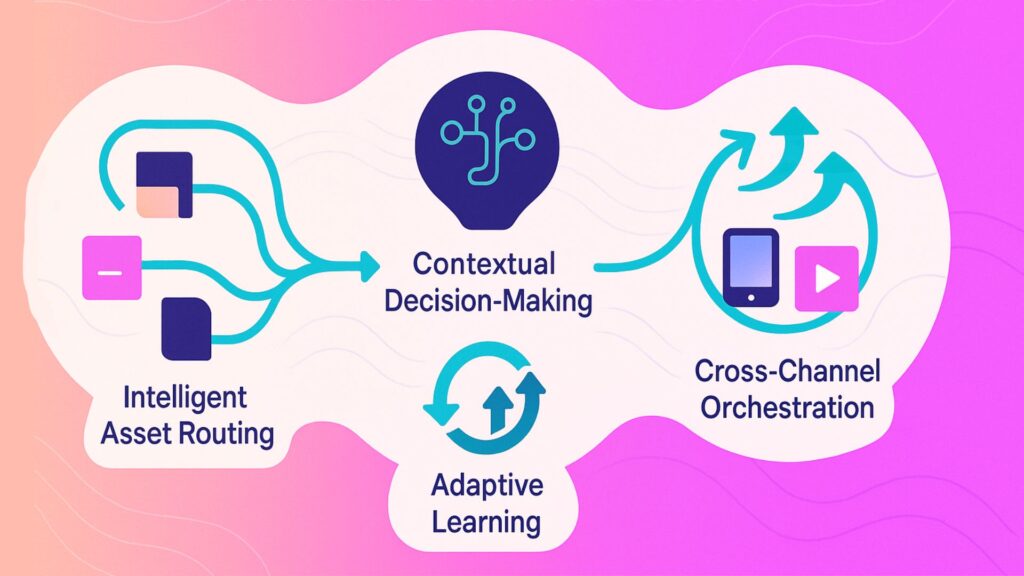
- Intelligent asset routing involves AI systems that can evaluate content characteristics and automatically determine appropriate approval workflows.
- Contextual decision-making is the biggest differentiator between basic automation and true workflow intelligence. Advanced platforms can automatically assess brand compliance, predict campaign performance, and optimize distribution strategies based on comprehensive audience data.
- Adaptive learning capabilities ensure workflows improve over time rather than following static rules. The best systems learn from approval patterns, content performance data, and team behaviors to continuously optimize processes.
- Cross-channel orchestration becomes essential as marketing complexity increases. Teams need systems that can coordinate content deployment across email, social media, advertising, and website channels while maintaining consistent messaging and timing.
Marketing automation can lead to a 14.5% increase in sales productivity and a 12.2% reduction in marketing overhead when implemented strategically across comprehensive content workflows.
Which Implementation Strategy Sets Teams Up for Long-Term Success?
Smart teams treat AI workflow automation as a platform decision rather than a collection of tool choices. Starting with comprehensive content operations platforms provides the foundation for sophisticated automation that actually understands marketing context.

Begin with your highest volume, most standardized workflows. Content approval processes, asset distribution, and compliance checking offer excellent starting points because they combine clear business value with measurable efficiency gains.
Data preparation matters more than most teams realize. AI workflow automation tools work best with clean, well-structured content libraries and consistent metadata. Investing in data quality upfront pays dividends as automation sophistication increases.
Plan for scale from day one. The workflows you build should accommodate growth in content volume, team size, and market complexity. Platforms designed specifically for enterprise content ops handle this scaling much better than collections of point solutions.
Focus training on strategic thinking over tool operation. When automation handles routine tasks effectively, team members can focus on creative strategy, audience insights, and campaign optimization. This shift requires deliberate change management to help teams embrace their evolving roles.
What Does the Future Hold for Marketing Workflow Intelligence?
The future points toward more sophisticated AI agents that can autonomously handle increasingly complex marketing decisions. We’re moving beyond task automation toward strategic intelligence that can evaluate campaign opportunities, optimize resource allocation, and predict market responses.
Agentic AI systems will become standard for content operations, handling everything from creative brief analysis to campaign performance optimization. These systems will adapt strategies based on real-time data and market conditions.
Natural language workflow creation will democratize access to sophisticated automation. Marketing professionals will describe desired outcomes in plain English, and AI systems will build the appropriate workflows automatically.
Predictive content intelligence will enable teams to anticipate content needs, trending topics, and audience preferences before they become obvious through traditional analytics. This capability will shift marketing from reactive to genuinely proactive.
The teams that understand content operations as integrated systems rather than collections of tools will have significant advantages in the future of marketing.
FAQ
What’s the difference between basic workflow automation tools and content operations platforms? Basic automation tools connect apps and trigger simple actions. Content operations platforms combine deep content intelligence with workflow automation, enabling AI systems that understand brand requirements, audience preferences, and marketing context to make sophisticated decisions autonomously.
How do agentic AI workflow tools improve on traditional automation? Agentic AI workflow tools operate as autonomous digital workers that can evaluate content, make decisions, and adapt to changing conditions without human intervention. Unlike rule-based automation, they learn from outcomes and continuously improve their decision-making capabilities.
Which approach works better: integrated platforms or connecting multiple specialized tools? Integrated content operations platforms typically deliver better results because they provide unified intelligence across the entire content lifecycle. Connected specialized tools often create data silos that limit AI effectiveness and require constant manual coordination.
How can teams measure ROI from AI workflow automation investments? Focus on metrics beyond task efficiency: content velocity, campaign performance improvements, compliance accuracy, and team capacity for strategic work.
What should teams prioritize when evaluating workflow automation platforms? Prioritize content intelligence capabilities over feature breadth. Look for platforms that understand your content characteristics, integrate with creative tools, and can scale with growing complexity. Deep integration matters more than extensive app connections.
Workflow Automation that Actually Understands Marketing
The most successful marketing teams aren’t the ones with the most automation tools but the ones with the smartest automation systems. Platforms that truly understand content operations deliver exponentially better results than collections of connected apps. As organizations scale, they need technology that can automate the mundane, strengthen governance, and adapt seamlessly to an increasingly complex ecosystem.
Aprimo brings this discipline to life with AI-powered workflows, predictive metadata, intelligent reviews, and real-time content intelligence that streamline even the most intricate content operations. Our composable architecture and deep integration capabilities ensure teams can orchestrate creation, governance, and delivery with unmatched efficiency and control. Discover how Aprimo’s intelligent content operations platform combines deep content intelligence with sophisticated workflow automation to help teams create, manage, and optimize content at unprecedented scale.