

AI-powered marketing revolutionizes digital asset management by enabling smarter, data-driven decisions at unprecedented speed and scale. Key benefits include:
- Automated metadata tagging that improves asset discoverability
- Predictive analytics that guide content strategy based on performance data
- Intelligent workflows that streamline approval processes
Organizations using AI marketing tools in DAM see faster content creation cycles and reduced operational costs while achieving measurable ROI improvements.
Marketing teams are drowning in decisions. Which assets will resonate with audiences? How should budgets be allocated across campaigns? What content should be created next? These choices, multiplied across thousands of digital assets and countless touchpoints, can overwhelm even the most experienced professionals.
The solution isn’t working harder; it’s working smarter. AI-powered marketing is transforming how organizations approach decision-making in digital asset management, turning reactive content operations into proactive, data-driven strategies. By using artificial intelligence to analyze patterns, predict outcomes, and automate routine choices, marketing teams can focus on creative strategy while intelligent systems handle the logistics.
How Can AI-Powered Marketing Transform Decision-Making in DAM?
Modern marketing demands quick decisions across an ever-expanding landscape of content, channels, and customer touchpoints. Traditional approaches that rely on intuition and manual analysis simply can’t keep up.
AI-powered marketing changes the game by giving decision-makers real-time insights from comprehensive data analysis. Rather than making choices based on limited information or past assumptions, marketing professionals get intelligent recommendations that consider multiple variables at once.
Here’s where it gets interesting: AI can process data at a scale humans simply can’t match. While a marketing manager might analyze dozens of performance metrics to determine which assets to promote, AI systems can simultaneously evaluate thousands of data points—user behavior patterns, seasonal trends, competitive shifts, and historical performance data. What used to take hours or days of manual digging now happens in milliseconds.
Companies leveraging AI in marketing see 20–30% higher ROI on campaigns compared to those relying on traditional methods. This improvement stems largely from the quality and speed of decision-making that AI enables.
What AI Marketing Tools Drive Better Asset Decisions?
AI marketing tools continue evolving, but three categories consistently deliver the most impactful results for digital asset management decision-making.
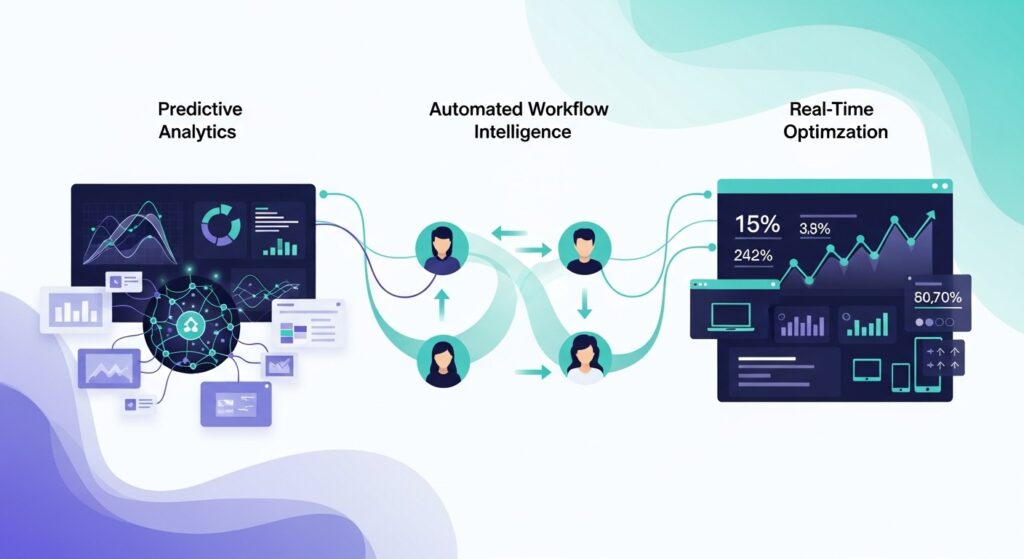
Predictive Analytics for Content Performance
Predictive analytics tools analyze historical performance data, audience behavior patterns, and market trends to forecast which assets will perform best in specific contexts. These systems identify subtle correlations between content characteristics and engagement outcomes that human analysis might miss.
For example, predictive models might determine that product images featuring lifestyle contexts generate 40% higher conversion rates during specific seasonal periods or that certain color palettes resonate more strongly with particular demographic segments. This intelligence enables marketing teams to prioritize asset creation and selection based on predicted performance rather than guesswork.
Today’s predictive analytics platforms can factor in real-time market conditions, competitive activity, and external events—even weather patterns or trending social media topics—to refine their forecasts.
Automated Workflow Intelligence
Intelligent workflow systems transform decision-making from manual routing to automated optimization. AI tools analyze current team capacity, project deadlines, asset complexity, and approval requirements to automatically determine the most efficient path for each piece of content.
Rather than marketing managers spending time deciding who should review what content when, AI systems can instantly assess current workloads and route assets to available team members with appropriate expertise. This automation extends to budget allocation decisions, campaign timing optimization, and resource assignment across multiple projects.
Real-Time Asset Optimization
Real-time optimization tools continuously monitor asset performance across channels and automatically adjust distribution, formatting, or targeting based on emerging data. These systems make thousands of micro-decisions daily, optimizing everything from image compression for different devices to audience targeting for social media campaigns.
The results speak for themselves. Organizations using AI-driven decision-making tools report conversion rates 14% higher than traditional marketing approaches, primarily due to the speed and accuracy of automated optimizations.
Which Marketing Decisions Benefit Most from AI in DAM?
While AI can enhance almost any marketing decision, certain areas see particularly dramatic improvements when artificial intelligence is applied to digital asset management workflows.
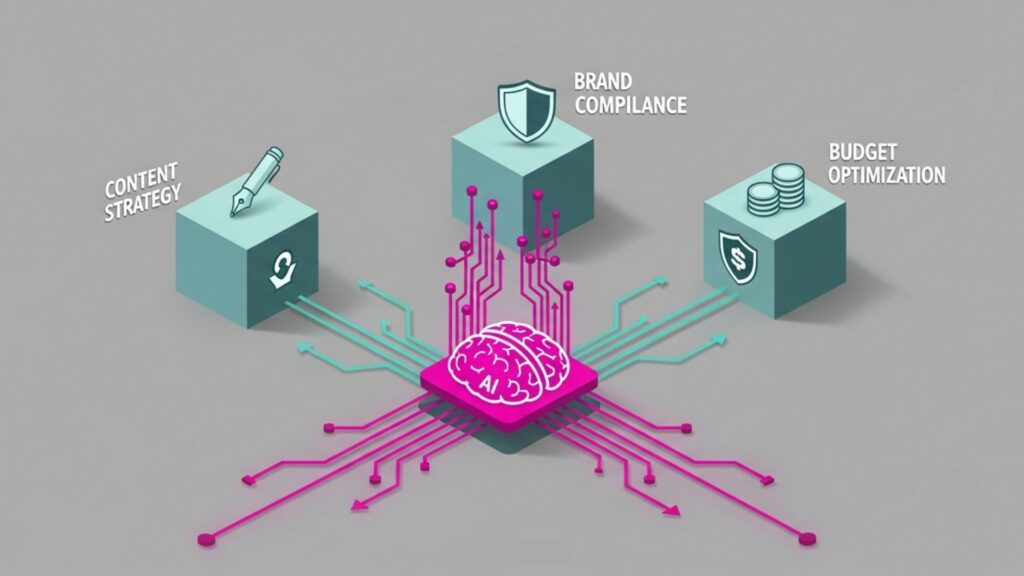
Content Strategy and Planning
AI excels at spotting content gaps and opportunities that human analysts might miss. By analyzing customer journey data, competitive content mapping, and performance trends, AI systems can recommend specific content types, formats, and themes that align with your business objectives.
Beyond performance metrics, AI can identify emerging topics gaining traction in your target markets, predict seasonal content needs based on historical patterns, and recommend optimal content mix across different asset types. Marketing teams see improved content relevance when using AI-driven content planning tools.
Brand Compliance and Governance
Brand governance decisions traditionally required manual review by specialists who checked every asset against brand guidelines. AI-powered compliance tools can automatically scan assets for brand violations, suggest corrections, and route non-compliant content for human review.
Automation is particularly valuable for global organizations managing brand consistency across multiple markets, languages, and cultural contexts. AI systems can identify subtle brand deviations that might pass human inspection while processing thousands of assets.
Resource Allocation and Budget Optimization
Budget allocation decisions often rely on historical performance data and educated guesses about future outcomes. AI marketing tools can analyze budget distribution across channels, asset types, and campaigns to recommend smarter resource allocation strategies.
These systems consider factors like audience overlap, channel performance variations, seasonal trends, and competitive spending patterns to suggest budget redistributions that maximize return on investment. Early adopters report 10–20% average ROI improvements in sales when implementing AI-driven budget optimization.
How Do Leading Organizations Implement AI Marketing Decision-Making?
Successful AI implementation for marketing decision-making follows consistent patterns across high-performing organizations. Here are five proven approaches that drive results:
- Start with Data Foundation Building: Leading organizations invest heavily in data quality and integration before deploying AI tools. They consolidate customer data, asset performance metrics, and campaign results into unified platforms that AI systems can analyze.
- Focus on High-Impact Use Cases First: Rather than attempting comprehensive AI deployment, successful teams identify specific decision-making bottlenecks where AI can deliver immediate value. Common starting points include automated asset tagging, performance prediction for similar content types, and basic workflow routing.
- Combine Human Expertise with AI Insights: The most effective implementations treat AI as decision support rather than decision replacement. Marketing professionals use AI-generated insights to inform their strategic choices while maintaining creative control and strategic oversight.
- Implement Continuous Learning Loops: AI systems improve through feedback, so leading organizations establish processes for capturing decision outcomes and feeding results back into their machine learning models. This loop creates increasingly accurate recommendations over time.
- Scale Gradually with Proven Success: Organizations that achieve the highest ROI from AI marketing tools expand their implementations methodically, adding new capabilities only after demonstrating success with foundational applications.
What Are the Measurable Benefits of AI-Powered Marketing in DAM?
The business impact of AI-powered marketing in digital asset management goes way beyond efficiency improvements. Organizations implementing these technologies report measurable gains across multiple performance dimensions.
Operational efficiency sees immediate improvement. Teams using AI marketing tools reduce asset creation time while maintaining quality standards. With more hours in the day, marketing professionals can focus on strategic work instead of administrative tasks.
Cost management benefits are substantial. Companies implementing AI-powered marketing decision-making achieve a 37% reduction in operational costs, such as customer acquisition, while scaling content operations. These savings come primarily from automation of manual processes and optimization of resource allocation.
The revenue impact demonstrates the strategic value of implementing AI. Businesses using generative AI in customer management saw ROI growth of 5–10%.
Organizations are also seeing better decision quality across the board. AI systems give marketing teams data-driven insights that lead to more accurate predictions, smarter resource use, and improved campaign outcomes.
How to Get Started with AI-Enhanced Marketing Decisions
Implementing AI-powered marketing requires strategic planning, but organizations can begin realizing benefits quickly by following a structured approach.
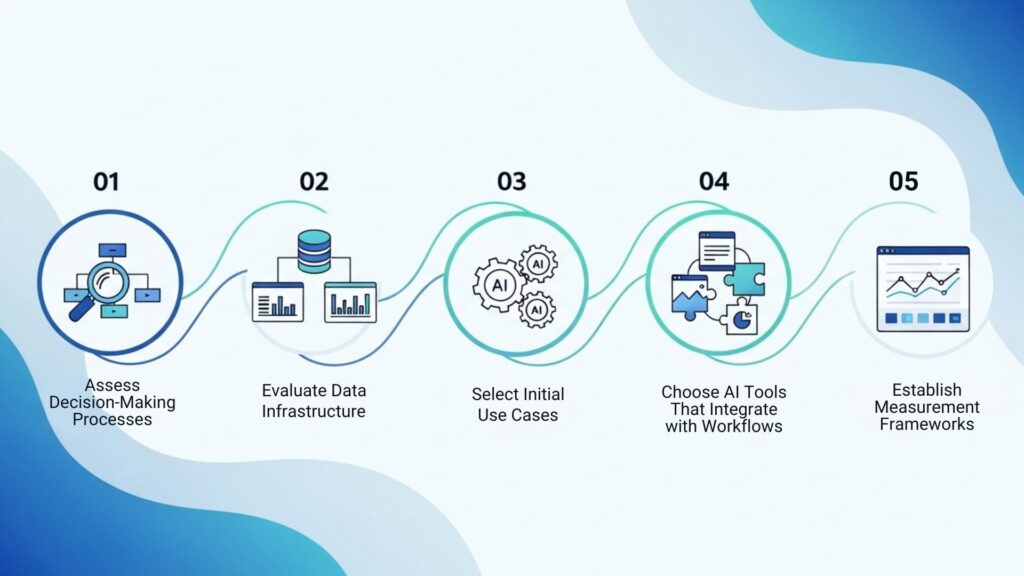
Begin by assessing your current decision-making processes. Identify areas where marketing teams spend significant time on routine choices, experience bottlenecks in asset selection, or struggle with performance prediction. These pain points are the most valuable opportunities for AI implementation.
Evaluate existing data infrastructure and quality. AI systems require clean, comprehensive data to generate accurate insights. Organizations should audit their current data collection, storage, and integration capabilities before selecting AI tools.
Select initial use cases based on potential impact and implementation complexity. Simple applications like automated metadata tagging or basic performance prediction often provide quick wins that build organizational confidence in AI capabilities.
Choose AI marketing tools that integrate with existing workflows rather than requiring complete system replacement. The most successful implementations enhance current processes rather than forcing teams to adopt entirely new working methods.
Establish measurement frameworks for tracking AI impact on decision quality and business outcomes. Clear metrics enable teams to demonstrate value and guide future investment in AI capabilities.
Frequently Asked Questions
What’s the difference between AI-powered marketing and traditional marketing automation? AI-powered marketing uses machine learning to make intelligent decisions based on real-time data analysis, while traditional automation follows predetermined rules and workflows. AI systems adapt and improve over time, while automation tools execute fixed processes.
Do AI marketing tools require technical expertise to implement? Modern AI marketing platforms are designed for marketing professionals rather than technical specialists. While some setup and training is required, most tools offer intuitive interfaces and guided implementation processes that don’t require coding or data science skills.
Can AI marketing tools integrate with existing DAM systems? Yes, most AI marketing tools are built to integrate with existing digital asset management platforms through APIs and standard connectors. Organizations can enhance their current systems rather than replacing them entirely.
What data is required for AI marketing tools to be effective? AI marketing tools typically need historical performance data, user behavior information, and content metadata to generate accurate insights. The quality and comprehensiveness of this data directly impact the effectiveness of AI recommendations and predictions.
Transform Your Marketing Strategy with Intelligent Decision-Making
The evolution from manual to AI-powered marketing is a smart shift toward data-driven strategy that enables unprecedented scale, speed, and precision in content operations. By leveraging AI marketing tools to enhance decision-making capabilities, marketing teams can focus on creativity and strategic thinking while intelligent systems handle routine optimization tasks.
AI-powered marketing delivers measurable improvements in efficiency, performance, and ROI when properly implemented. Aprimo’s intelligent content operations platform combines advanced AI capabilities with comprehensive DAM functionality to streamline your marketing decisions and deliver exceptional results at scale. Get started with a demo today and discover how AI can revolutionize your content operations.