

LLMs are revolutionizing enterprise operations, transforming manual workflows into intelligent, automated systems powered by advanced content automation.
- AI-powered workflows reduce manual content tasks.
- LLMs enable predictive content optimization and automated metadata generation.
- Enterprise teams see faster asset discovery with LLM integration.
- Content intelligence provides strategic insights for measurable ROI.
Organizations must adopt LLM-powered content operations to remain competitive in the AI-driven landscape.
Content operations are experiencing their most significant transformation since digital asset management systems. Large language models are reshaping how enterprises create, manage, and optimize content across every stage of the lifecycle.
Think about how much content your marketing team cranks out every single day—campaign materials, social posts, product docs, regulatory communications, the list goes on. Traditional content operations relied heavily on manual processes for tagging, categorization, and workflow management. LLM content operations change this paradigm entirely by introducing intelligent automation that learns, adapts, and optimizes based on actual usage patterns and business outcomes.
According to McKinsey research, 92 percent of companies plan to increase their AI investments over the next three years, with content operations representing one of the highest impact application areas. Organizations implementing LLM report dramatic improvements in efficiency, consistency, and strategic alignment across their marketing technology stack.
What Are LLMs and Why Do They Matter for Content Operations?
Large language models are a breakthrough in artificial intelligence that enables machines to understand, generate, and manipulate human language with unprecedented sophistication. Here’s where LLMs really shine: they don’t just match keywords like old-school systems. They actually understand what your content means, what it’s trying to accomplish, and how different pieces connect to each other.
In the context of content operations, this capability transforms how organizations approach every aspect of their content lifecycle. LLMs can analyze existing assets to identify patterns, predict performance outcomes, and automatically generate metadata that improves discoverability and reuse. They excel at understanding brand voice, compliance requirements, and audience preferences, enabling more intelligent content creation and distribution decisions.
The global LLM market is projected to reach $35 billion by 2030, growing at a compound annual growth rate of nearly 37 percent. This growth reflects the technology’s proven ability to deliver measurable business value across industries and use cases. For content operations specifically, early adopters are already seeing significant returns on their LLM investments through reduced manual overhead, improved content quality, and more strategic resource allocation.
Enterprise adoption of large language models in marketing has accelerated as organizations recognize their potential to solve long-standing content operations challenges. From Fortune 500 companies to mid-market businesses, teams are discovering that LLMs provide the intelligence layer needed to transform content from a cost center into a strategic advantage.
How Do LLMs Transform Traditional Content Workflows?
Traditional content workflows follow linear, manual processes that create bottlenecks and inconsistencies. Content creators develop assets, submit them for review, wait for approval feedback, make revisions, and repeat until final approval. Each step requires human intervention, creating delays and potential for errors or miscommunication.
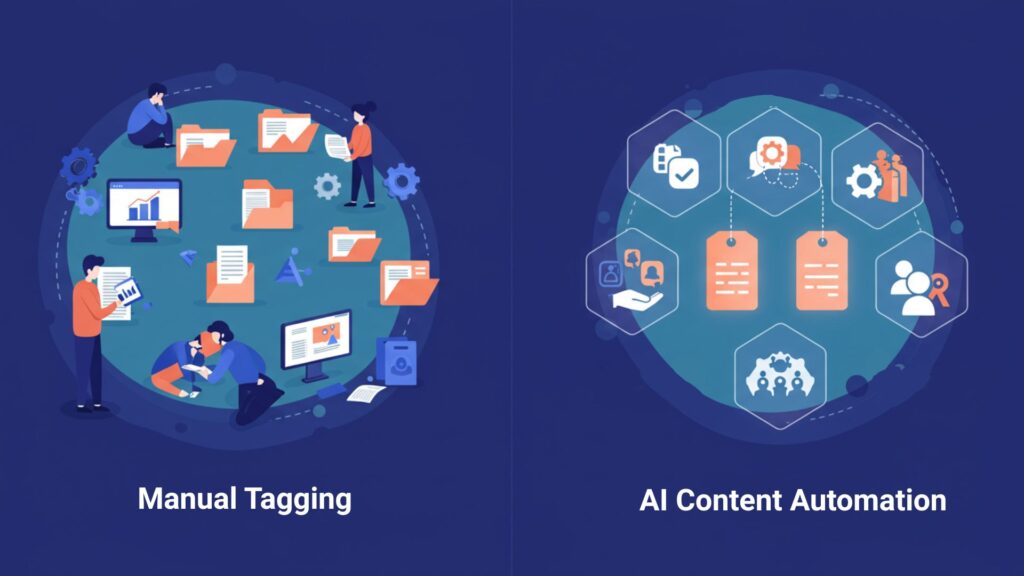
From Manual Tagging to Intelligent Automation
LLM content operations restructure workflows by introducing intelligent automation at every stage. Instead of requiring editors to manually tag assets with metadata, AI content workflow systems analyze visual and textual content to automatically generate comprehensive, relevant tags. We’re talking about automation that handles brand compliance checks, predicts how content will perform, and even suggests ways to make it better.
It all starts the moment content hits your system. LLMs jump in right away, scanning everything from visuals to text, checking if it’s on-brand, and figuring out where it’ll work best.This analysis generates rich metadata that improves searchability and enables intelligent content recommendations. Teams report finding relevant assets faster when LLM-powered search capabilities replace traditional keyword-based systems.
Predictive Content Analytics and Performance Insights
Traditional content operations provide limited insight into which assets perform best and why. LLMs analyze historical performance data, audience engagement patterns, and market trends to predict how new content will perform across different channels and audience segments. This predictive capability enables teams to make more informed decisions about content creation priorities and resource allocation.
Advanced LLM implementations can identify content gaps by analyzing existing asset libraries against market demands and competitive landscapes. They surface opportunities for new content that addresses unmet audience needs while maintaining brand consistency and compliance standards. This insight transforms content planning from reactive to proactive, enabling teams to stay ahead of market demands.

Streamlined Review and Compliance Processes
Compliance review is one of the most time-intensive aspects of traditional content operations, particularly for regulated industries like healthcare, financial services, and pharmaceuticals. LLMs streamline these processes by automatically flagging potential compliance issues, brand guideline violations, or legal concerns before content reaches human reviewers.
AI content workflow systems learn from historical review patterns to identify subtle compliance risks that might escape manual review. They can detect inconsistent brand messaging, inappropriate tone for specific audiences, or missing required disclaimers and disclosures. This automation reduces review cycles while improving overall compliance quality and consistency.
What Are the Key Enterprise Applications of LLM Content Operations?
Enterprise organizations leverage LLM content operations across diverse use cases, from operational efficiency improvements to strategic content optimization. The most impactful implementations focus on areas where intelligent automation can deliver immediate value while building foundation capabilities for future innovation.

Automated Metadata Generation and Asset Enrichment
Let’s be honest—manual tagging takes forever and nobody does it the same way. That’s how assets end up buried in your content library, never to be seen again. LLMs automatically generate detailed, contextually relevant metadata for every asset type, including images, videos, documents, and multimedia content.
This automated enrichment includes sentiment analysis, audience targeting recommendations, and cross-channel optimization suggestions. Automated metadata generation can improve content discoverability while reducing the time required for manual tagging. These improvements compound over time as LLMs learn from usage patterns and user feedback.
Advanced implementations integrate brand guidelines and compliance requirements directly into the metadata generation process. All automatically generated tags and descriptions align with organizational standards while identifying potential optimization opportunities. The payoff? Your content library actually gets better and easier to use as it grows, instead of turning into an overwhelming mess.
Content Intelligence and Gap Analysis
Strategic content planning traditionally relies on intuition and limited analytics to guide creation priorities. LLM-powered content intelligence provides data-driven insights into content performance, audience preferences, and market opportunities. These systems analyze vast amounts of structured and unstructured data to identify patterns and trends that inform strategic decision-making.
Content gap analysis is a valuable application of this intelligence capability. LLMs can compare existing content libraries against competitor offerings, search trends, and audience behavior to identify opportunities for new content that addresses unmet needs. This analysis considers factors like seasonal demand, emerging topics, and audience segment preferences to prioritize content creation efforts for maximum impact.
The insights generated by content intelligence systems enable teams to shift from reactive content creation to strategic content planning. Rather than responding to immediate requests, teams can anticipate needs and develop content that drives business outcomes while maintaining brand consistency and message alignment.
Multi-Channel Personalization at Scale
Modern marketing requires content personalization across numerous channels, audience segments, and customer journey stages. Try personalizing content manually across dozens of channels and audience segments—you’ll run out of steam fast as the variations multiply. LLMs enable personalization at scale by automatically generating appropriate content variations for different contexts while maintaining brand consistency and message integrity.
This capability includes intelligent content adaptation based on audience characteristics, channel requirements, and performance data. For example, an LLM can automatically adapt a product announcement for different social media platforms, email campaigns, and website placements while ensuring consistent messaging and appropriate tone for each context.
The scalability advantages become particularly apparent in global organizations that must adapt content for different markets, languages, and cultural contexts. LLMs can maintain brand consistency while adapting messaging for local preferences and regulatory requirements, enabling truly global content operations without proportional increases in manual effort.
How Do LLMs Eliminate Manual Content Tasks?
The operational impact of LLM content operations becomes most apparent when examining specific manual tasks that AI automation can eliminate or significantly streamline. These improvements free up creative teams to focus on strategic work while ensuring consistent, high-quality output across all content operations.
1. Automated Content Tagging and Categorization
Traditional content tagging requires editors to manually review each asset and assign appropriate metadata tags, categories, and descriptions. This process is time-intensive, subjective, and prone to inconsistency among team members. LLM content operations automate this entire process by analyzing content contextually and automatically generating comprehensive, consistent metadata.
Automation includes emotional tone, target audience suitability, and cross-channel optimization recommendations. Teams using automated tagging report reductions in manual metadata creation time while achieving higher consistency and discoverability scores across their content libraries.
2. Intelligent Content Gap Analysis
Identifying content gaps traditionally requires extensive manual research, competitive analysis, and intuitive judgment about market opportunities. This process often overlooks subtle patterns or emerging trends that could become opportunities. LLM-powered gap analysis automates this research by continuously monitoring market trends, competitor activity, and audience behavior to identify specific content opportunities.
Advanced implementations can quantify the potential impact of addressing specific content gaps, enabling teams to prioritize creation efforts based on projected business value rather than subjective preferences.
3. Workflow Optimization and Smart Routing
Content automation and approval workflows traditionally follow fixed paths regardless of content type, urgency, or complexity. The problem? Simple stuff gets stuck waiting for approvals it doesn’t need, while complex content that actually needs scrutiny might slip through too quickly. LLM-powered workflow optimization analyzes characteristics to automatically route assets through appropriate approval paths.
Smart routing considers factors like content complexity, regulatory requirements, brand risk levels, and historical approval patterns to optimize workflow efficiency. Simple updates might bypass certain review stages entirely, while high-risk content receives additional scrutiny and specialized review. This intelligent routing reduces average approval times while improving overall quality and compliance.
4. Brand Compliance and Safety Checks
Manual brand compliance review requires specialized expertise and significant time investment, particularly for organizations with complex brand guidelines or regulatory requirements. LLMs automate initial compliance screening by analyzing content against established guidelines, identifying potential issues, and flagging content that requires human review.
These automated checks can identify subtle compliance issues that might escape manual review, including inconsistent brand voice, inappropriate imagery for specific audiences, or missing required legal disclaimers. The result is higher compliance quality with reduced manual effort, enabling teams to scale content operations without proportional increases in compliance overhead.
5. Performance Analytics and Reporting Automation
Traditional content performance analysis requires manual data collection, analysis, and reporting that consumes time while often providing limited actionable insights. AI content workflows automate this entire process by continuously monitoring content performance across channels and generating insights and recommendations.
Automated reporting identifies patterns, predicts trends, and recommends optimization actions based on performance data. Teams receive actionable insights without manual analysis, enabling faster optimization cycles and more strategic decision-making about future content priorities.
What Should Organizations Know About Implementing LLM Content Operations?
Organizations that approach implementation systematically achieve better outcomes while avoiding common pitfalls that can delay benefits or create user resistance.
Selecting the Right LLM Integration Strategy
LLM platforms and integration options continue evolving, making technology selection an important decision that impacts long-term success. Organizations must evaluate their specific needs, existing technology infrastructure, and growth plans to select appropriate LLM capabilities and integration approaches.
IBM’s research on AI workflows indicates that 80% of organizations pursue end-to-end automation of business processes, but successful implementations require careful consideration of which processes benefit most from LLM integration. Starting with high-impact, low-complexity use cases enables teams to build confidence and expertise before tackling more complex automation scenarios.
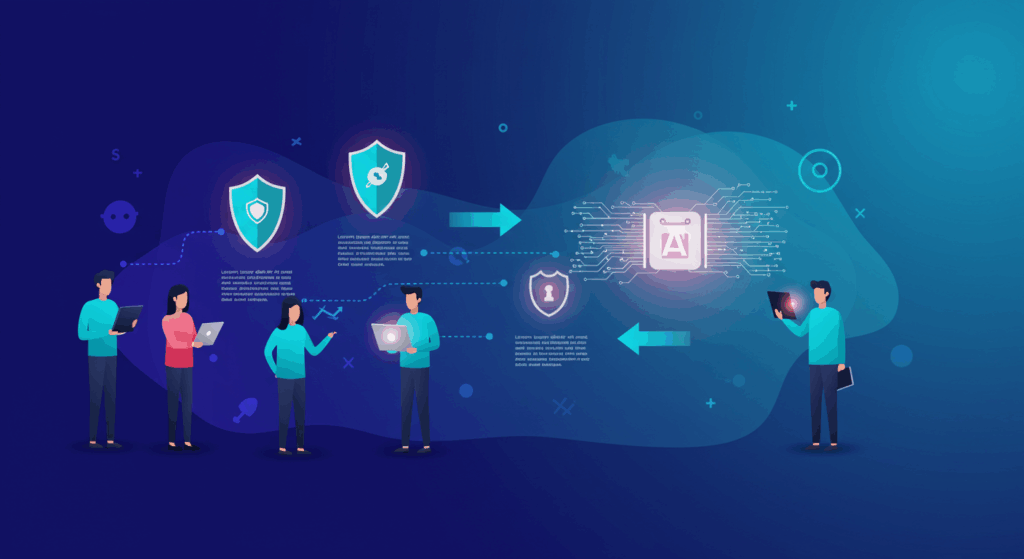
Integration strategies should consider factors like data security requirements, compliance obligations, and existing technology investments. Organizations in regulated industries may require on-premises or private cloud deployments, while others can leverage cloud-based LLM services for faster implementation and lower upfront costs. The key is selecting an approach that aligns with organizational requirements while providing flexibility for future expansion.
Training Models on Brand Guidelines and Content Standards
Sure, out-of-the-box LLMs are powerful, but your enterprise needs them trained on your specific brand guidelines, compliance rules, and quality standards to really work. This customization involves training models on organizational content examples, style guidelines, and approval criteria to ensure consistent, on-brand output.
The training process should include diverse content examples that represent the full range of organizational content types, audiences, and use cases. High-quality training data produces better automation results, making the initial investment in comprehensive training datasets worthwhile for long-term value realization.
Organizations should also establish processes for continuous model improvement based on user feedback and performance monitoring. LLMs improve over time as they learn from corrections and updates, making ongoing training investment crucial for maintaining and improving automation quality.
Measuring ROI and Success Metrics
Implementing LLM content operations requires clear success metrics and measurement frameworks to justify investment and guide optimization efforts. Traditional content operations metrics like production volume and approval times remain relevant, but organizations should also measure AI-specific benefits like automation accuracy, user adoption rates, and strategic impact indicators.
Organizations implementing AI workflow automation report time savings for content team members. Those time savings mean real money back in your budget and more bandwidth for strategic work. Just make sure you’re tracking both the hard numbers and the softer benefits to get the full picture.
Success metrics should align with broader business objectives while providing actionable insights for optimization. Metrics like content discovery rates, reuse frequency, and time-to-market improvements demonstrate value beyond simple efficiency gains, helping justify continued investment and expansion of LLM capabilities.
What Does the Future Hold for LLM-Powered Content Operations?
The evolution of LLM content operations continues accelerating as technology capabilities advance and organizations gain experience with AI-powered workflows. Generative engine optimization can boost content visibility by up to 40%, indicating the strategic importance of AI-optimized content operations.
Emerging capabilities include more sophisticated multimodal content analysis that can understand relationships between text, images, video, and audio content within unified workflows. These advances enable more comprehensive content intelligence and automation that considers all content elements rather than analyzing each type separately.
The integration of LLMs with broader marketing technology ecosystems will also expand, enabling seamless content operations that span creation, distribution, performance optimization, and strategic planning.
Advanced personalization capabilities are another frontier for LLM content operations. Future implementations will enable real-time content optimization based on individual user preferences, behavior patterns, and contextual factors, creating truly personalized content experiences at enterprise scale.
Frequently Asked Questions
How do LLMs improve content discoverability in enterprise DAM systems?
LLMs enhance content discoverability by automatically generating comprehensive, contextually relevant metadata for all asset types. Unlike traditional keyword-based tagging, LLMs understand content context and meaning, creating rich descriptions that improve search accuracy and enable intelligent content recommendations.
What ROI should organizations expect from LLM content operations?
Organizations implementing LLM content operations typically report reductions in manual content management tasks, translating to hours of daily time savings per team member. Additional benefits include improved content quality, faster time-to-market, and better strategic alignment of content creation efforts. Most organizations achieve positive ROI within 12 months of implementation through efficiency gains and improved content performance.
How do LLMs integrate with existing content management workflows?
LLMs integrate with existing workflows through APIs and automated connectors that work with popular content management systems, digital asset management platforms, and marketing technology tools. The integration process typically involves connecting LLM capabilities to existing content repositories and workflow systems rather than replacing entire technology stacks. This approach enables organizations to enhance current operations while preserving existing investments and user familiarity.
How Can Organizations Transform Their Content Operations with AI Intelligence?
The transition to LLM-powered content operations is an opportunity and a necessity for organizations seeking to maintain a competitive advantage. Early adopters are already demonstrating significant benefits, including reduced operational overhead, improved content quality, and more strategic resource allocation.Content operations powered by large language models deliver measurable improvements in efficiency, quality, and strategic impact while positioning organizations for future AI advances. Aprimo’s AI-powered content operations platform combines advanced LLM capabilities with enterprise-grade workflow automation to help organizations transform their content operations and achieve measurable business results. Book a demo today to see our AI intelligence in action.