

Key Takeaways
Content intelligence bridges the gap between content creation and measurable business outcomes by revealing which assets drive revenue.
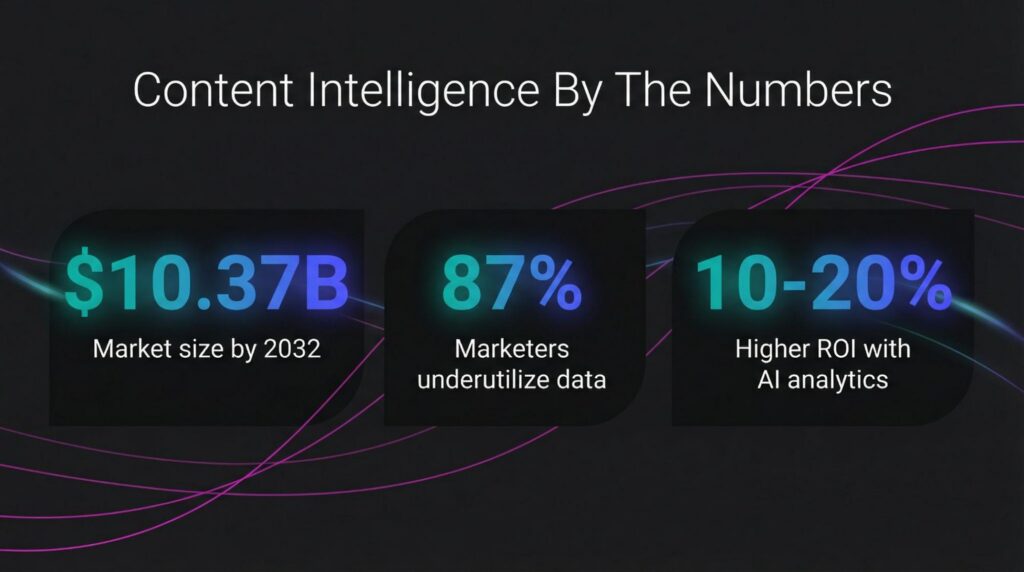
- The global market for these analytics capabilities is projected to reach $10.37 billion by 2032, reflecting urgent demand for data-driven content strategies.
- Organizations leveraging AI-driven analytics report 10-20% higher ROI from their marketing investments according to McKinsey research.
- Traditional content operations platforms only store and organize assets; intelligent analytics actively predict which content will perform and why.
If your digital assets aren’t generating actionable data, they’re just expensive files collecting digital dust.
Why Does Content Intelligence Matter for Revenue Growth?
Marketing teams produce more content than ever before, yet most struggle to connect that output to tangible business results. According to HubSpot’s 2025 Marketing Report, nearly 87% of marketers say data remains their company’s most underutilized asset. The disconnect between content creation and revenue attribution costs organizations millions in wasted effort and missed opportunities.
Content intelligence solves this challenge by applying AI, machine learning, and advanced analytics to every piece of content your organization creates, stores, and distributes. Rather than treating digital assets as static files, these intelligent systems transform them into dynamic data points that reveal audience behavior, predict performance outcomes, and guide strategic decisions. The result is a fundamental shift from reactive content management to proactive revenue optimization.
The financial case for these capabilities grows stronger each year. Fortune Business Insights reports the global market will expand from $2.77 billion in 2025 to over $10 billion by 2032. This explosive growth signals that forward-thinking organizations recognize content as a strategic asset requiring intelligent management rather than a cost center to minimize.
Moving Beyond Vanity Metrics
Traditional DAM analytics focus on surface-level data: download counts, storage usage, and basic engagement numbers. While useful for operational purposes, these metrics fail to answer the questions that matter most to leadership. Which content drives conversions? What assets influence purchasing decisions across the customer journey? Where should teams invest their creative resources for maximum impact?
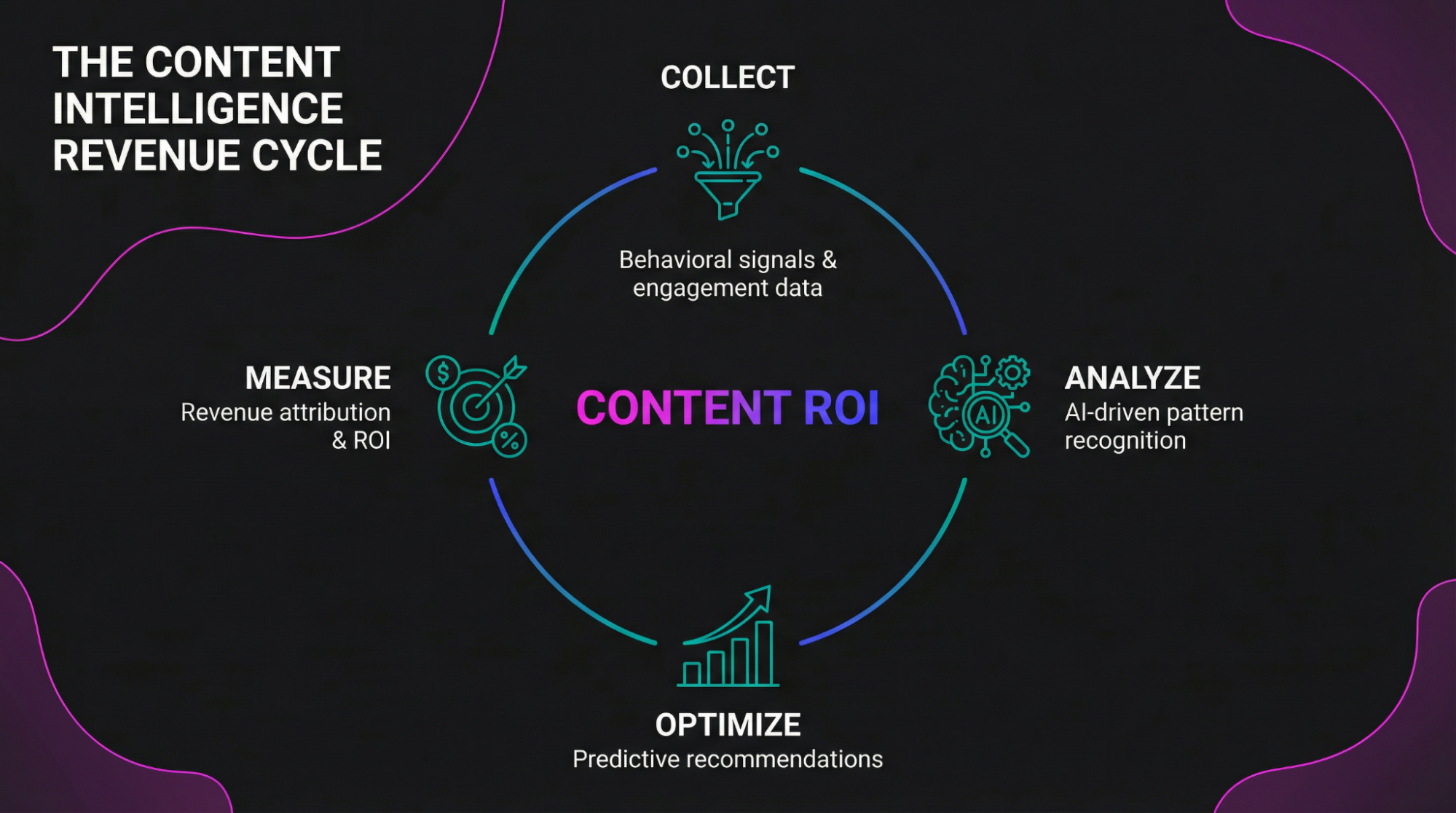
Intelligent analytics platforms analyze deeper behavioral signals to answer these questions with precision. By tracking how audiences interact with content across touchpoints, these systems identify patterns that human analysts would miss. They surface content gaps, predict which formats will resonate with specific segments, and recommend optimizations based on actual performance data rather than assumptions.
How Do Intelligent Analytics Generate Performance Insights?
Understanding what these capabilities deliver requires examining the core technologies at work. Modern platforms combine several approaches to transform raw asset data into strategic guidance.
Behavioral Analytics and Audience Signals
These systems ingest data from multiple sources including website analytics, CRM platforms, social media, and email engagement metrics. Machine learning algorithms process this information to identify behavioral patterns among different audience segments. For instance, the system might detect that enterprise buyers in financial services consistently engage with compliance-focused content before requesting demos, while mid-market prospects prefer ROI calculators and case studies.
These behavioral insights enable marketing teams to create more targeted content and distribute it through channels where each segment is most likely to engage. Rather than producing generic assets that attempt to appeal to everyone, teams can develop personalized content experiences that guide prospects toward conversion.
Predictive Content Performance
Perhaps the most valuable capability is predictive power. By analyzing historical performance data across thousands of content pieces, AI models can forecast how new assets will perform before publication. Teams can identify high-impact content opportunities, understand which topics attract the most engagement, and prioritize production efforts accordingly.
Predictive analytics also prevents wasted resources on content destined to underperform. When the system flags that a proposed topic has historically generated low engagement among the target audience, teams can pivot to more promising alternatives. This capability alone can dramatically improve content ROI by ensuring creative energy flows toward initiatives with the highest potential returns.
AI Agents for Automated Enrichment and Optimization
Content intelligence extends beyond analysis into active optimization through autonomous AI Agents. Advanced platforms automatically enrich assets with metadata, making them more discoverable and useful across the organization. Librarian Agents analyze visual and textual elements to generate tags, suggest categorizations, and identify relationships between assets that human catalogers might overlook.
This automated enrichment feeds back into the analytics system, creating a virtuous cycle where better-organized content generates richer performance data, which in turn enables more precise predictions and recommendations. Organizations with mature implementations often see dramatic improvements in asset reuse rates, reducing duplicate creation efforts and maximizing the value extracted from each piece of content.
Five Ways DAM Analytics Drive Content ROI
Understanding the benefits in abstract terms is useful, but concrete applications demonstrate real-world impact. The following approaches represent proven methods for extracting revenue value from your content assets.
- Identifying High-Performers for Repurposing: Analytics reveal which assets consistently drive engagement and conversions across channels. Teams can prioritize these proven performers for repurposing into new formats, extending their value without starting from scratch. A high-performing whitepaper might become a video series, infographic set, or webinar presentation.
- Detecting and Closing Content Gaps: By analyzing the customer journey against existing content inventory, intelligent platforms identify gaps where audiences drop off or disengage. Filling these gaps with targeted content accelerates pipeline velocity and reduces friction in the buying process.
- Optimizing Distribution Timing and Channels: Performance insights reveal when and where specific audience segments engage most actively. Teams can schedule content distribution for maximum visibility and impact rather than relying on generalized best practices.
- Personalizing Experiences at Scale: These capabilities enable dynamic personalization by matching individual user behaviors with relevant content recommendations. Visitors see content aligned with their interests and journey stage, increasing engagement and conversion rates.
- Proving Marketing Value to Leadership: Perhaps most importantly, intelligent analytics provide the attribution data necessary to demonstrate content’s contribution to revenue. Marketing teams can move beyond activity metrics to show direct connections between content investments and business outcomes.

How Do You Implement Analytics That Reveal Revenue Signals?
Effective implementation requires more than purchasing a platform. Organizations must establish foundations that enable meaningful insights.
Centralizing Content in a Single Repository
Intelligent analytics depend on comprehensive data. When assets are scattered across multiple systems, drives, and team folders, the platform lacks visibility into the full content ecosystem. Centralizing digital assets in a unified repository ensures the system can analyze performance across all channels and content types.
A modern digital asset management platform serves as this central hub, providing the infrastructure for organizing, enriching, and distributing content while capturing the usage data that feeds analytics algorithms. Without this foundation, analytics initiatives deliver incomplete insights that can mislead strategic decisions.
Defining Meaningful Performance Metrics
Before implementation, organizations must clarify which metrics matter most for their business objectives. Vanity metrics like pageviews and downloads provide limited strategic value. Instead, focus on metrics that connect content performance to revenue outcomes such as influence on pipeline progression, contribution to closed deals, and impact on customer lifetime value.
Clear metric definitions enable the system to track the right signals and generate actionable recommendations. They also establish baselines for measuring improvement over time, demonstrating the ROI of investments to stakeholders who authorize continued spending.
Integrating Across the Technology Stack
These platforms generate the most value when connected to other marketing and sales systems. Integration with CRM platforms enables tracking content’s influence through the full customer lifecycle. Connection to marketing automation tools allows intelligent content recommendations to trigger personalized experiences automatically. Analytics platform integration provides the behavioral data that powers predictive models.
These integrations transform analytics from an isolated reporting tool into an active participant in marketing execution. Recommendations flow directly into workflows, optimizations deploy automatically, and insights inform decisions across the organization.

How Do You Measure Success With Content Intelligence?
Implementing these capabilities represents an investment that requires demonstrable returns. Organizations should establish measurement frameworks that capture both operational improvements and revenue impact.
Operational Efficiency Gains
Track time savings from automated enrichment, reduced duplicate content creation, and faster asset discovery. These efficiency gains often provide quick wins that justify continued investment while longer-term revenue attribution matures. Teams that once spent hours searching for assets or manually tagging uploads can redirect that effort toward strategic work.
Content Performance Improvements
Monitor how content engagement, conversion rates, and journey progression change after implementing intelligence-driven optimizations. Compare performance of assets created with analytics insights against historical baselines. Organizations commonly report engagement improvements exceeding 25% when aligning content production with AI-driven recommendations.
Revenue Attribution Clarity
The ultimate measure of success is clearer visibility into how content contributes to revenue. Track changes in marketing’s ability to demonstrate content ROI to leadership. As attribution confidence grows, marketing teams can make stronger cases for content investment and gain credibility as strategic business partners rather than cost centers.
Frequently Asked Questions
What is the difference between content intelligence and traditional content analytics?
Traditional content analytics reports on what happened with your content after publication, focusing on metrics like views, downloads, and basic engagement. Intelligent analytics goes further by predicting what will happen, recommending optimizations, and actively improving content performance through AI-driven insights. Analytics tells you that a blog post received 500 views; intelligence tells you why it underperformed compared to predictions and what changes would improve results.
How long does it take to see ROI from these platforms?
Most organizations see initial operational improvements within four to six weeks as automated enrichment and improved search capabilities take effect. Meaningful revenue attribution insights typically emerge within 90 days as the system accumulates sufficient performance data to generate reliable predictions. The timeline depends on data quality, content volume, and how thoroughly the organization integrates recommendations into workflows.
Can small and mid-sized businesses benefit from intelligent content analytics?
Absolutely. While enterprise organizations were early adopters, modern platforms offer scalable solutions accessible to smaller teams. Even basic implementation can improve content performance significantly by eliminating guesswork from strategy decisions. The key is selecting a platform that matches organizational complexity and budget rather than assuming these capabilities require enterprise-level investment.
How do intelligent analytics improve personalization?
These systems analyze behavioral patterns to identify which content types, topics, and formats resonate with specific audience segments. This intelligence feeds into personalization engines that dynamically serve relevant content based on individual user characteristics and journey stage. The result is personalization based on demonstrated preferences rather than assumed interests, dramatically improving relevance and engagement.
Transform Your Content into a Revenue Engine
Content intelligence represents a fundamental shift in how organizations approach digital asset management and content strategy. By applying AI, machine learning, and advanced analytics to every piece of content, businesses can finally connect creative investments to measurable revenue outcomes. The days of content as an unmeasurable cost center are ending for organizations that embrace intelligence-driven approaches.
Aprimo delivers these capabilities through AI Agents that transform how enterprises manage, optimize, and extract value from their digital assets. With behavioral insights, predictive analytics, and automated optimization built directly into a unified content operations platform, marketing teams gain the visibility they need to prove content ROI and drive strategic decisions. Request a demo today to see how Aprimo turns your content into revenue signals.