

In 2015, American retailer Lord & Taylor launched an influencer campaign featuring 50 fashion influencers promoting the same dress on Instagram. The campaign reached 11.4 million users, generated 328,000 engagements, and helped sell out the featured dress.
By traditional marketing metrics, it was a success. But there was a problem.
The influencers had been paid to promote the dress, and none of their posts disclosed the commercial relationship. The brand reviewed and approved the content before publication, yet a critical compliance requirement went unnoticed. The following year, the Federal Trade Commission (FTC) took action, resulting in a settlement that required stronger advertising disclosure practices.
The lesson? Even content that is reviewed, approved, and performing well can expose a brand to significant risk. That is how content governance gaps open: the content passed every check that existed, but the checks did not cover everything.
Today, the stakes are even higher. Enterprise content is spread across websites, regional campaigns, partner portals, agency repositories, and cloud storage. AI is accelerating content production, which makes it much harder to keep every asset aligned with brand, legal, and compliance requirements.
The biggest risks often are not obvious. They are the outdated logos, expired campaigns, unauthorized claims, inaccessible visuals, and forgotten assets that slip through governance processes.
Here are ten hidden content governance gaps that could put your brand at risk, plus how to close each one.
TL;DR
- Expired campaigns: Outdated content stays live, displaying invalid offers or expired usage rights.
- Unmonitored partners: Dealers, distributors, and resellers publish outdated or unauthorized materials.
- Accessibility violations: Websites contain content that creates barriers for users with disabilities.
- Expired approvals: Previously approved assets stay in circulation after their approval periods expire.
- Incorrect logos: Outdated or modified brand identities appear across digital channels.
- Typography inconsistencies: Incorrect font sizes weaken visual consistency and readability.
- Off-tone messaging: Content fails to reflect approved brand voice or communication standards.
- Off-brand visuals: Unauthorized colors, imagery, and design elements create fragmented customer experiences.
- Unreviewed agency content: External creative work introduces brand and compliance issues before formal approval.
- Ungoverned cloud storage: Legacy repositories retain expired or unapproved assets that may be reused.
1. Expired Campaign Content Still Live on Websites
A holiday promotion was supposed to end in January. Six months later, its landing page is still accessible, advertising discounts that no longer exist. Worse, it features an influencer image whose usage rights expired when the campaign ended.
This happens when campaign teams move on to the next launch without systematically retiring previous content. Old microsites, forgotten landing pages, and regional websites can display content long after its intended lifecycle.
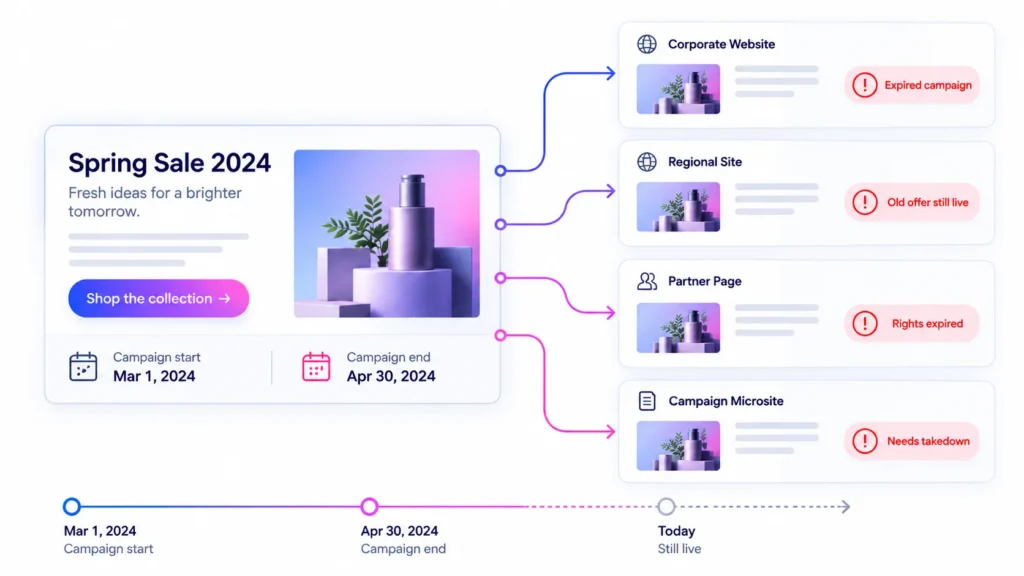
Impact on brand and business risk: Customers who encounter invalid offers may lose confidence in the brand. Expired image or talent rights can create licensing disputes, while outdated product claims may introduce regulatory exposure. Campaigns meant to generate revenue become sources of customer frustration and potential liability.
How to close the gap: Continuously scan websites and campaign pages against approved asset versions, expiration dates, or usage rights. Flag content that needs updating, replacement, or removal instead of relying on periodic manual audits.
2. Partners, Resellers, and Dealers Using Outdated Brand Content
Imagine an automotive manufacturer that has updated its vehicle branding and product lineup.
Its corporate website reflects the changes, but hundreds of independent dealerships run their own sites. Some still use the previous logo. Others advertise discontinued models or display promotional claims that headquarters never approved.
The central brand team has little visibility into these sites, let alone the resources to audit every page by hand. For businesses with extensive dealer, franchise, distributor, or reseller networks, this gap multiplies with every partner.
Impact on brand and business risk: Outdated product information can mislead buyers, weaken customer trust, and create disputes over promotional claims. Inconsistent partner experiences erode brand equity, while unauthorized or non-compliant messaging can create legal exposure even when the content originates outside corporate marketing.
How to close the gap: Extend governance monitoring to partner websites and portals. Identify outdated assets, unauthorized changes, or policy violations. Then group findings by region, partner, and severity so responsible teams can prioritize corrective action.
3. Website Content That Fails Accessibility Requirements
Your website might look flawless to your design team while being difficult or impossible for some customers to use.
Common accessibility problems include insufficient color contrast, missing meaningful alternative text, images containing unreadable text, and typography that does not adapt to different screen sizes.
For example, a beauty brand might place promotional messaging directly over product photography. The design looks attractive, but the text lacks sufficient contrast, which makes it hard for users with low vision to read.
Depending on the organization and jurisdiction, such issues may raise concerns under the Americans with Disabilities Act (ADA), the European Accessibility Act, or other applicable accessibility requirements. The Web Content Accessibility Guidelines (WCAG) provide widely used technical criteria for assessing web accessibility.
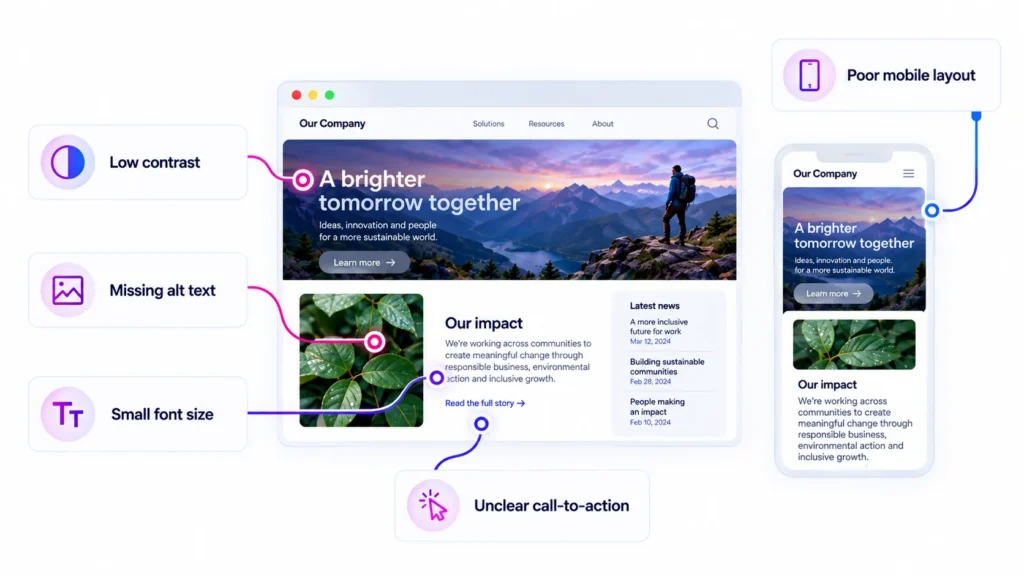
Impact on brand and business risk: Inaccessible content excludes potential customers, damages the brand’s reputation for inclusivity, and can expose organizations to accessibility complaints or legal action. Poor readability can also reduce engagement and conversion.
How to close the gap: Continuously assess website content for potential accessibility problems, including text contrast, embedded text, and image-related issues. Combine automated detection with accessibility testing and human validation, since automated checks alone cannot establish full compliance.
4. Assets That Have Expired After Regulatory Approval
A pharmaceutical company launches a product campaign after completing its Medical, Legal, and Regulatory (MLR) review.
The assets are approved and stored in the DAM. They are then distributed across regional websites, healthcare professional portals, and external agencies.
Months later, the approval period expires or new regulatory information requires the claims to be reassessed.
The DAM may flag the original asset, but what happens to copies already published elsewhere? Without continuous visibility, previously approved materials can remain in use after their approval conditions have changed.
Impact on brand and business risk: Expired or outdated promotional materials may contain claims that no longer meet current requirements. In regulated industries such as pharmaceuticals, healthcare, or financial services, continued use can create compliance exposure, remediation costs, and reputational damage.
How to close the gap: Track approval status across distributed content. Identify known copies and derivatives, then flag expired assets for withdrawal, updating, or re-review. Where appropriate, connect findings to existing regulatory workflows, including MLR systems.
5. Unauthorized or Outdated Logo Usage
A global brand refresh is complete. Updated logos are available in the DAM, new guidelines have been distributed, and the corporate website reflects the latest identity.
But a regional marketing team keeps using an older logo in email campaigns. An external agency modifies the logo to fit a creative concept. A partner website stretches it beyond approved proportions.
Small deviations can go unnoticed for months across distributed channels. Logo governance gets harder when multiple brands, business units, and regions operate independently.
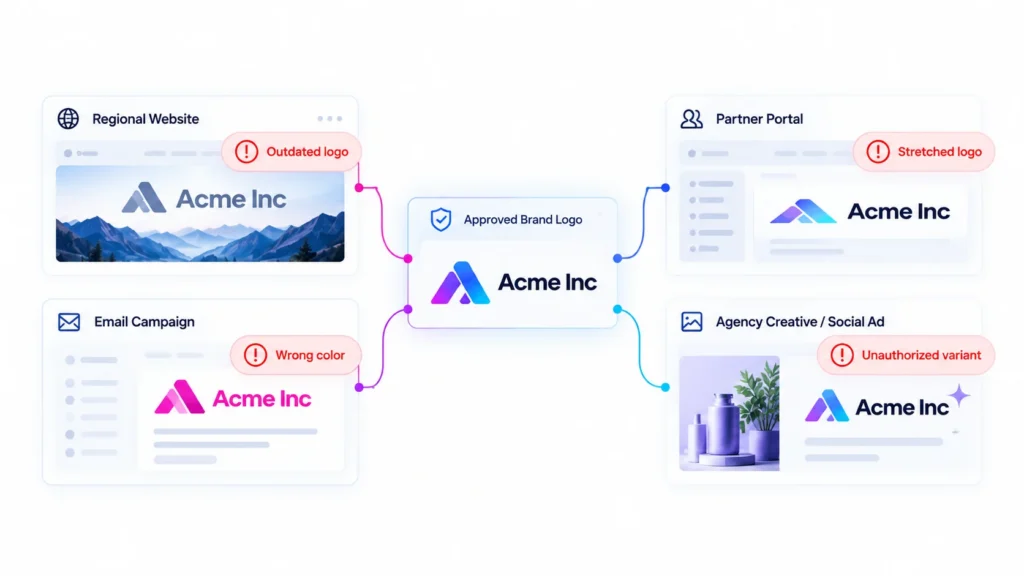
Impact on brand and business risk: Incorrect logos undermine visual recognition, weaken consistency, and reduce the effectiveness of brand investments. Unauthorized modifications can also create confusion about official brand representation, particularly across partner networks.
How to close the gap: Compare logos used across websites, campaigns, and connected repositories with approved brand references. Flag outdated versions, alterations, and incorrect applications for brand-team review.
How Mature Is Your Content Governance?
Benchmark where your content governance program stands today, then see where to focus first.
6. Incorrect Font Sizes and Typography Across Channels
Typography might seem like a minor design consideration, but it directly shapes how customers experience your brand.
Consider a financial services organization with carefully defined typography standards for customer communications. Regional teams adapt its templates, shrinking important supporting text to fit localized content.
Elsewhere, agencies introduce inconsistent font weights or sizes across product pages, banners, and marketing materials. These changes may look insignificant individually, but they become noticeable across hundreds of customer touchpoints.
Impact on brand and business risk: Inconsistent typography weakens brand recognition and perceived professionalism. Text that is too small or difficult to read can reduce comprehension and create accessibility concerns, especially when applied to important disclosures or instructions.
How to close the gap: Establish typography rules within brand governance policies, then assess content for deviations in font sizing, readability, and visual hierarchy. Prioritize issues that affect customer comprehension or accessibility instead of treating every formatting variation equally.
7. Content That Does Not Match Your Brand’s Tone of Voice
Your brand positions itself as knowledgeable, trustworthy, and approachable.
But a regional campaign uses aggressive promotional language. An AI-generated product description makes exaggerated claims. A partner’s social post adopts a tone that clashes with your brand’s communication standards.
Each piece might be grammatically correct and visually compliant, yet still feel disconnected from your brand. As AI makes content creation accessible to more teams, maintaining a consistent brand voice gets harder.
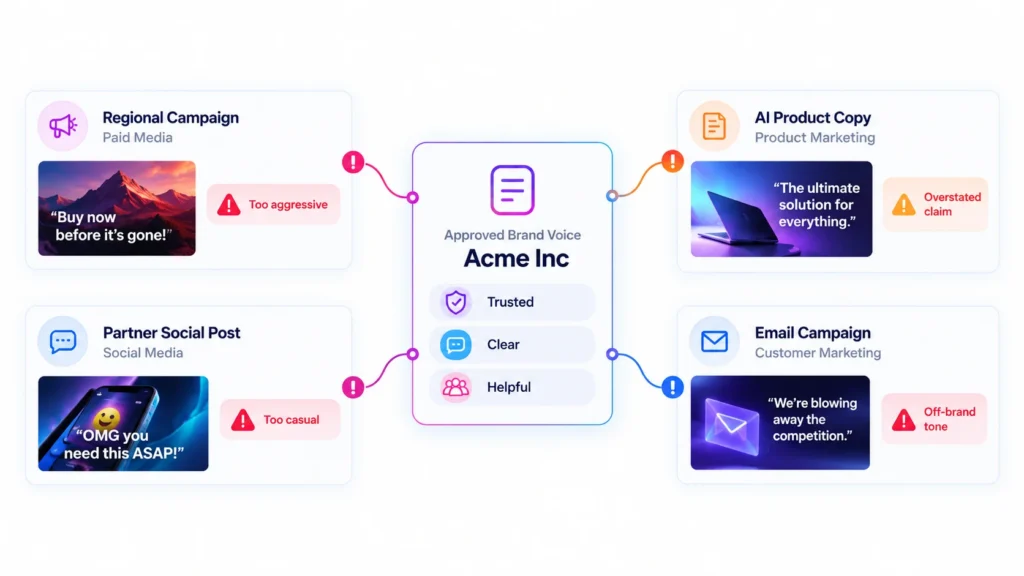
Impact on brand and business risk: Inconsistent messaging creates fragmented customer experiences and can undermine trust. Exaggerated language or inappropriate claims may also create legal and reputational risks, particularly for brands operating in sensitive or regulated markets.
How to close the gap: Evaluate content against defined voice, tone, terminology, and messaging policies. AI-supported checks can flag deviations or potentially problematic language, so brand and compliance teams can review exceptions.
8. Off-Brand Colors, Images, and Creative Assets
A global consumer brand has invested heavily in a distinctive visual identity.
But regional websites use inconsistent color palettes, product imagery that does not reflect current positioning, and creative layouts that differ from approved standards.
In some cases, local teams have simply reused older assets. In others, agencies have made unauthorized adjustments to suit regional campaigns. Without visibility across all customer-facing channels, brand teams may not discover these inconsistencies until a periodic audit or customer complaint.
Impact on brand and business risk: Inconsistent visual experiences dilute brand equity and make the organization appear fragmented. Poor-quality or inappropriate imagery can also affect customer confidence, perceived product quality, and campaign performance.
How to close the gap: Apply brand and quality checks to creative assets across websites, portals, or connected repositories. Identify unauthorized colors, imagery, and other visual deviations, then prioritize the most significant issues.
9. Agency-Created Content That Escapes Early Governance Checks
An external agency creates a campaign for a global brand.
The creative team works in its own design environment, using downloaded product assets and brand guidelines. By the time the content reaches the client’s formal approval workflow, it contains an outdated logo, an unsupported product claim, and imagery with questionable licensing rights.
The campaign now needs extensive revisions, which delays launch and raises production costs.
The issue is not necessarily poor agency performance. It is that governance checks often occur too late in the creative process.
Impact on brand and business risk: Late discovery of compliance or brand violations causes costly rework, longer approval cycles, and missed campaign deadlines. If insufficiently reviewed material is published, the organization may also face legal or reputational consequences.
How to close the gap: Extend governance checks to connected agency repositories and creative workflows before content enters final approval. Early identification of brand, quality, and rights issues helps teams correct problems before they become expensive.
10. Expired or Ungoverned Assets Hidden in Amazon S3 and Other Storage
Some of the greatest governance risks sit in repositories that marketing teams rarely examine.
An organization may have years of content in Amazon S3 buckets, SharePoint folders, cloud drives, or legacy systems established before its current DAM.
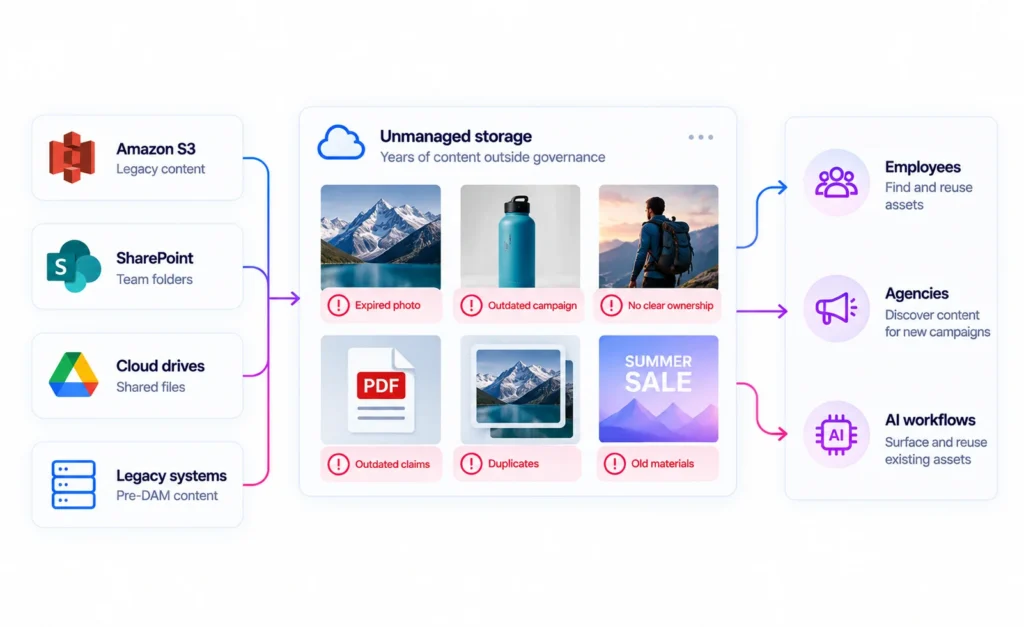
These locations may contain expired photographs, old campaign materials, outdated claims, duplicates, or assets without clear ownership. Even when this content is not currently published, employees, agencies, or AI-enabled workflows can discover and reuse it. Because it sits outside the primary governance environment, standard approval and expiration controls may not apply.
Impact on brand and business risk: Ungoverned storage creates a persistent risk of reusing expired, unauthorized, or inaccurate content. It can also increase audit complexity, duplicate production effort, and make it difficult to determine which assets are safe for future campaigns.
How to close the gap: Discover content across connected storage environments, then apply consistent brand, compliance, rights, and quality checks. Organizations should be able to identify risky assets without first migrating entire repositories into the DAM.
Why Traditional Content Governance Misses These Risks
These ten gaps share a common cause: governance coverage ends before the content lifecycle does.
Most enterprises already have policies, brand guidelines, review processes, and DAM systems. The problem is that content travels beyond the environments where those controls are enforced.
A website may use a superseded asset. A dealer may modify approved content. An agency may store outdated creative in SharePoint. An expired campaign may stay live long after its owner has moved on.
Manual audits can identify some of these problems, but they are periodic and limited by available resources. Continuous content governance requires a different approach: discover content wherever it exists, evaluate it against current policies, and prioritize issues based on business risk.
How Aprimo CPM Helps Close Hidden Content Governance Gaps
Aprimo Content Portfolio Management (CPM) extends governance beyond the DAM. It helps enterprises discover, monitor, and manage content across distributed systems without requiring every asset to move into a single repository. It combines three core capabilities:
- Aprimo Mesh, discover content everywhere: Scans websites, partner portals, DAMs, SharePoint, and other connected repositories. It maps asset relationships, duplicates, and derivatives to give visibility into distributed content.
- AI Agents, continuously apply governance: Evaluate content against configured brand, compliance, digital rights, and quality policies. They flag issues such as outdated logos, expired assets, inappropriate messaging, and potential accessibility violations.
- Portfolio Risk Dashboard, prioritize what matters: Surfaces findings by severity, brand, region, and asset type, with recommended actions such as updating, replacing, removing, or archiving content.
Rather than replacing existing DAM, brand review, or regulatory workflows, CPM extends their reach to content that would otherwise stay outside centralized oversight.
From Hidden Content Risks to Continuous Brand Protection
A brand can have excellent governance policies and still be exposed to significant risk.
The problem is not always a lack of standards. It is the inability to apply those standards consistently across every system, channel, and partner where content exists.
As enterprise content portfolios grow, organizations need to move from periodic audits and reactive corrections toward continuous, portfolio-wide governance. That means knowing what is live, identifying what is outdated or non-compliant, and giving teams the information they need to address the most important issues first.
With Aprimo Content Portfolio Management, organizations can bring hidden content risks into view and extend brand protection beyond the DAM.
Because the content you do not know about can pose just as much risk to your brand as the content you do.
FAQ
What are content governance gaps?
Content governance gaps are areas where an organization’s content is not consistently monitored or evaluated against brand, legal, regulatory, quality, or usage policies. They often occur across external websites, partner portals, agency repositories, and cloud storage environments.
How does poor content governance increase brand risk?
Poor governance allows outdated, inaccurate, unauthorized, or non-compliant content to stay in circulation. That can create inconsistent customer experiences, reputational damage, accessibility problems, rights violations, and regulatory exposure.
How can organizations identify hidden content governance risks?
Organizations can use continuous content discovery and automated governance checks to identify assets across connected systems. Those checks compare assets with approved references, then flag potential violations for review.
Can content governance extend beyond the DAM?
Yes. Content Portfolio Management solutions such as Aprimo CPM extend governance to websites, partner portals, external repositories, and cloud storage. Organizations can assess content without requiring all assets to be stored in the DAM.
What is the difference between brand governance and content compliance?
Brand governance focuses on maintaining consistent visual identity, messaging, and customer experience. Content compliance focuses on meeting applicable legal, regulatory, contractual, and organizational requirements. Both are essential for protecting brand reputation and reducing business risk.
Discover the content risks your brand can’t see. Learn how Aprimo Content Portfolio Management helps enterprises continuously discover content, enforce governance policies, and prioritize brand or compliance risks across their entire content ecosystem.
Related reading: the hidden cost of ungoverned content, brand governance for 50+ content creators, content compliance in regulated industries.