

A robust content management strategy powered by enterprise DAM transforms scattered digital assets into a competitive advantage through workflow automation, AI-driven intelligence, and seamless content lifecycle management.
- Centralized Control: A single source of truth for all digital assets eliminates content silos and shadow operations.
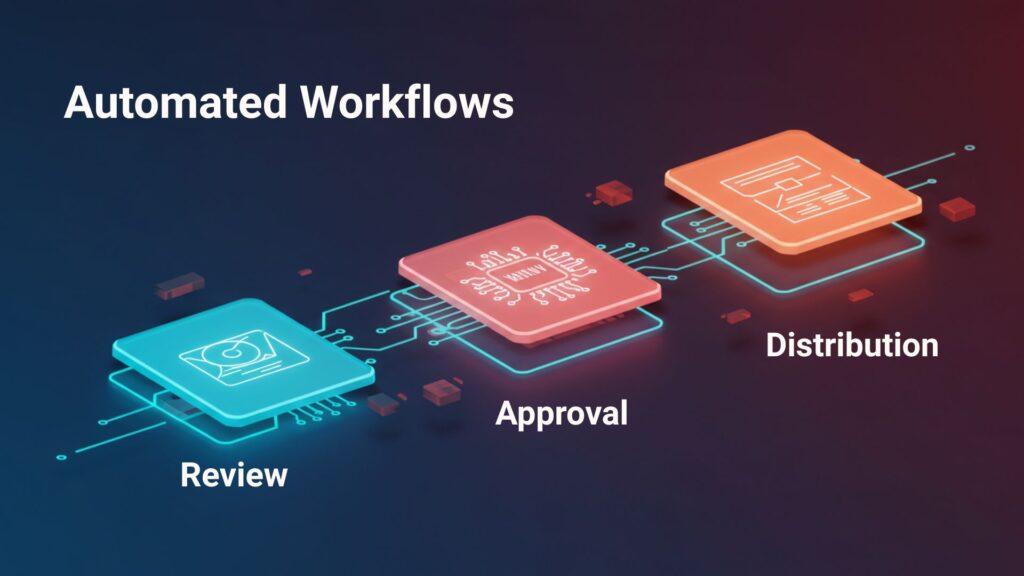
- Automated Workflows: AI-powered processes reduce manual tasks while ensuring brand compliance.
- Scalable ROI: Enterprise organizations achieve measurable outcomes, including faster asset creation and campaign launches.
- Strategic Integration: Modern DAM platforms connect with enterprise systems for seamless content operations.
Enterprises managing thousands of digital assets face an overwhelming challenge: transforming content chaos into strategic advantage. A comprehensive content management strategy powered by digital asset management creates the foundation for scalable content operations that drive measurable business outcomes.
The modern digital content lifecycle demands more than basic file storage. Organizations need intelligent systems that automate workflows, ensure compliance, and optimize content performance across all channels. Strategic content management is a critical business investment.
What Makes an Enterprise Content Management Strategy Effective?
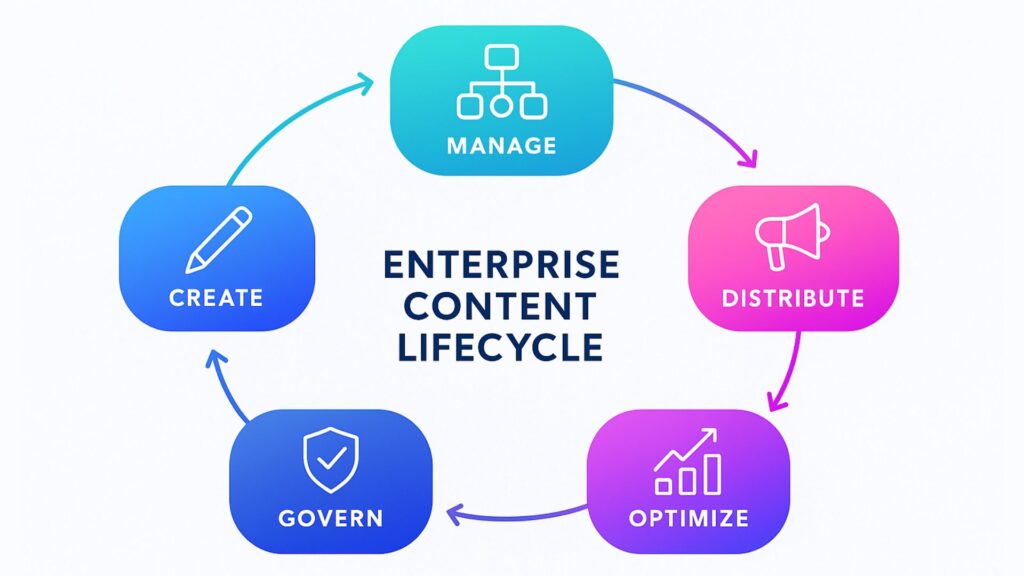
A content management strategy encompasses how organizations create, organize, govern, and optimize digital content throughout its entire lifecycle. For enterprises, this strategy must address complex requirements, including multi-brand management, regulatory compliance, global distribution, and seamless integration with existing technology ecosystems.
Enterprise content management differs from basic file organization. It requires sophisticated content strategy frameworks that align with business objectives, support cross-functional collaboration, and enable real-time content intelligence. The most successful implementations combine strategic planning with advanced platforms designed for enterprise content operations.
Modern content strategy frameworks emphasize automation, intelligence, and integration. These systems recognize that manual processes can’t scale with enterprise-level content volumes or complexity. Instead, they leverage AI-powered capabilities to streamline workflows, enhance discoverability, and optimize content performance across all touchpoints.
Why Does Your Enterprise Need Strategic Content Management?
Enterprise organizations face unique content challenges. The complexity of managing content across multiple brands, regions, compliance requirements, and distribution channels demands balancing governance with agility.
Strategic Productivity Gains: Organizations implementing comprehensive content management strategies experience dramatic productivity improvements. Teams gain immediate access to approved assets through intelligent search capabilities, eliminating the time-wasting hunt for content across disconnected systems. Advanced workflow automation reduces manual handoffs and accelerates approval processes, while AI-powered metadata generation ensures content remains discoverable and usable.
Enhanced Workflow Automation: Modern DAM transforms manual processes into intelligent, automated workflows. These systems automatically route content for review based on predefined rules, apply metadata using AI analysis, and distribute approved assets to designated channels. Organizations with advanced workflow automation can reduce content production time by half.
Accelerated Digital Content Lifecycle Management: Sophisticated content lifecycle management ensures assets maintain value throughout their entire lifespan. Platforms include automated content expiration tracking, rights management enforcement, and performance analytics that inform future content strategy decisions. Enterprises report a 53% reduction in asset duplication when implementing comprehensive lifecycle management.
Advanced Compliance and Governance: Enterprises operating in regulated industries require robust governance frameworks that ensure content compliance without hampering creativity. Automated compliance checking, audit trail maintenance, and role-based access controls protect organizations while enabling innovation. These capabilities are vital as AI-generated content requires new levels of oversight and validation.
Measurable ROI and Performance Optimization: Strategic content management delivers quantifiable business outcomes. Organizations track metrics including content reuse rates, time-to-market improvements, and campaign performance optimization.
What Are the Core Components of Enterprise Content Strategy?
Successful enterprise content strategy frameworks incorporate multiple interconnected components that work together to optimize the entire digital content lifecycle. Each component serves specific business functions while contributing to overall content operations efficiency.
Intelligent Asset Organization: Advanced content strategy utilizes AI-powered taxonomy and metadata systems that automatically categorize and tag content based on visual analysis, contextual understanding, and business rules. This intelligent organization enables contextual search that surfaces relevant assets based on project requirements, campaign objectives, and brand guidelines.
Automated Content Creation and Production: Modern frameworks incorporate workflow automation that streamlines content creation from ideation through final approval. These systems integrate with creative tools, automatically generate required renditions, and route work through approval processes based on content type, usage rights, and compliance requirements.
Centralized Asset Storage and Distribution: Enterprise-grade storage solutions provide secure, scalable repositories that support global content distribution requirements. These systems feature advanced capabilities, including CDN integration, dynamic media transformation, and real-time asset delivery optimization across multiple channels and geographic regions.

Sophisticated Production Workflows: Enterprise content strategy includes configurable workflow engines that automate complex approval processes, manage resource allocation, and track project progress across multiple teams and departments. These workflows support both standard operating procedures and exception handling for unique requirements.
Comprehensive Version Control and Collaboration: Advanced version control systems prevent content conflicts while enabling simultaneous collaboration across global teams. These capabilities include branch management for different campaign variations, automated conflict resolution, and real-time collaboration features that maintain content integrity.
Multi-Channel Distribution and Optimization: Make sure every piece of content shows up exactly where and how it should. DAM automates format conversions, optimizes delivery for each channel, and applies personalization rules so your content always feels native to the platform and relevant to each audience.
Enterprise Data Governance and Security: Robust governance frameworks protect intellectual property while enabling appropriate content access. These systems include granular permission management, audit logging, compliance reporting, and integration with enterprise security infrastructure.
How Do You Successfully Implement Enterprise DAM for Content Management?
Implementing enterprise DAM requires careful planning, stakeholder alignment, and phased execution that minimizes disruption while maximizing adoption. Success follows proven methodologies that address technical and organizational change management requirements.
How Do You Build a Compelling Business Case for DAM Implementation?
Creating an effective business case requires quantifying both current content management costs and projected DAM benefits. Analyze existing inefficiencies, including duplicate content creation, manual workflow bottlenecks, compliance risks, and missed market opportunities.
Successful business cases emphasize strategic benefits, including accelerated time-to-market, improved brand consistency, enhanced compliance, and scalable content operations. These cases should include specific ROI projections, implementation timelines, and risk mitigation strategies that address stakeholder concerns.
What Scope Considerations Are Critical for Enterprise DAM Projects?
Defining the right scope for an enterprise DAM project is all about building for long-term scalability without overwhelming the initial rollout. Start by identifying the highest impact use cases and essential integrations, then plan for future growth once early wins are achieved.
Key factors include the types and volume of content, how different teams access and use assets, existing system integrations, and any compliance or governance requirements. Many organizations find success by launching with a focused set of content types or departments first. This phased approach helps prove value early, refine workflows, and build support across the business before expanding to more complex use cases.
How Do You Ensure Stakeholder Alignment and Change Management Success?
Enterprise DAM success depends on broad stakeholder adoption across creative, marketing, IT, and business teams. Effective change management begins during project planning and continues through optimization. Identify content champions who can advocate for new processes and provide feedback during implementation.
Training programs should address different user personas with role-specific guidance on how DAM capabilities enhance their daily workflows. Projects with excellent change management are far more likely to meet or exceed objectives.
What Implementation Strategies Minimize Risk and Maximize Adoption?
Successful DAM implementations follow iterative approaches that deliver value quickly while building toward comprehensive capabilities. Organizations should prioritize core functionality, including asset ingestion, metadata management, search capabilities, and basic workflow automation, before expanding to advanced features.
Implementation should include comprehensive testing phases, pilot programs, and gradual user onboarding that allows teams to adapt to new processes. Collecting feedback and refining processes ensure implementations meet user needs while achieving business objectives.
Enterprise Content Management Strategy Success Factors
The most successful enterprise content management strategies combine advanced technology platforms with organizational capabilities that sustain long-term success. These strategies recognize that technology alone can’t solve content challenges without corresponding process improvements and cultural changes.
Platform Selection and Integration: Organizations achieve best results with platforms designed specifically for enterprise content operations rather than basic file storage solutions. These platforms should offer native integrations with existing enterprise systems, support for complex approval workflows, and scalability for future growth requirements.
Process Standardization and Automation: Successful strategies emphasize process standardization that reduces variability while maintaining flexibility for unique requirements. Automation capabilities should handle routine tasks, including metadata application, format conversion, and distribution, while escalating complex decisions to human experts.
Performance Measurement and Optimization: Leading organizations implement comprehensive analytics that track operational metrics and business outcomes. These measurements include content reuse rates, workflow efficiency, user satisfaction, and KPIs that demonstrate content management’s contribution to business success.
Continuous Improvement and Innovation: Enterprise content strategies require ongoing optimization based on changing business requirements, technology capabilities, and market conditions. Establish regular review processes that assess your strategy’s effectiveness and identify any improvement opportunities.
5 Key Benefits of Strategic Enterprise Content Management
Successful enterprise content management delivers measurable benefits that extend beyond operational efficiency to strategic business advantage:
- Accelerated Content Velocity: Organizations report faster asset creation through streamlined workflows and intelligent automation.
- Enhanced Brand Consistency: Centralized governance ensures brand compliance across all content while reducing review cycles and approval delays.
- Improved Collaboration Efficiency: Global teams can instantly access approved assets, eliminating geographic and time zone barriers.
- Scalable Compliance Management: Automated governance frameworks ensure regulatory compliance without manual oversight.
- Strategic ROI Optimization: Comprehensive analytics enable data-driven content strategy decisions that optimize resource allocation and campaign performance.
Frequently Asked Questions
How long does enterprise DAM implementation typically take? Implementation timelines vary depending on the organization’s size, goals, and system complexity. Many teams see early value soon after deployment, especially when starting with a focused set of use cases. Broader rollouts that include advanced workflows, automation, and integrations generally take longer but deliver stronger, more sustainable impact.
What ROI can organizations expect from strategic content management? A well-implemented DAM drives measurable efficiency gains across content creation, collaboration, and delivery. Organizations often see faster campaign execution, reduced production costs, and higher content reuse rates, all contributing to improved return on investment over time.
How does enterprise DAM integrate with existing technology ecosystems? Modern DAM platforms are designed to fit seamlessly within broader marketing and business ecosystems. They integrate with creative tools, content management systems, and automation platforms through prebuilt connectors and open APIs, ensuring content flows smoothly across teams, channels, and technologies.
Transform Your Content Operations with Strategic DAM
Enterprise content management demands a transformation that aligns content operations with business objectives. An enterprise DAM platform provides the advanced capabilities organizations need to implement comprehensive content strategy frameworks that drive measurable results.
Aprimo’s AI-powered content operations platform enables organizations to automate complex workflows, optimize content performance, and scale operations without proportional resource increases. With proven results and industry-leading customer satisfaction, we transform enterprise content management from operational necessity to strategic advantage. Schedule a demo to discover how Aprimo’s enterprise DAM capabilities can optimize your content operations.