
Key Benefits of Digital Asset Management

The demand for effectively managing digital assets is at an all-time high, with businesses across every industry searching for powerful solutions to streamline content management. The challenge isn’t just about creating assets like marketing materials, product images, and video content; it’s about organizing, accessing, and distributing them seamlessly across teams while maximizing their return on investment (ROI).
Digital Asset Management (DAM) enables organizations to bring order to their content ecosystems and unlock the full potential of their assets through performance tracking and analytics. Understanding these benefits is crucial, as DAM helps companies elevate brand consistency, drive efficiency, measure content effectiveness, and scale their content strategies to meet growing demands.
TL;DR: Scaling Content Operations with DAM
Digital Asset Management (DAM) is essential for enhancing brand experience and achieving strategic goals. Acting as a single source of truth, a DAM system ensures teams always use the right assets at the right time. The key benefits include:
- Improved organization through centralized systems and metadata
- Reduced time spent searching for assets with powerful search enhanced by AI-generated metadata
- Increased efficiency through AI-driven automation of repetitive tasks
- Upholding brand consistency by ensuring all materials are up-to-date and on-brand
- Enhanced security through controlled access and rights management
Improved Organization and Accessibility
One of the primary benefits of DAM is the streamlined organization and easy accessibility it offers to teams managing a high volume of digital assets.
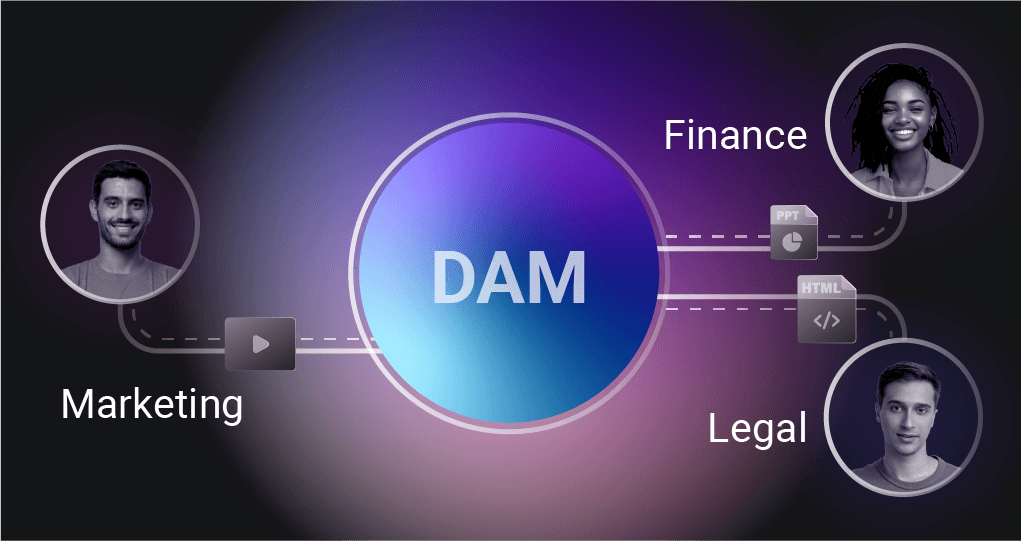
A centralized content hub streamlines workflows by making all assets easy to find, access, and use across the organization.
Centralized System and Single Source of Truth
A DAM system serves as a centralized hub for all digital assets, replacing scattered storage solutions with a single, organized repository. This means that everyone in the organization, from marketing to product development, has easy access to the same library of files.
- Confidence and Integrity: Centralization simplifies access and protects brand integrity by reducing the risk of outdated or off-brand assets being used across channels. Teams can upload, retrieve, and share assets with confidence, knowing they are using the most up-to-date, approved content.
- Reduced Roadblocks: This accessible organization eliminates the often tedious and time-consuming process of searching for files across various drives and networks.
Metadata Magic for Searchability
Metadata management is perhaps the most powerful organizational tool within DAM systems. Metadata is the key to making assets searchable and organized.
- Enhanced Discoverability: By tagging each file with relevant metadata, such as keywords, categories, dates, and licensing information, a DAM system enables users to find exactly what they need in seconds.
- AI Automation: Organizations can harness the power of AI to automate tasks like metadata tagging and asset organization. Features like generative AI for metadata creation and automated tagging can significantly improve the speed and reliability of DAM. The ability to add custom metadata fields tailored to organizational needs further enhances discoverability.

AI-generated metadata automatically enriches your assets with accurate tags and details, making everything easier to search, organize, and reuse.
Boost Efficiency and Collaboration
A robust DAM system enhances efficiency and fosters better collaboration across teams. Its ability to streamline workflows and facilitate easier access to shared resources helps teams work faster and more effectively.
Operational Efficiency
The first thing businesses notice when switching to a DAM system is a boost in operational efficiency and productivity.
- Faster Retrieval: Teams can make short work of finding what they need using advanced search capabilities that filter through metadata, tags, and categories. This allows employees to focus more on strategic tasks rather than administrative ones.
- AI Automation: AI DAM systems take efficiency to the next level by automating repetitive tasks, like tagging, organizing, and categorizing assets. This ensures that teams can quickly find and use the content they need. Furthermore, reducing the time and effort it takes teams to work on visual assets leads to higher efficiency.
- Cost Savings: Increased productivity and efficiency translates directly into saving money. Costs are cut through reduced labor (less time searching and doing redundant work) and reduced production costs (by repurposing and reusing existing assets).
Seamless Collaboration
Effective collaboration is essential, especially when multiple teams or departments contribute to a project.
- Unified Platform: A DAM enables real-time collaboration by allowing teams to access, comment on, and share assets within a single platform. Teams can share and revise work in real time and complete projects faster.
- Version Control: Accurate version control ensures everyone is working with the most up-to-date files. This is critical to enhance collaboration and consistency. This prevents version control problems and minimizes the risk of miscommunication.
Upholding Brand Consistency and Integrity
A well-structured DAM system is a powerful asset for maintaining brand consistency and protecting brand integrity.
- Unified Image: Brand consistency builds trust and recognition with customers. A DAM system helps teams achieve consistency by storing only approved, on-brand assets. This eliminates the need for teams to create ad-hoc versions of content, reducing the risk of off-brand visuals or messaging slipping into customer-facing materials.
- Single Source Protection: A centralized content hub ensures that all brand assets are sourced from a single, verified location. If a product logo is updated, the DAM system can immediately reflect this change across all assets, ensuring teams always have access to the latest version.
- Brand Integrity and Rights: Brand integrity involves protecting the brand’s values and reputation. DAM systems promote security and roles-based file access using Digital Rights Management, helping organizations comply with copyright laws and protecting the organization from legal risks.
Enhanced Security and Compliance
DAM systems provide enhanced security and ensure compliance with industry standards, licensing agreements, and regulatory requirements.
- Strong Security: A DAM system strengthens security by centralizing content storage and implementing access controls, reducing the risk of unauthorized use or accidental data breaches. The systems include strong security measures to protect intellectual property and sensitive corporate information from unauthorized access or breaches, such as access controls, encryption, and secure backup.
- Controlled Access: Features like role-based permissions ensure that only authorized team members can access specific content. Administrators can set precise levels of access for individual users or groups.
- Compliance Support: DAM supports compliance with regulatory standards by keeping detailed logs of asset usage, modifications, and distributions. These audit trails are invaluable during external audits or legal challenges. This helps organizations adhere to industry regulations, such as HIPAA for healthcare organizations.
Measuring Performance and ROI
Among the key benefits of DAM is the ability to track and measure the performance and Return on Investment (ROI) of digital assets.
- Performance Analytics: With built-in performance analytics, a DAM system allows teams to monitor how assets are performing across different channels and campaigns. By identifying top-performing assets, organizations can refine their approach to maximize engagement.
- Asset Usage Tracking: A DAM system tracks asset usage, showing which files are accessed, downloaded, or shared most frequently. Tracking unused or underutilized assets can highlight content gaps, helping teams repurpose or retire assets that don’t contribute effectively to business goals.
- ROI Justification: The ability to measure ROI is crucial for justifying investment. A DAM system helps quantify ROI by connecting asset usage data with revenue or campaign outcomes. This provides clear evidence of the value of individual assets to the organization.
Bottom Line
A Digital Asset Management system is essential for any organization looking to streamline content organization, enhance brand consistency, and improve collaboration across teams. By utilizing AI for automation, enforcing security features, and enabling detailed performance tracking, DAM helps businesses unlock the full potential of their digital assets, turning content into a powerful driver of growth and efficiency. The right system helps your teams deliver faster, maintains consistency, and has the scalability to grow with you tomorrow.
Frequently Asked Questions
What is the primary benefit of a DAM system?
The primary benefit of a DAM system is providing centralized organization for all digital assets, acting as a single source of truth. This centralized hub replaces scattered storage solutions, ensuring that every team member has easy access to the most up-to-date and approved content.
How does DAM accelerate efficiency and save money?
DAM accelerates efficiency by eliminating the time-consuming process of searching for files and automating repetitive tasks like tagging through AI. This increased efficiency translates into cost savings by reducing labor costs and lowering production costs, as employees can quickly repurpose and reuse existing assets.
What role does metadata play in maximizing DAM benefits?
Metadata is the key to making assets searchable and organized. Metadata management is perhaps the most powerful organizational tool within DAM systems. By tagging each file with relevant metadata, the system transforms a large content library into an easily navigable system, where assets are just a quick search away.
How does DAM ensure brand consistency?
A DAM system helps teams achieve consistency by storing only approved, on-brand assets and ensuring all materials are sourced from a single, verified location. This prevents the use of outdated or incorrect files in new projects, helping organizations present a unified brand image across all channels.
How does DAM help organizations with security and compliance?
DAM systems strengthen security by implementing access controls and role-based permissions, which ensure that only authorized users can access sensitive content. They support compliance with regulatory standards by maintaining audit trails that track who accessed what files and when, which helps mitigate legal risks.