

Effective asset management content marketing transforms how brands create, organize, and deploy digital content across every channel.
- Marketing teams leveraging centralized digital asset management report meaningful improvements in asset creation speed and reductions in content duplication.
- AI-powered platforms automate metadata tagging, compliance checks, and content recommendations, eliminating hours of manual work.
- Organizations without structured asset management waste valuable time recreating content that already exists, leading to brand inconsistency and missed opportunities.
- The right platform integrates with your existing tech stack and scales alongside growing content demands.
Enterprise teams ready to streamline content operations should evaluate platforms based on automation capabilities, governance features, and measurable ROI potential.
Marketing teams manage more digital assets today than ever before. Images, videos, campaign materials, branded templates, and social media content multiply across departments, channels, and markets. The global digital asset management market is projected to reach $19.36 billion by 2034, reflecting how structured content management has become critical for competitive brands.
Without a centralized system, these valuable resources quickly become disorganized. Teams waste time searching for existing assets, dealing with outdated files, or recreating content that already exists somewhere in the organization. Brand inconsistencies creep into campaigns. Compliance risks increase. Marketing velocity slows to a crawl.
A marketing asset management platform provides the structured approach modern brands need to efficiently store, organize, and distribute content. When implemented correctly, asset management content marketing enables teams to work smarter, maintain brand integrity, and maximize the impact of every piece of creative work. This guide explores how businesses can leverage these platforms and implement best practices that drive measurable results.
How Does Asset Management Content Marketing Work?
Keeping track of marketing assets involves multiple moving parts. Teams must ensure the right versions are used, maintain brand consistency, and provide instant access to approved content. Basic cloud storage can’t handle these demands at scale.
A marketing asset management platform is a specialized solution designed to help organizations manage digital assets, streamline workflows, and optimize content distribution. Unlike traditional file storage systems, a digital asset management platform offers intelligent tools to organize, track, and deploy assets in ways that align with strategic marketing goals.
What Are Marketing Assets?
Marketing assets encompass all the digital materials that support a company’s storytelling and customer engagement efforts. Categories include branding elements, campaign visuals, video content, product photography, sales collateral, and creative templates. A well-implemented DAM system centralizes these assets, making it easier to locate, repurpose, and share content across internal teams and external partners.
Essential Features of Modern DAM Platforms
While storing files matters, a robust digital asset management system does far more. Leading platforms optimize workflows, enhance team collaboration, and ensure assets are strategically deployed. The features that separate enterprise-grade solutions from basic storage include:
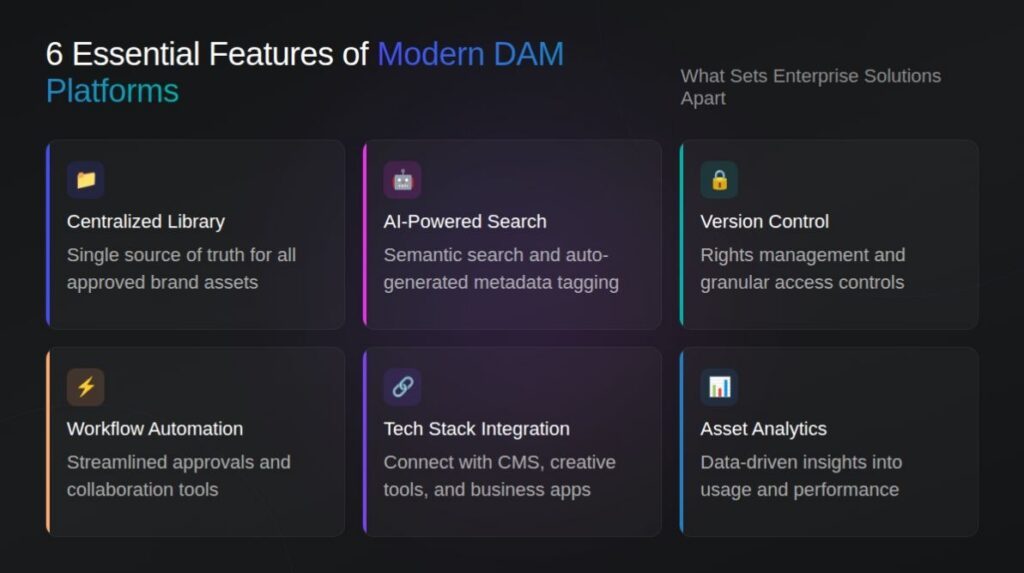
Centralized Asset Library: Stores all approved assets in a single, organized location with intuitive categorization. Teams access one source of truth rather than hunting through email threads, shared drives, and desktop folders.
AI-Powered Search and Metadata: Enables teams to quickly locate specific assets using semantic search, auto-generated tags, and intelligent filters. Modern platforms use machine learning to recognize image content, suggest relevant metadata, and surface recommendations based on usage patterns.
Version Control and Rights Management: Prevents outdated or unapproved content from reaching the market while managing granular access controls. Digital rights tracking ensures teams understand usage restrictions, expiration dates, and licensing requirements.
Workflow Automation and Collaboration Tools: Simplifies approval processes and ensures only brand-compliant assets get published. Automated routing, review cycles, and notification systems keep projects moving without manual bottlenecks.
Integration with Existing Tech Stacks: Connects with CMS platforms, creative tools, marketing automation systems, and business applications. Enterprise DAM solutions offer extensive pre-built connectors plus APIs for custom integrations.
Data-Driven Insights and Asset Analytics: Provides visibility into asset usage, content performance, and workflow efficiency. These insights help marketing teams optimize their content operations strategy and demonstrate clear ROI.
With these capabilities, asset management content marketing transforms from a storage exercise into an efficiency driver across every marketing initiative.
Why Do Modern Brands Need Asset Management?
Digital content complexity grows alongside organizational scale. Teams produce more assets across more channels for more audience segments. Without structured management, the chaos compounds.
Consider what happens without centralized asset management. Marketing teams spend hours searching for existing content. Designers recreate assets that already exist because nobody can find the originals. Outdated logos appear in new campaigns. Legal teams discover compliance violations after content goes live. External partners use unapproved materials because they can’t access the right versions.
A DAM solution eliminates these inefficiencies by providing a single source of truth for all marketing materials. Organizations using structured content lifecycle management report measurable improvements in asset creation speed and productivity gains when leveraging AI capabilities. According to research, 69% of B2B marketers expect content marketing budgets to increase in 2026, reflecting growing demand for efficient content infrastructure that can scale with these investments.

Whether enabling faster collaboration, ensuring consistent brand identity, or optimizing campaign delivery, the right digital asset management platform helps marketing teams scale efficiently and deliver stronger results.
How to Organize and Optimize Brand Assets for Maximum Efficiency
As your marketing team prepares for a major product launch, they need video content, social media graphics, email templates, and website banners. Every asset must align with current brand guidelines. In organizations without structured asset management, this process becomes chaotic. Outdated logos slip into ads. Materials get buried in email threads. Teams spend hours tracking down approved versions.
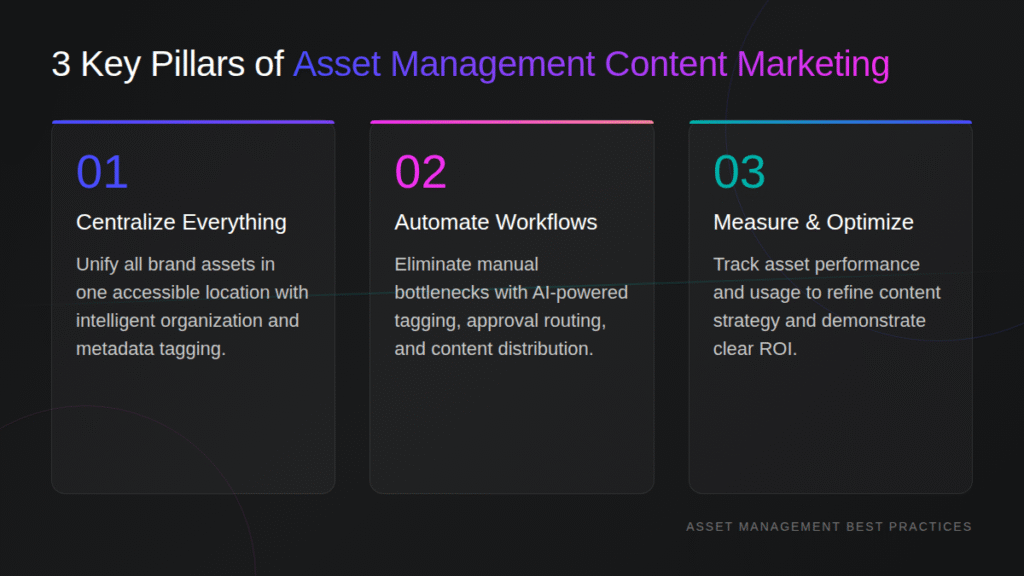
A marketing asset management platform eliminates these problems by centralizing everything in one accessible location.
Centralized Storage and Accessibility
A centralized asset library is the foundation of organized content operations. Rather than storing files across multiple platforms, shared drives, and personal desktops, a DAM system consolidates everything into a structured hub. Every stakeholder, from creative teams to external agencies, finds what they need quickly.
Establish clear folder structures and naming conventions from the start. Categorize assets by campaign, content type, and usage rights to prevent confusion. A DAM platform with AI-powered search capabilities helps teams instantly locate specific assets using metadata and visual recognition, eliminating the frustration of sifting through endless files.
Ensuring Brand Consistency Across Channels
Brand consistency means maintaining unified messaging and visual identity across all marketing touchpoints. Whether launching campaigns, updating websites, or publishing on social media, every asset should reflect the same standards. Digital asset management solutions enforce brand integrity by storing approved assets, brand templates, and pre-set design elements in controlled environments.
Use granular access controls to define who can upload, edit, or download assets. This feature prevents unauthorized changes and ensures only current, brand-compliant materials reach circulation. Teams can confidently share assets knowing they are working with approved versions.
Leveraging AI for Smarter Asset Discovery
AI-powered DAM platforms allow teams to locate content based on keywords, campaign names, visual similarity, or concepts. Instead of relying on outdated folder structures, marketers pull up files in seconds, saving time and reducing redundant content creation.
Invest effort in setting up metadata tags that reflect how your team actually searches for content. Think beyond basic categories. Include campaign themes, product lines, customer personas, and usage contexts to make asset discovery intuitive. The platforms driving real business value combine this foundational organization with intelligent automation that continuously improves discovery accuracy.
How Does Asset Management Software Enhance Creative Workflows?
Marketing teams operate in high-velocity environments where creative workflows, content production, and campaign delivery run simultaneously. Without the right tools, these processes bog down with unnecessary bottlenecks: approval delays, outdated materials, and wasted time hunting for assets.
A digital asset management system optimizes collaboration, speeds content deployment, and ensures every asset performs effectively across channels.
Streamlining Creative Team Collaboration
Consider a creative team working on a product launch. Designers create promotional visuals while copywriters craft headlines and marketers plan rollout strategy. Problems multiply when files get misplaced, revisions accumulate in email chains, and multiple asset versions create confusion. DAM platforms eliminate these challenges by providing unified spaces for real-time collaboration.
Set up automated review and approval processes within your DAM solution to eliminate back-and-forth delays. Stakeholders provide feedback directly on assets, accelerating decision-making and keeping projects on schedule. When everyone works from the same centralized system, accountability increases and timelines tighten.
Integrating with Your Existing Technology Stack
DAM platforms work best when integrated into existing workflows. Teams access and deploy content without jumping between disconnected systems. Leading solutions offer extensive pre-built connectors for creative tools like Adobe Creative Suite, marketing automation platforms, CMS systems, and e-commerce platforms.
When evaluating DAM software, prioritize integration capabilities that support your team’s current processes. A platform that connects directly with marketing automation tools, content management systems, and campaign managers reduces duplication and ensures creative assets are accessible exactly where teams need them.
Automating Distribution and Expiry Management
Managing marketing assets also means ensuring content deploys at the right time and retires when no longer relevant. Modern DAM solutions automate asset distribution based on scheduled campaigns, ensuring correct versions go live at the right moments. They also prevent outdated content from circulating by automatically archiving or expiring assets that no longer meet compliance or brand standards.
Use workflow automation features to set asset expiration dates and schedule content updates in advance. This foresight prevents teams from accidentally using outdated logos, expired promotional materials, or old product visuals in new campaigns. The result is consistent brand presentation and reduced compliance risk.
6 Factors for Choosing the Right DAM System
Selecting the right DAM system impacts how effectively your team manages digital assets, maintains brand consistency, and optimizes marketing operations. The platform you choose should align with your workflows, integrate with your tech stack, and scale alongside your needs.
- Scalability and Flexibility: Choose a solution that grows with your business, supporting increasing content volumes and expanding teams without performance degradation. Enterprise organizations managing petabytes of content need platforms built for that scale.
- User Experience and Accessibility: Look for intuitive interfaces that allow both technical and non-technical users to share assets, locate files, and collaborate efficiently. Adoption depends on usability.
- Automation and AI Capabilities: Ensure your platform includes capabilities like automated metadata generation, intelligent workflow routing, and AI-powered search. Organizations prioritizing AI report efficiency gains and faster time-to-market.
- Integration with Existing Systems: Your DAM tools should connect with CMS, marketing automation platforms, creative applications, and business systems. Disconnected tools create friction and data silos.
- Security and Governance: Implement a system that offers granular access controls, rights management, audit trails, and compliance tools to protect sensitive brand assets while ensuring only approved content reaches the market.
- Measurable ROI and Analytics: An intelligent platform provides data-driven insights into asset usage, helping you track engagement, optimize content strategy, and demonstrate clear business value.
The ultimate goal of implementing DAM is to enable marketing teams to work faster and more collaboratively while maintaining a consistent brand identity across every channel.
What Are Brand Management Best Practices in Content Marketing?
When every piece of marketing content aligns with your messaging, maintains consistency across campaigns, and reaches the right teams at the right time, you have mastered brand management. A marketing asset management platform centralizes control over brand assets and optimizes content workflows. These best practices maximize your investment:
Set Clear Permissions and Governance Controls: Define who can upload, edit, and download marketing materials. This practice prevents unauthorized changes and maintains brand integrity across distributed teams and external partners.
Use Standardized Templates and Brand Guidelines: Store pre-approved templates for presentations, social media posts, and campaign materials. Teams effortlessly produce on-brand content without starting from scratch every time.
Leverage Metadata and AI for Smarter Discovery: Tag assets with detailed metadata so teams locate specific content instead of recreating files. AI-powered tagging accelerates this process and improves accuracy over time.
Automate Workflows for Faster Approvals: Reduce delays by setting up automated approval processes. Approved assets are published without unnecessary bottlenecks while maintaining compliance checkpoints.
Monitor Performance and Optimize Content Strategy: Track usage and analyze which marketing assets drive engagement. These insights refine future content decisions and demonstrate ROI to stakeholders.
With a well-implemented DAM solution, your marketing team maintains a strong, consistent brand identity while ensuring content remains accessible, current, and optimized for performance.
What Sets Enterprise DAM Apart from Basic File Storage?
Marketing teams evaluating asset management solutions often wonder whether basic cloud storage might suffice. The differences are substantial. Traditional file storage handles uploads and downloads. Enterprise DAM platforms transform how organizations create, manage, and deploy content at scale.
Basic storage offers folders and search functionality. Enterprise DAM delivers intelligent automation, governance frameworks, and workflow orchestration that accelerate every stage of content operations. Where file storage creates silos, DAM creates connected ecosystems where assets flow seamlessly from creation through distribution.
Consider whether you need simple storage or strategic content operations infrastructure. Teams serious about scaling personalization, maintaining compliance, and driving measurable outcomes from content investments require platforms purpose-built for these challenges. The platforms leading analyst recognition, including Gartner, Forrester, and IDC, deliver capabilities that generic storage tools can’t match.
Modern content operations platforms combine DAM capabilities with workflow automation, planning tools, and analytics to manage the entire content lifecycle. This integrated approach eliminates the disconnection between storage and strategy that limits marketing effectiveness.
Maximize Your Marketing Impact with the Right Asset Management Strategy
Asset management content marketing streamlines content creation, improves brand consistency, and enhances collaboration across teams. The right DAM system empowers organizations with workflow automation, intelligent search, granular access controls, and seamless integrations that make managing brand assets across channels straightforward and efficient.
Aprimo understands the challenges marketing teams face when managing digital assets at enterprise scale. Our digital asset management platform helps centralize content, automate creative workflows, and ensure marketing materials always align with brand guidelines. With AI-powered tagging, real-time collaboration tools, and robust rights management, our solution gives teams the power to share assets confidently and scale marketing operations with ease. Request a demo today and discover how Aprimo can help your team work smarter, faster, and more effectively.
Frequently Asked Questions
What is the difference between DAM and basic cloud storage?
Digital asset management platforms provide intelligent organization, automated metadata tagging, workflow automation, and governance features that basic cloud storage lacks. While cloud storage handles file uploads and downloads, DAM systems manage the entire content lifecycle with tools for brand compliance, version control, usage analytics, and seamless distribution across channels.
How does AI improve asset management content marketing?
AI capabilities transform asset management by automating time-consuming tasks like metadata tagging, content categorization, and compliance checking. Modern platforms use machine learning to recognize image content, suggest relevant tags, surface similar assets, and predict which content will perform best for specific campaigns.
What ROI can organizations expect from DAM implementation?
Organizations implementing DAM solutions typically report faster asset creation, reductions in content duplication, and improved productivity. Specific outcomes depend on organizational scale and content volume, but measurable benefits include reduced time spent searching for assets, decreased recreation of existing content, faster campaign delivery, and improved brand consistency across channels.
How do I know if my organization needs a DAM system?
Organizations benefit from DAM when they experience challenges with scattered assets across multiple storage locations, difficulty maintaining brand consistency, time wasted recreating content, compliance concerns with asset usage, or scaling content operations across teams and markets. If your marketing team spends more time searching for assets than creating them, a structured DAM solution addresses these pain points.
What features matter most when evaluating DAM platforms?
Priority features include AI-powered search and metadata automation, robust workflow capabilities, extensive integration options with existing tools, enterprise-grade security and governance, scalability for growing content volumes, and analytics that demonstrate ROI. The best platform for your organization depends on team size, content complexity, and how far you need your DAM to extend into broader content operations.