
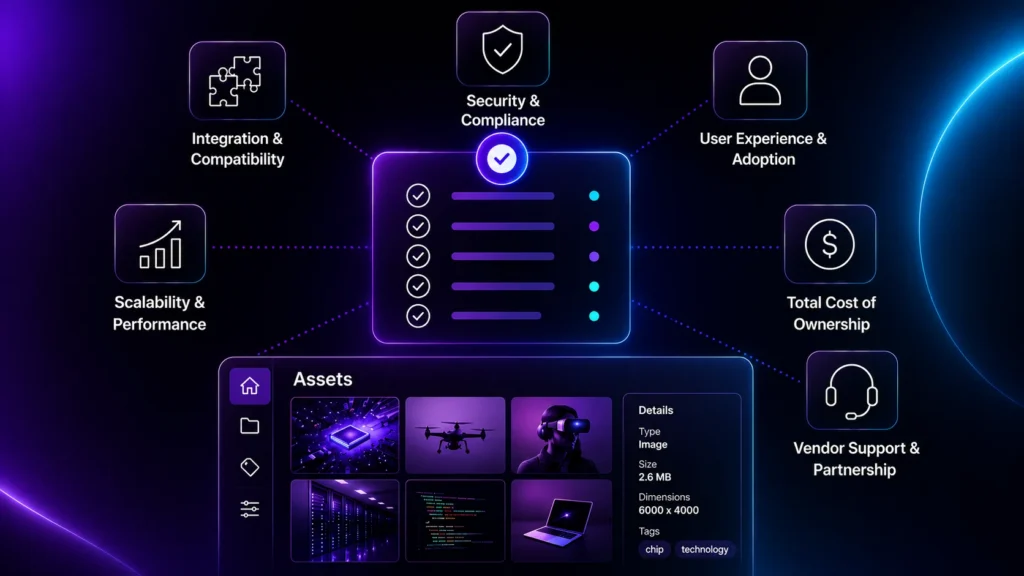
How to Select the Right DAM Vendor for Your Technology Company
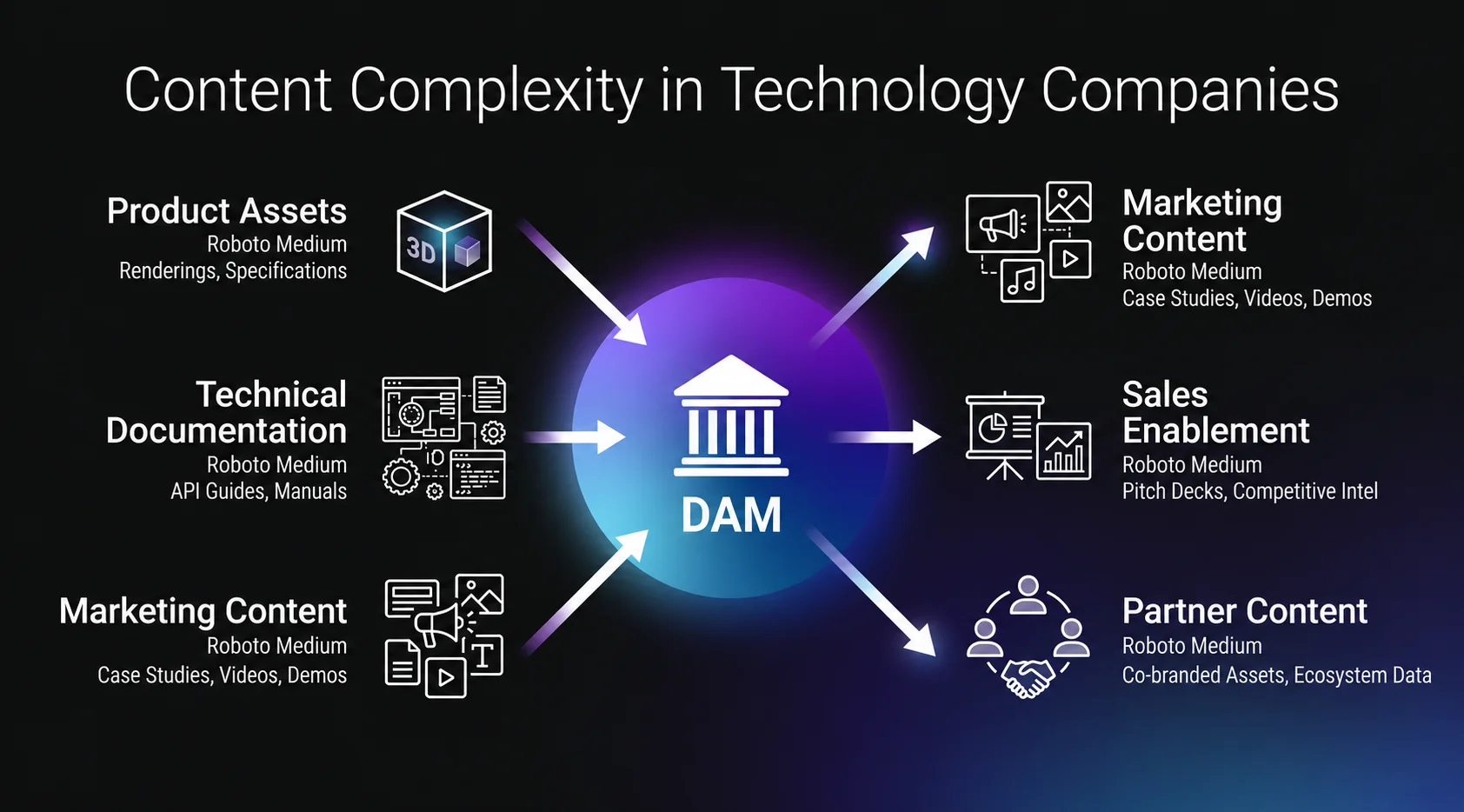
Technology companies face a unique set of content challenges. Unlike many other industries, they do not just manage marketing assets. They manage product documentation, technical diagrams, release notes, sales enablement materials, training content, and partner-facing collateral, often across multiple product lines and global markets.
This creates a different kind of complexity.
Content is not only high in volume but also constantly getting updated. A single product launch may require dozens of assets tailored for different regions, audiences, and channels. At the same time, accuracy, compliance, and version control become critical, especially for hardware specifications or software documentation.
This is why selecting the right digital asset management vendor is especially important for technology companies.
It is not just about storing assets. It is about managing how content moves through the business, how it connects to product systems, and how it supports global distribution, internally and externally. As Aprimo explains in its blog on how to build a business case for DAM, DAM is fundamentally about improving efficiency, governance, and scalability across content operations.
TL;DR
- Technology companies need DAM platforms that go beyond brand asset storage to support product content, documentation, and global distribution.
- Key selection criteria include governance, metadata, integrations, workflow automation, and scalability.
- DAM must align with product ecosystems such as PIM, CMS, and developer workflows.
- The right vendor supports both marketing and product content operations across global teams.
- Vendor selection should be based on operational fit, not just feature comparisons.
Why Technology Companies Have Unique DAM Requirements
Technology companies operate at the intersection of product and marketing content. This creates requirements that differ significantly from industries focused primarily on brand assets.
Product and product marketing content is often complex and highly structured. It may include specifications, manuals, release notes, certifications, and compliance documentation. This content must remain accurate and consistent across all channels.
At the same time, marketing teams need to adapt this content into campaigns, product pages, and customer-facing experiences.
This creates a dependency between systems.
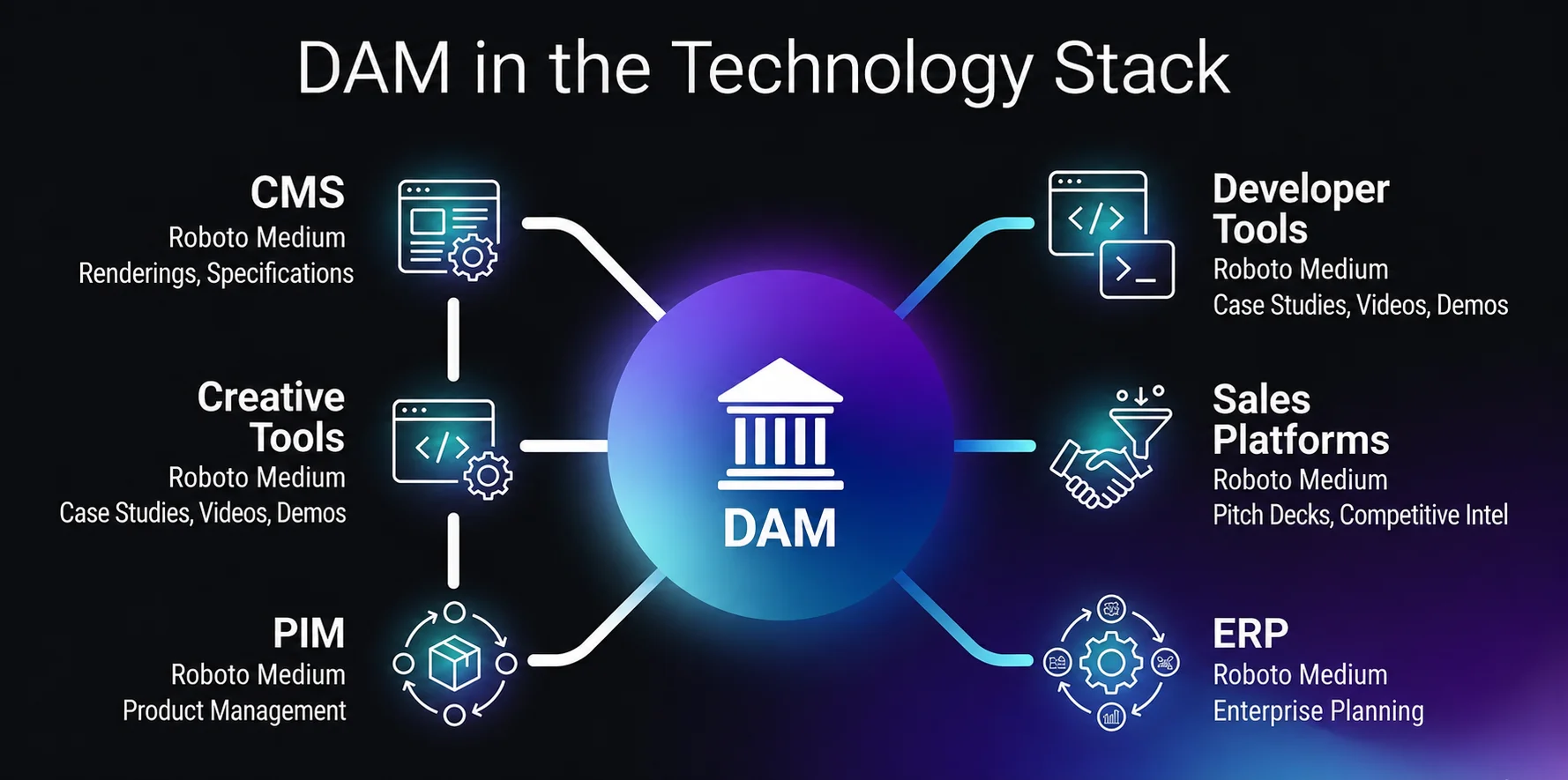
DAM must connect with product information systems, content management systems, and sales enablement tools to ensure that content remains aligned. As outlined in Aprimo’s article on how DAM integrates with CMS, PIM, and ERP systems, integration is critical for maintaining consistency between product data and digital assets.
Without this alignment, technology companies risk inconsistencies between product information and customer-facing content.
Start with Your Content and Operational Needs
Before evaluating vendors, technology companies need to define their own requirements clearly. This starts with understanding how content is created, managed, and distributed across the organization.
Key questions include:
- How is product content created and updated?
- How do marketing teams access and adapt product assets?
- How are approvals handled across teams and regions?
- How is content distributed to partners and customers?
These questions help identify the operational gaps that a DAM platform needs to address. Structure is essential for making content usable. For technology companies, this structure must accommodate both product and marketing content.
Evaluate Core DAM Capabilities
Asset Management and Discoverability
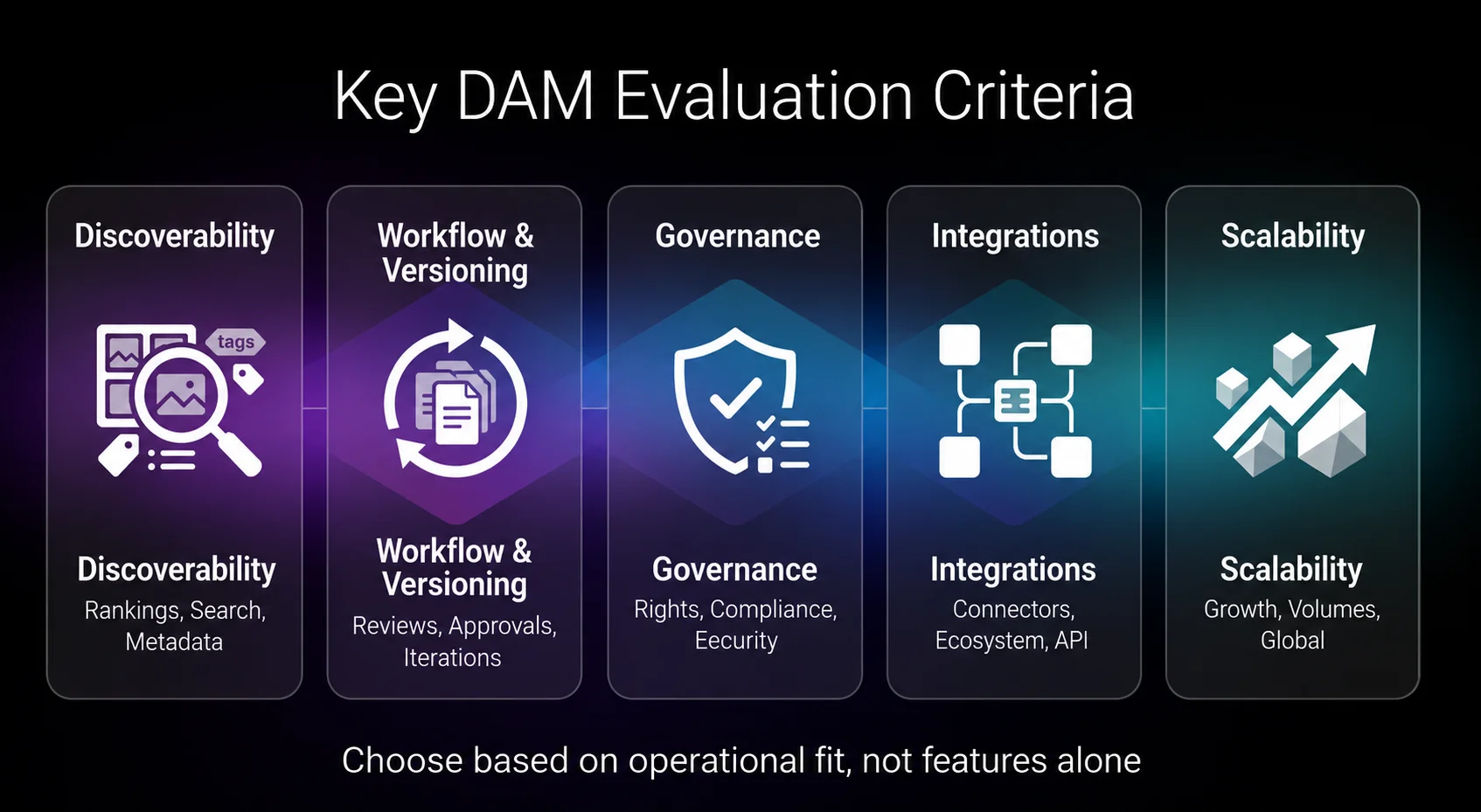
Technology companies need a DAM system that makes it easy to find the right content quickly. This requires strong metadata, taxonomy, and search capabilities.
Without proper organization, teams may struggle to locate the correct version of a product asset or documentation, leading to inefficiencies and errors.
Workflow and Version Control
Version control is especially important for technology companies.
Product updates happen frequently, and content must reflect the latest specifications and features. DAM platforms should support versioning, approvals, and clear visibility into asset status.
This ensures that teams always work with the most current and approved content.
Governance and Compliance
Governance is critical for managing product-related content.
Incorrect or outdated information can lead to compliance issues, customer dissatisfaction, or reputational risk. DAM platforms should provide strong controls for permissions, approvals, and usage rights.
The typical technology company has several segments in its external and internal audiences. As an example, customers and prospects need access to different forms of content. Similarly, on the internal side, sales and customer success teams in many cases need some similar content and many different assets as well. Creating the right governance structure allows teams to centrally define who gets access to what.
Assess Integration Capabilities
For technology companies, integration is often one of the most important factors in DAM selection.
A DAM platform must connect seamlessly with systems such as:
- Product Information Management (PIM) for hardware companies
- Content Management Systems (CMS)
- Developer tools and repositories
- Sales enablement and operations platforms
These integrations ensure that product content and marketing assets remain aligned.
Gartner Peer Insights reviews for Aprimo Digital Asset Management include integration and deployment as evaluation criteria, reinforcing the importance of integration capabilities for enterprise DAM buyers with complex technology stacks.
Without integration, DAM becomes a silo rather than a central hub.
Consider Scalability and Global Distribution
Technology companies often operate globally, with teams and customers distributed across multiple regions.
DAM platforms must support:
- Multi-language content
- Regional variations
- Partner and distributor access
- High-volume asset management
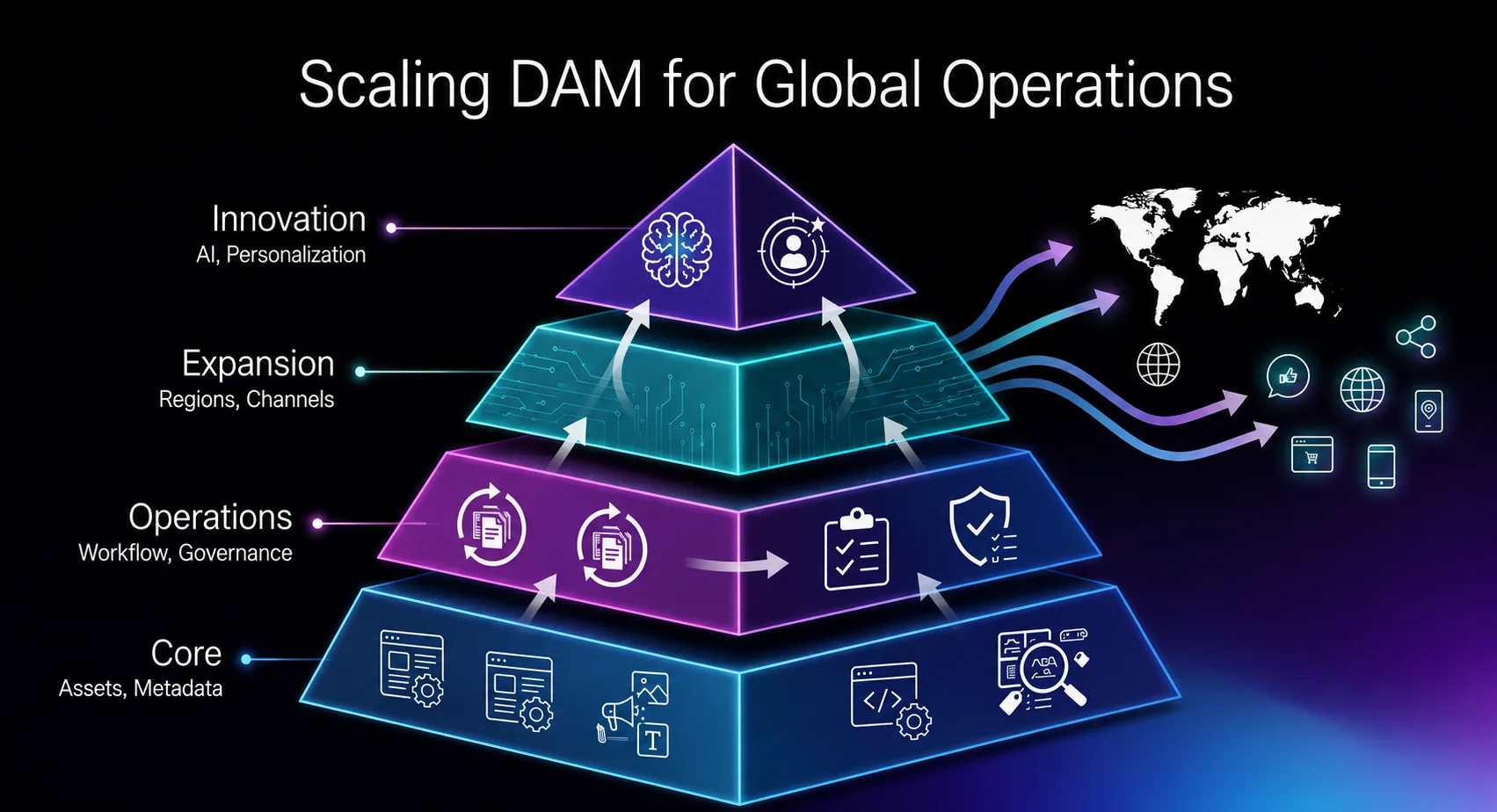
As Aprimo explains in its blog on facilitating brand consistency across global markets, global content operations require both flexibility and control.
The right DAM vendor should enable organizations to scale content operations without losing consistency or governance.
Evaluate AI Capabilities
Modern DAM platforms are evolving to include AI capabilities that help teams automate, scale, and improve content operations.
These features help technology companies:
- Automatically tag and organize assets
- Generate metadata, alt text, and asset descriptions
- Recommend content for reuse
- Create and optimize copy for different channels
- Review content for brand, regulatory, and accessibility alignment
For technology companies, AI is particularly valuable because it reduces manual work and helps content move faster across teams, markets, and channels. In a DAM environment, AI agents can turn assets into more structured, searchable, and reusable content that supports stronger digital experiences.
Vendor Fit: Beyond Features
Selecting a DAM vendor is not just about features. It is about fit.
Technology companies should evaluate vendors based on how well they align with their operating model. This includes:
- Support for both product and marketing content
- Ability to handle complex workflows
- Integration with existing systems
- Scalability for future growth
Forrester notes that organizations should focus on use cases and operational alignment rather than feature checklists when selecting DAM platforms.
This ensures that the chosen solution delivers long-term value.
Common Mistakes to Avoid
Technology companies often make several mistakes when selecting DAM vendors.
One common mistake is choosing a platform based on marketing use cases alone, without considering product content requirements. This can lead to gaps in functionality and integration.
Another mistake is underestimating the importance of governance and workflow. Without these capabilities, content operations can become inefficient and difficult to manage.
Finally, organizations sometimes overlook scalability. A DAM platform that works for a small team may not support enterprise-level complexity.
How Aprimo Supports Technology Companies
Aprimo is particularly well suited for technology companies that need DAM as part of a broader content operations model. Our platform supports:
- Enterprise-scale asset management
- Workflow automation and governance
- Integration with CMS, PIM, and other systems
- AI-driven content operations
These capabilities make it a strong option for organizations managing complex content ecosystems. For more details, read Aprimo for technology companies.
Conclusion
Selecting the right DAM vendor for a technology company requires a clear understanding of content operations, system integrations, and future growth.
It is not just about managing assets. It is about enabling content to move efficiently across the organization while maintaining accuracy, consistency, and governance.
By focusing on operational fit, scalability, and integration, technology companies can choose a DAM platform that supports both product and marketing content effectively.
FAQ
What should technology companies look for in a DAM vendor?
Technology companies should look for DAM vendors that support both product and marketing content, including strong metadata, workflows, and governance capabilities. They should also prioritize integration with systems like PIM and CMS to ensure content consistency.
Why is integration important for DAM in technology companies?
Integration ensures that product data and digital assets remain aligned across systems. This is critical for maintaining accuracy and consistency in customer-facing content.
How does DAM support product content management?
DAM helps manage product assets such as images, documentation, and specifications in a centralized system. It ensures that teams can access and use the correct content efficiently.
What role does AI play in DAM selection?
AI enhances DAM by automating tasks such as tagging, search, and content recommendations. It also provides insights into content performance, helping teams optimize their strategies.
How do you choose the best DAM vendor?
The best DAM vendor is one that aligns with your organization’s operational needs, integrates with your systems, and supports scalability. It should also provide strong governance and workflow capabilities to manage content effectively.