

The Retail Challenge
Retail and CPG teams move at high speed. Seasonal launches, promotions, and SKU refreshes all require accurate images, videos, and copy. Without a unified library, content spreads across shared drives, e-commerce folders, and agency links. That creates duplicate work, mismatched visuals, and late product pages. A shared DAM solves this by giving marketing and merchandising one source of truth with shared rules and repeatable workflows.
TL;DR
Retail leaders centralize creative and product visuals in a single Digital Asset Management system, align taxonomy with PIM data, and automate workflows that serve both marketing and merchandising calendars. With Aprimo, teams connect product records to imagery, approve once, and distribute everywhere with control over versions, rights, and channel readiness.
What “Organized” Means in Retail/CPG
To be truly organized, a retail content library must connect each asset to the product data and campaign context that drive usage decisions. That requires:
- A central library for every brand, product line, and region
- A shared taxonomy that ties assets to SKUs, collections, seasons, and channels
- Governed workflows that align approvals for both launch calendars
- Distribution connectors that feed e-commerce, marketplaces, and retail partners
Who Benefits
- Marketing: Finds approved hero imagery, lifestyle shots, and promotional variants without digging through folders.
- Merchandising: Pulls accurate, rights-cleared assets for assortments and planograms.
- E-commerce: Publishes the right renditions with correct aspect ratios and attributes.
- Agencies and Vendors: Contribute assets into a governed pipeline instead of ad hoc file drops.
- Legal and Brand: Enforce usage rights, embargo dates, and brand standards at the source.
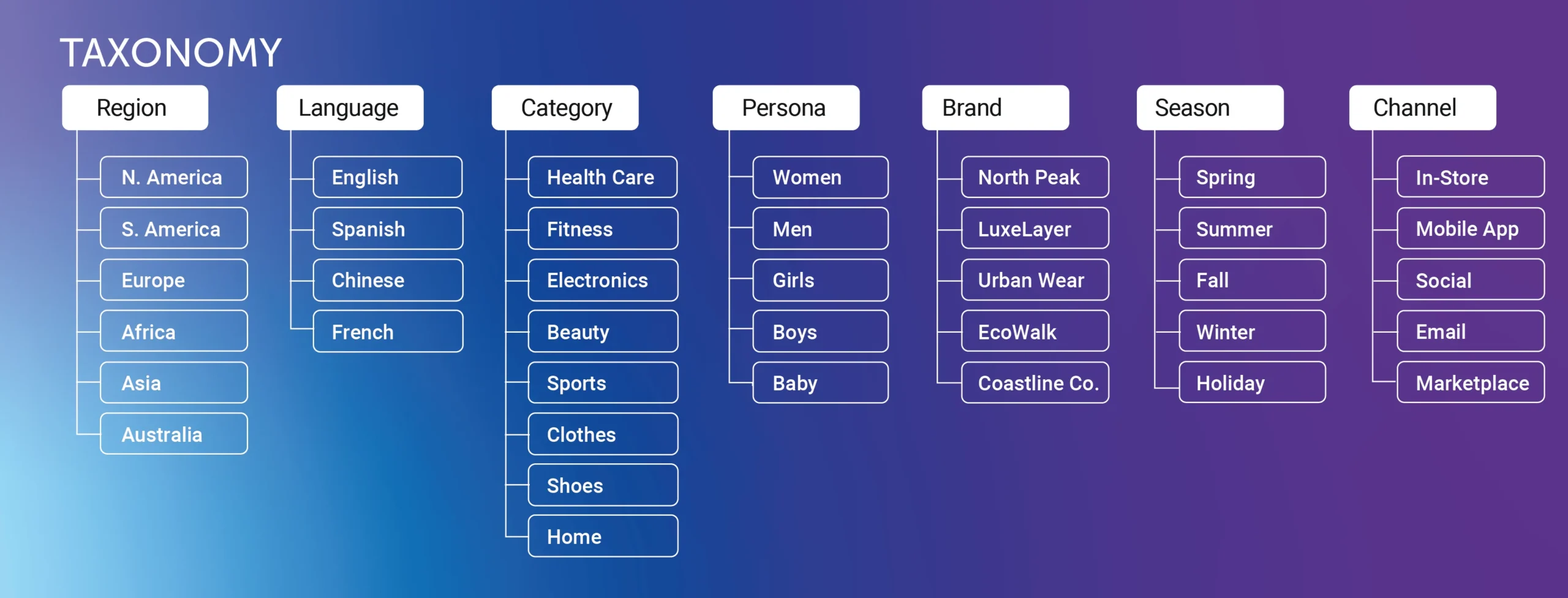
How Top Brands Structure Their Libraries
Centralize assets and standardize taxonomy
Create a single repository for all creative and product visuals. Use a taxonomy that mirrors how the business works: brand, category, season, collection, region, and channel. Tie assets to SKUs and product families so merchandising and e-commerce can filter by assortment or market.
Map metadata to PIM and commerce needs
Adopt metadata fields that match product attributes and channel rules. Minimum set: SKU, product name, colorway, size, region, season, usage rights, expiration, and channel readiness. Enrich with campaign, offer, and placement. This removes guesswork during publish.
Align workflows across calendars
Marketing runs on campaign timelines. Merchandising runs on buying and floor set timelines. Use a single workflow that routes creative for review, then exposes approved assets to merchandising milestones. When a product flips to ready, the workflow pushes exact renditions to e-commerce and partner feeds.
Automate renditions and approvals
Generate required sizes and crops automatically for PDPs, PLPs, marketplaces, email, social, and in-store screens. Lock the approved version so teams cannot accidentally publish a draft. Capture comments and annotations for fast fixes.
Govern rights and regional variants
Store license terms, embargo dates, and model release data with each asset. Block delivery to channels where rights do not apply. Manage localized variants, packaging differences, and market-specific imagery without duplicating entire folders.
Integrate with the ecosystem
Connect the DAM to PIM, e-commerce, CMS, and creative tools. Pull product data in, push approved assets out, and keep everything synchronized when items are updated or retired.
What “Good” Looks Like in Practice
- A merchant filters by brand, season, and category, then selects only assets with current rights for their region.
- The e-commerce team receives an automatic package of PDP images with correct crops and alt text.
- Marketing schedules a promotion and links hero assets to the SKUs in scope. The system distributes the right versions to email, web, and paid channels.
- When a license nears expiration, the DAM flags affected listings and prevents further publish until a new asset is approved.
How Aprimo Helps Retail and CPG Teams
- Unified library for marketing and merchandising: One source for hero shots, pack shots, lifestyle content, and rich media.
- AI-assisted metadata and tagging: Faster SKU mapping, season tagging, and visual similarity search for quick alternates.
- Workflow automation: Shared review paths, campaign checkpoints, and calendar alignment across teams.
- Rights and compliance controls: Enforce license terms, embargoes, and regional restrictions at the asset level.
- Rendition automation and delivery: Ready-to-publish packages for PDPs, marketplaces, and retail partners.
- Integrations: Connects to PIM and commerce platforms so data and assets stay in sync.
Why This Approach Works
A single system reduces errors and accelerates launches. Metadata mapped to SKUs enables precise discovery. Automated renditions remove repetitive work. Governance at the source keeps every channel on brand and in compliance. Teams collaborate faster because they trust the library.
Closing Thoughts
Top retail brands treat digital assets like operational infrastructure. They centralize, tag, approve, and distribute from one platform that respects both marketing creativity and merchandising precision. Aprimo provides that foundation and scales with product lines, markets, and seasons.
FAQ
How should marketing and merchandising share taxonomy?
Use a shared base. Organize by brand, category, season, and region. Add product and campaign fields so both teams can filter without creating separate libraries.
What metadata fields are essential for e-commerce?
SKU, product name, colorway, size, rights, expiration, region, channel readiness, and required rendition sets. Many teams also store alt text and PDP sequencing.
Can one workflow support campaign and product launches?
Yes. Use a combined path that captures creative review, legal approval, and merchandising readiness. Release approved assets to e-commerce automatically.
How does Aprimo connect to PIM and commerce?
Aprimo syncs product attributes from PIM, then publishes approved assets and renditions to e-commerce and partner endpoints to keep listings accurate.