

A structured digital asset management strategy accelerates campaigns and protects brand integrity.
- Organizations with mature DAM implementations report 30% ROI through reduced duplication, faster asset retrieval, and streamlined workflows.
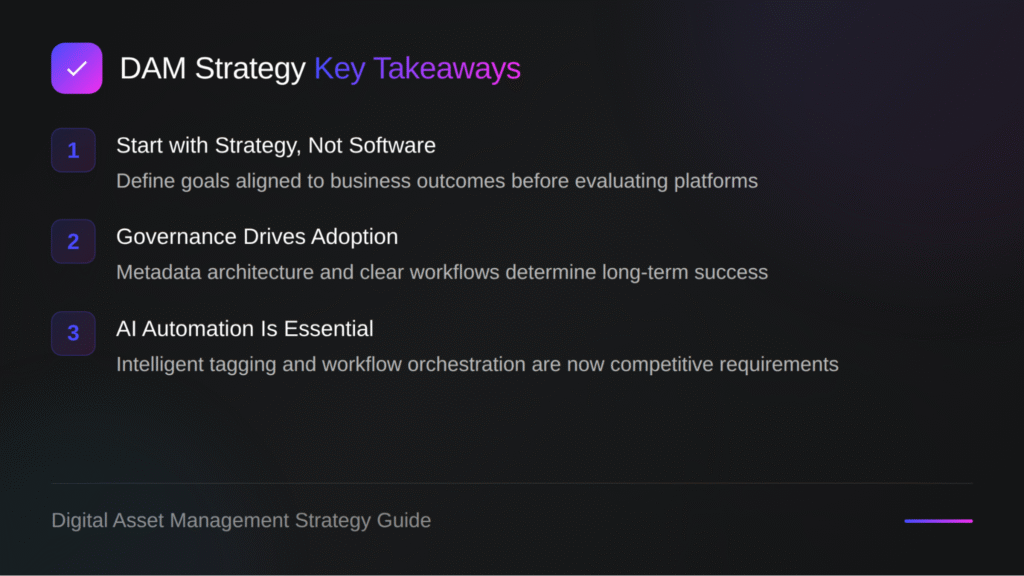
- Enterprise DAM solutions require metadata governance, stakeholder alignment, and integration with existing tools.
- AI-powered automation is reshaping how companies manage content at scale, with intelligent tagging and workflow orchestration becoming essential capabilities.
Start with a comprehensive audit of current assets and pain points before evaluating platforms; the best strategy addresses specific organizational challenges, not generic industry benchmarks.
The digital asset management market reached an impressive scale in 2025, with large enterprises contributing nearly 63% of revenue by integrating DAM with ERP, CRM, and marketing technology suites. Yet many organizations still struggle with scattered files across shared drives, inconsistent naming conventions, and creative teams burning hours searching for assets that may or may not exist.
Building a digital asset management strategy that actually works requires moving toward a comprehensive approach that addresses people, processes, and technology together. The best strategies encompass governance frameworks, metadata architecture, integration planning, and ongoing optimization.
This guide breaks down how to develop a strategy that delivers measurable value, whether you’re implementing your first enterprise DAM solution or refining an existing system that isn’t meeting expectations.
What Makes a Digital Asset Management Strategy Successful?
The difference between a thriving DAM implementation and an expensive digital filing cabinet comes down to strategic planning. Organizations that treat DAM as a software purchase rather than a business transformation consistently underperform, regardless of which platform they select.
Aligning DAM Goals with Business Objectives
Every effective strategy starts with clarity about what success looks like for your specific organization. For a global consumer brand, success means reducing time-to-market for localized campaigns across 50+ regions. For a healthcare company, priorities center on compliance documentation and audit trails. A financial services firm focuses on brand governance and regulatory requirements.
Generic goals like “better organization” or “improved efficiency” lack the specificity needed to guide implementation decisions. Instead, define measurable outcomes tied to business impact. Consider campaign launch time, asset reuse rates, brand compliance scores, or cost savings from reduced duplication.
Understanding Your Current State
Before designing where you want to go, document where you actually are. A comprehensive asset audit reveals the true scope of your organization, including how many assets exist, where they live, who owns them, how they are used, and where the bottlenecks occur.
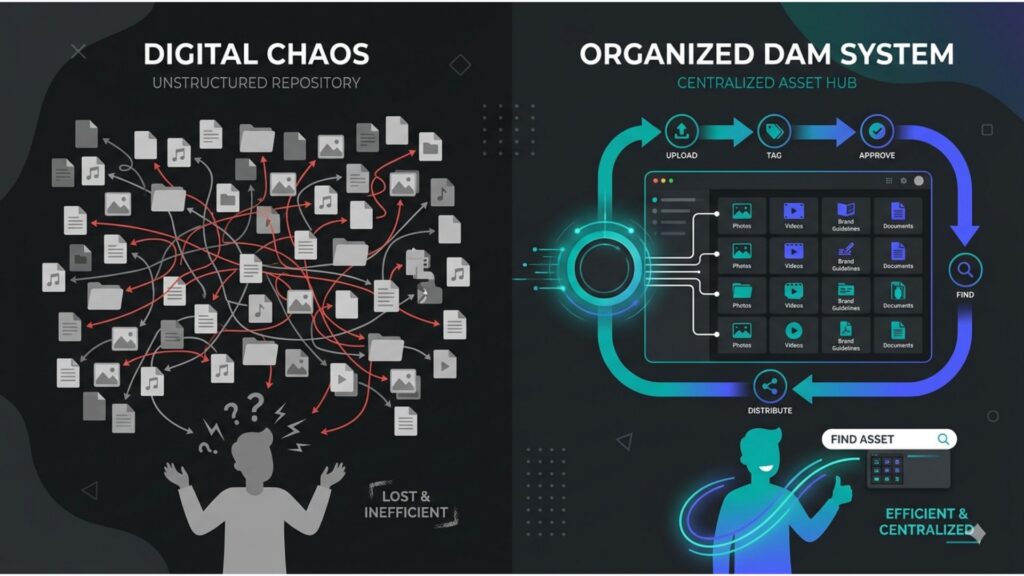
This discovery process often surfaces uncomfortable realities. Marketing may have assets scattered across five different cloud storage systems. Creative teams might be recreating assets because existing versions can’t be found. Brand guidelines may exist as static PDFs that nobody references. Understanding these pain points ensures your strategy addresses real problems rather than hypothetical ones.
How Do Enterprise DAM Solutions Differ from Basic Storage?
Cloud storage platforms like Google Drive or Dropbox solve one problem well: making files accessible from anywhere. But accessibility alone doesn’t create strategic value for organizations managing thousands of creative assets across complex workflows.
The Limitations of Generic Storage
Basic storage treats every file the same, whether it’s a final approved campaign asset or an early draft that should never see daylight. Without metadata governance, version control, or permission structures designed for content operations, organizations face predictable challenges. Teams spend excessive time searching for files. Wrong versions get published. Brand inconsistencies creep across channels. Compliance documentation becomes a scramble during audits.
The fundamental difference with enterprise DAM solutions lies in treating digital assets as strategic resources rather than passive files. Advanced search capabilities, automated metadata, workflow orchestration, and integration with creative and marketing tools create operational efficiencies.
When Organizations Need Enterprise-Grade DAM
Several indicators suggest an organization has outgrown basic storage solutions. Content volume exceeding tens of thousands of assets typically creates search and organization challenges that folder structures can’t solve. Multiple teams or agencies requiring access to shared assets introduce governance complexity. Global operations demanding localized content across regions require sophisticated asset management capabilities.
Organizations managing campaigns across multiple channels and formats need the workflow automation that purpose-built DAM provides. Similarly, compliance requirements in regulated industries demand audit trails and permission controls beyond what general storage offers.
What Are the Essential Components of a DAM Strategy?
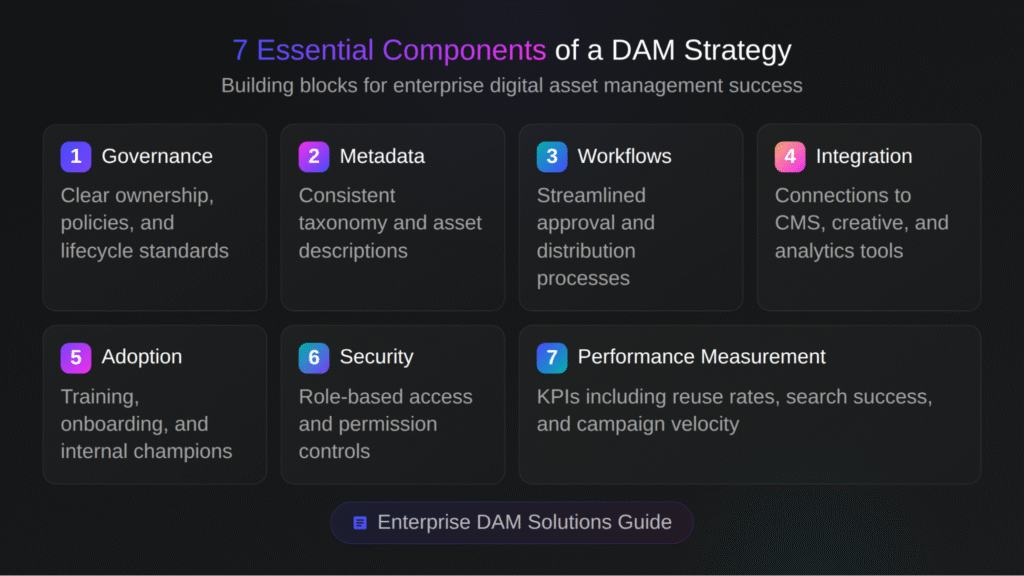
Building an effective digital asset management strategy involves seven interconnected elements to create lasting value.
1. Governance Framework: Establish clear ownership, policies, and standards for how assets move through their lifecycle. Define who can upload, edit, approve, and distribute content. Create guidelines for asset retirement and archival.
2. Metadata and Taxonomy Architecture: Design a consistent system for categorizing and describing assets. Effective metadata makes the difference between users finding what they need in seconds versus giving up and recreating content. Include fields for usage rights, expiration dates, brand guidelines compliance, and any industry-specific requirements.
3. Workflow Design: Map how assets flow from creation through approval to distribution and eventual retirement. Identify bottlenecks in current processes, and design workflows that eliminate manual handoffs where possible. Consider how AI agents can automate routine tasks like tagging, compliance checking, and format conversion.
4. Integration Strategy: DAM systems deliver maximum value when connected to the broader technology ecosystem. Prioritize integrations with creative tools where content originates, CMS platforms where content publishes, and analytics systems that measure performance.
5. User Adoption Plan: The most sophisticated DAM strategy fails if people don’t use the system. Plan for comprehensive onboarding, role-specific training, and ongoing support. Identify internal champions who can advocate for adoption and provide peer support.
6. Security and Permissions Model: Design access controls that balance protection with usability. Overly restrictive permissions discourage adoption, while insufficient controls risk brand damage or compliance violations. Consider how different user groups need to interact with assets, and build appropriate role structures.
7. Performance Measurement: Define metrics that demonstrate DAM value and track them consistently. Common indicators include search success rates, asset reuse percentages, time from request to delivery, duplicate content reduction, and campaign launch velocity. Regular reporting maintains organizational support for the platform.
How Should Organizations Approach Implementing DAM?
Implementation success depends on treating DAM as a change management initiative rather than a technology deployment. Organizations that rush to migrate assets without addressing process and adoption questions typically struggle with user resistance and underwhelming results.
Phase Planning for Enterprise Rollout
Rather than attempting organization-wide deployment immediately, successful implementations start with a focused pilot. Select a team or use case where pain points are acute and stakeholders are motivated. Use the pilot to refine metadata structures, test workflows, and build internal expertise before expanding.
The best practices for implementing DAM emphasize iterative expansion over big-bang deployments. Each phase should deliver tangible value while creating foundations for subsequent growth. This approach manages risk while building organizational confidence in the platform.
Migration Considerations
Moving existing assets into a new DAM requires careful planning. Not every file deserves migration. Asset audits should identify content that is outdated, redundant, or irrelevant. Migrating everything creates the same chaos in a new location.
For assets that warrant migration, plan for metadata enrichment during the process. Raw file uploads without proper tagging undermine the searchability and governance capabilities that make DAM valuable. Consider whether AI-powered metadata generation can accelerate this process while maintaining quality.
Training and Adoption Strategies
Different user groups require different training approaches. Creative teams need to understand how DAM integrates with their existing tools. Marketing managers need visibility into asset availability and workflow status. Executive stakeholders need reporting dashboards that demonstrate business value.
Ongoing support matters as much as initial training. Establish feedback channels where users can report issues and request improvements. Regular system updates based on user input build ownership and engagement that sustain adoption over time.
What Role Does AI Play in Modern DAM Strategy?
Artificial intelligence is now essential in enterprise solutions for DAM. Organizations evaluating platforms should consider AI as a current requirement for competitive content operations.
Intelligent Metadata and Search
AI-powered tagging eliminates the metadata bottleneck that historically limited DAM effectiveness. Instead of requiring manual entry for every asset, intelligent systems analyze visual content, extract text, and automatically generate descriptive tags.
Natural language search capabilities transform how users interact with asset libraries. Rather than constructing precise queries using specific metadata terms, users describe what they need conversationally. The system interprets intent and returns relevant results, reducing the expertise barrier for effective asset discovery.
Workflow Automation with AI Agents
AI agents automate multi-step processes that previously required human intervention. Planning agents can analyze campaign requirements and suggest relevant existing assets. Compliance agents can review content against brand guidelines before approval. Production agents can automatically generate format variations optimized for different channels.
Rather than treating DAM as a storage and retrieval system, organizations can leverage it as an intelligent automation platform that actively contributes to content production.
Predictive Content Recommendations
Advanced DAM platforms analyze usage patterns to suggest assets likely to perform well in specific contexts. If certain image styles consistently generate higher engagement in email campaigns, the system can surface similar assets when marketing teams plan new campaigns. This predictive intelligence transforms DAM from reactive storage to proactive strategic support.
How Can Organizations Measure DAM ROI?
Quantifying digital asset management value requires looking beyond software costs toward operational impact across the content lifecycle.
Direct Cost Savings
The most tangible ROI metrics come from reduced duplication and improved efficiency. Track how much time users spend searching for assets before and after implementation. Organizations report 30% ROI from DAM implementations, driven by faster production cycles, reduced time to find assets, and fewer licensing costs.
Calculate storage savings from eliminating duplicate files. Measure reduction in agency or freelancer costs when teams can repurpose existing assets instead of commissioning new creative. Quantify avoided compliance penalties when proper rights management prevents unauthorized asset usage.
Indirect Business Benefits
Some DAM benefits resist simple quantification but carry significant business impact. Brand consistency improves when all teams access approved, current assets rather than outdated or off-brand materials. Time-to-market accelerates when assets move through streamlined workflows rather than manual approval chains.
Customer experience benefits from consistent, high-quality content across all touchpoints. Employee satisfaction increases when creative teams spend time on meaningful work rather than administrative asset hunting. These benefits compound over time, creating strategic advantages that justify ongoing DAM investment.
Building the Business Case
Present DAM ROI in terms that executives care about. Connect efficiency metrics to revenue impact where possible. A 25% reduction in campaign production time might translate to additional campaigns per quarter, each generating measurable pipeline or revenue. Frame brand consistency improvements in terms of customer lifetime value or acquisition cost reduction.
The benefits of digital asset management extend across departments, so build coalitions of stakeholders who can articulate value from their perspectives. Marketing, creative, legal, and IT each experience different benefits that together create a compelling organizational case.
What Are Common Pitfalls in DAM Strategy Development?
Understanding where organizations struggle helps avoid repeating their mistakes. Several patterns consistently undermine DAM initiatives.
Technology-First Thinking
Selecting a platform before defining requirements invites misalignment. Features that sound impressive in demos may be irrelevant for your specific use cases. Conversely, capabilities critical for your operations might be missing or inadequate in platforms selected for other reasons.
Start with thorough requirements documentation. Understand workflows, user needs, integration requirements, and governance policies before evaluating vendors. Use requirements as evaluation criteria rather than letting vendor capabilities define what you think you need.
Underestimating Change Management
Organizations must invest in communication, training, and incentive structures that encourage adoption. Executive sponsorship signals organizational priority. Middle management accountability ensures teams actually use the system. Individual recognition rewards champions who drive adoption among peers.
Neglecting Ongoing Optimization
Your DAM strategy should be an ongoing program. Content needs evolve. Technology capabilities advance. User expectations shift. Organizations that treat implementation as the finish line rather than a starting point gradually fall behind.
Build ongoing governance into your strategy. Schedule regular reviews of metadata structures, workflow efficiency, and user satisfaction. Allocate resources for continuous improvement rather than assuming the initial configuration will remain optimal indefinitely.
Frequently Asked Questions
How long does implementing a digital asset management strategy typically take? Implementation timelines vary based on organizational complexity, asset volume, and integration requirements. Focused pilot deployments often launch within two to three months, while organization-wide rollouts for large enterprises may span six months to a year. Phased approaches reduce risk while delivering incremental value.
What is the difference between DAM and content management systems? DAM systems manage the creation, storage, and distribution of digital assets like images, videos, and design files. Content management systems focus on assembling and publishing content for digital experiences. Most enterprise organizations use both, with DAM providing the asset foundation that feeds into CMS publishing workflows.
How much should organizations budget for enterprise DAM solutions? Costs depend on user count, storage requirements, integration complexity, and feature tiers. Enterprise implementations typically involve subscription fees, implementation services, and ongoing optimization investment. Organizations should evaluate the total cost of ownership against expected efficiency gains and revenue impact rather than comparing license fees alone.
Can AI replace human involvement in digital asset management? AI automates routine tasks like tagging, format conversion, and compliance checking, but human judgment remains essential for strategic decisions. Creative direction, brand evolution, and complex workflow exceptions require human expertise.
Getting Started with Enterprise DAM Solutions
Creating an effective digital asset management strategy requires an honest assessment of current challenges, a clear definition of desired outcomes, and realistic planning for the organizational change involved. Success ultimately depends on how well the strategy addresses your specific business context.
Organizations ready to transform their content operations benefit from partnering with platforms that combine enterprise-scale capabilities with intelligent automation. Aprimo delivers the Agentic DAM capabilities that enable organizations to centralize assets, automate workflows, and maintain brand integrity across global operations. Request a demo to see how intelligent content operations can accelerate your DAM strategy.