
Content has become one of the most valuable assets in modern marketing, but most organizations still struggle to use it effectively. Teams produce large volumes of content across campaigns, channels, and regions, yet often lack clear visibility into what actually works. The result is a growing gap between content production and content performance.
This is where data-driven content strategies come into focus.
A data-driven approach shifts content strategy from intuition to insight. Instead of relying on assumptions, teams use real data to guide what content to create, how to optimize it, and where to deploy it. This enables organizations to align content efforts with measurable outcomes such as engagement, conversion, and revenue.
As Aprimo highlights in its content intelligence platform overview, modern content strategies are no longer built on static metrics alone. They are powered by AI-driven insights that connect content performance directly to business impact, enabling teams to continuously refine and improve their approach.
TL;DR
Data-driven content strategies use AI, analytics, and behavioral insights to guide content creation, optimization, and distribution.
- Content intelligence helps teams identify performance trends, content gaps, and opportunities for reuse.
- DAM enables structured, governed content that can be analyzed and reused effectively.
- Systematic content planning aligns strategy with execution using AI-driven insights and planning tools.
- The most effective strategies connect data, workflows, and personalization to drive measurable business outcomes.
What Is a Data-Driven Content Strategy?
A data-driven content strategy is an approach to planning, creating, and managing content based on insights derived from data rather than assumptions or isolated performance metrics. It integrates analytics, audience behavior, and content intelligence to inform decisions across the entire content lifecycle.
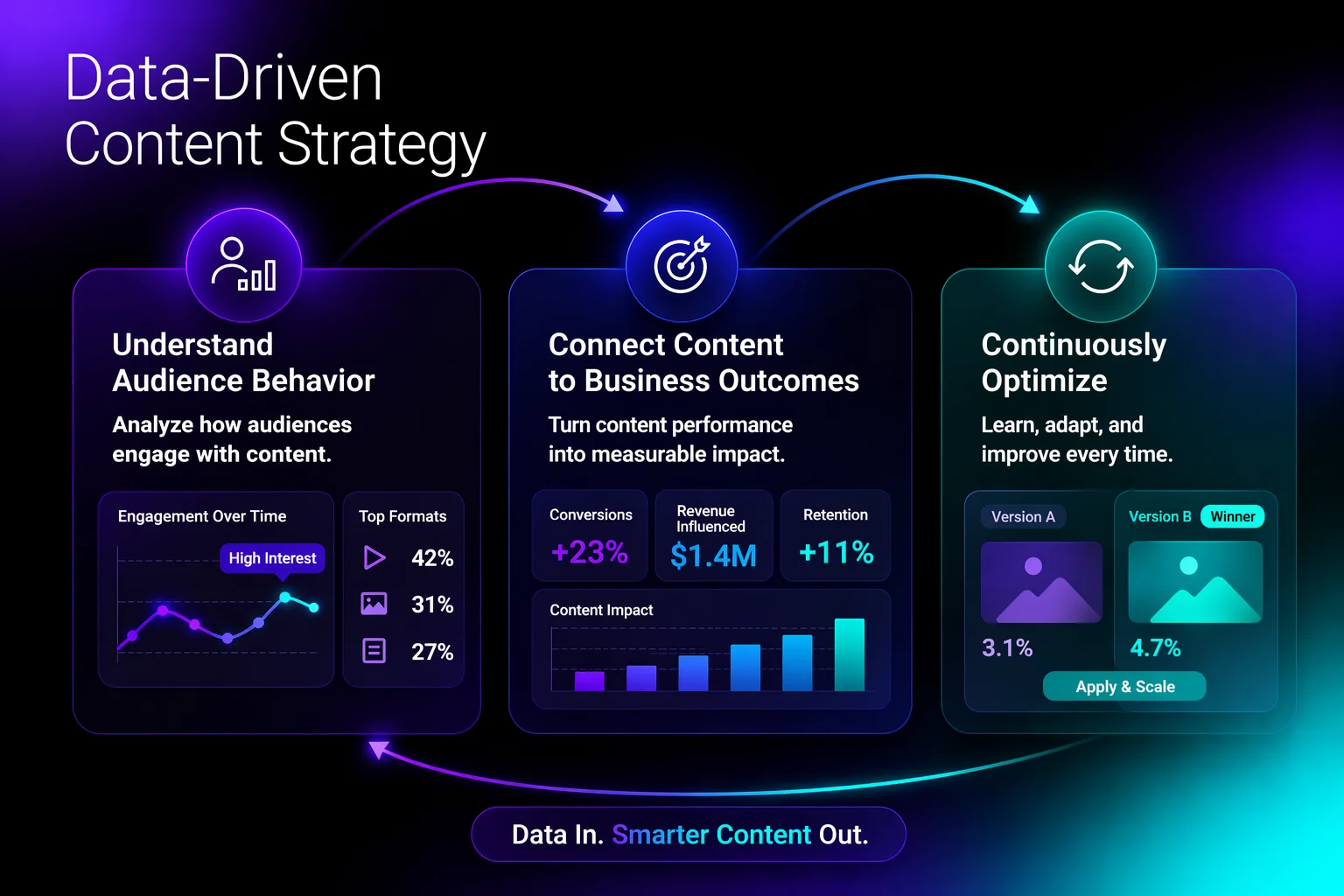
At its core, this strategy focuses on three key principles.
First, it prioritizes understanding audience behavior. This includes analyzing how users interact with content, what formats they engage with, and where they drop off. Second, it connects content performance to business outcomes, ensuring that content contributes to measurable goals such as conversions and customer retention. Third, it emphasizes continuous optimization, using insights to refine content over time rather than treating it as static.
This shift is critical because traditional content strategies often rely on periodic reporting rather than real-time insights. In contrast, data-driven strategies operate as continuous feedback loops that evolve alongside audience behavior and market dynamics.
Why Data-Driven Content Strategies Matter
Enterprise organizations face increasing pressure to deliver more content across more channels while maintaining consistency and relevance. Without a data-driven approach, this often leads to inefficiencies, including duplicated assets, underused content, and misaligned messaging.
One of the most significant challenges is content waste. Research frequently shows that a large percentage of enterprise content goes unused due to poor discoverability or lack of relevance. This not only increases production costs but also slows down marketing execution.
Data-driven strategies address this problem by identifying what content is valuable and where it can be reused. Instead of creating new assets for every campaign, teams can focus on optimizing and repurposing high-performing content. This improves both efficiency and ROI.
Additionally, data-driven strategies enable better personalization. Modern customers expect relevant, tailored experiences, and achieving this at scale requires a deep understanding of content performance and audience behavior. Without data, personalization becomes guesswork. With data, it becomes a structured and scalable capability.
The Role of Content Intelligence in Strategy
Content intelligence is the engine behind data-driven content strategies. It provides the insights needed to understand content performance, identify gaps, and guide decision-making.
Aprimo’s content intelligence capabilities go beyond basic metrics by analyzing how content contributes to conversions and revenue. This allows organizations to prioritize high-impact content and align strategy with business outcomes.
Content intelligence enables teams to:
- Identify high-performing assets and replicate their success
- Detect content gaps based on audience behavior and engagement
- Understand how content performs across different channels
- Optimize content placement and usage for maximum impact
As highlighted in Aprimo’s blog on AI-driven content personalization and speed, AI-powered insights can also recommend content improvements and identify opportunities for personalization, helping teams deliver more relevant experiences at scale.
This transforms content strategy from a reactive process into a proactive one, where decisions are guided by continuous insight.
Systematic Content Planning with AI and Content Intelligence
One of the most critical aspects of a data-driven content strategy is planning. Without a structured approach to planning, even the best insights cannot be translated into effective execution.
Systematic content planning connects data-driven insights with actionable content plans. It ensures that content creation aligns with business goals, audience needs, and brand guidelines.
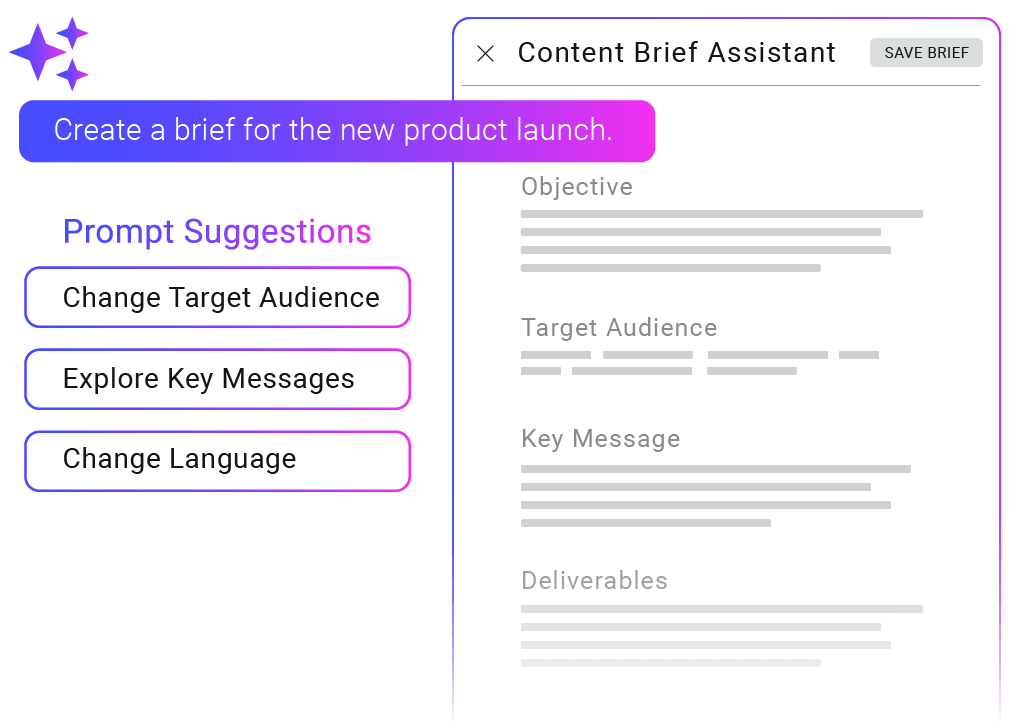
Aprimo’s recent innovations, including Intelligent Content Brief and Planning Agents, demonstrate how AI can transform this process. These tools use AI-assisted brief generation, automated workflows, and real-time collaboration to streamline planning and ensure alignment across teams.
This approach allows organizations to:
- Translate content gap insights into actionable content plans
- Align campaigns with audience behavior and engagement data
- Ensure consistency with brand guidelines and messaging frameworks
- Reduce time spent on manual planning and approvals
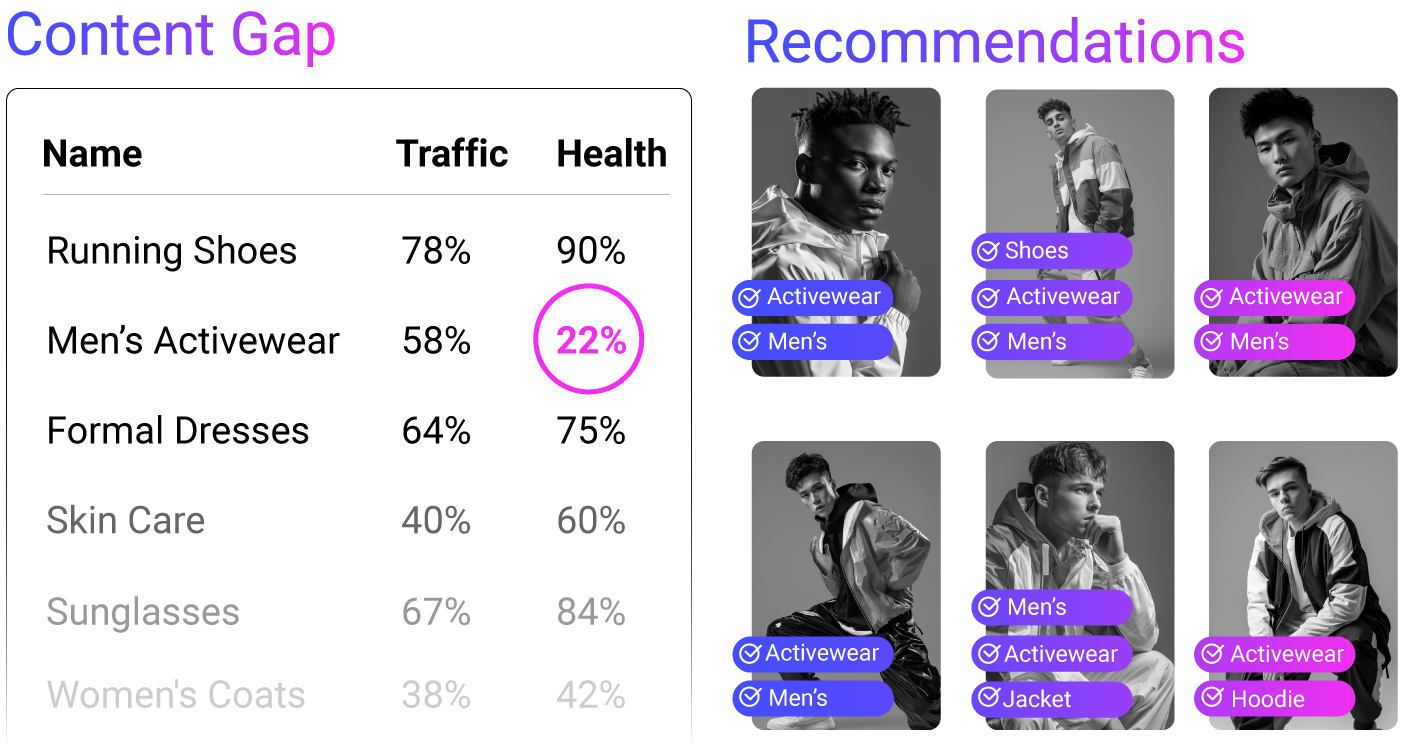
Content gap insights are particularly valuable in this process. By analyzing audience behavior and content performance, content intelligence can identify areas where content is missing or underperforming. These insights can then feed directly into planning tools like Aprimo Plan, enabling teams to prioritize the most impactful content initiatives.
Planning agents further enhance this process by automating parts of content planning. They can generate briefs, suggest content variations, and align content with strategic objectives, reducing manual effort and improving consistency.
The result is a more connected approach where planning is not separate from execution but integrated into the broader content operations framework.
Connecting Strategy, Execution, and Personalization
A data-driven content strategy is most effective when it connects strategy with execution and personalization.
Content intelligence identifies what content should be created and how it should be optimized. Planning tools ensure that this content is aligned with business objectives and executed efficiently. Personalization systems then deliver that content to the right audience at the right time.
Aprimo’s approach to content intelligence and personalization highlights how these elements work together. By combining AI-driven insights with real-time personalization, organizations can deliver more relevant experiences while improving engagement and conversion rates.
This integrated approach enables:
- Real-time content adaptation based on user behavior
- More efficient campaign execution across channels
- Greater alignment between content strategy and customer experience
- Improved ROI through targeted and relevant content delivery
Without this connection, content strategy remains disconnected from execution. With it, content becomes a dynamic and responsive asset.
Key Components of a Data-Driven Content Strategy
A successful data-driven content strategy relies on several interconnected components.
Data and Analytics
Data provides the foundation for understanding content performance and audience behavior. This includes engagement metrics, conversion data, and usage patterns across channels.
Content Intelligence
Content intelligence transforms data into actionable insights. It identifies trends, detects gaps, and provides recommendations for optimization.
Digital Asset Management
DAM provides the structure needed to manage content effectively. It ensures that assets are organized, governed, and accessible for analysis and reuse.
Workflow and Automation
Workflow tools ensure that insights are applied consistently across content operations. Automation reduces manual effort and improves efficiency.
Personalization
Personalization applies insights to deliver relevant content experiences. It ensures that content resonates with different audiences and contexts.
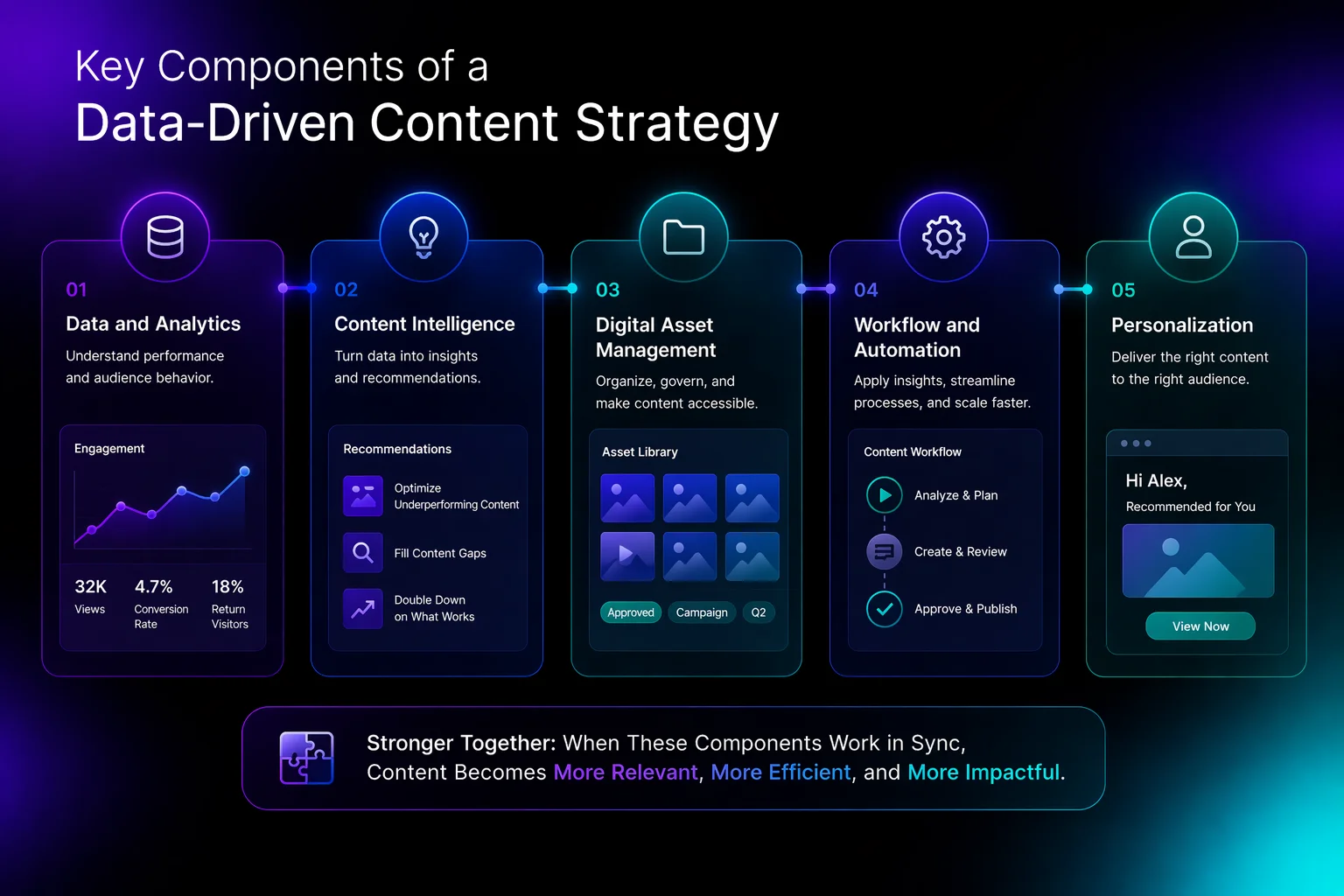
These components must work together to create a cohesive strategy. Isolated tools or processes cannot deliver the same level of impact.
Common Challenges in Data-Driven Content Strategies
Despite their benefits, data-driven strategies can be difficult to implement.
One common challenge is fragmented data. When content and performance data are spread across multiple systems, it becomes difficult to generate meaningful insights. Integration is essential to overcome this issue.
Another challenge is inconsistent metadata. Without structured metadata, content cannot be analyzed or retrieved effectively, limiting the value of content intelligence.
Organizations also struggle with adoption. Teams may resist data-driven approaches if they are accustomed to traditional workflows. This requires cultural change as well as technological investment.
Finally, governance remains a critical factor. Without clear governance, data-driven strategies can lead to inconsistent execution and increased risk.
The Future of Data-Driven Content Strategies
The future of content strategy will be increasingly driven by AI and automation.
Advancements in content intelligence will enable real-time optimization, predictive insights, and deeper personalization. AI-driven planning tools will further streamline content creation and execution, allowing teams to move faster while maintaining control.
As these capabilities evolve, the importance of integration and governance will continue to grow. Organizations that successfully combine data, intelligence, and structured operations will be better positioned to compete in an increasingly complex digital landscape.
Conclusion
Data-driven content strategies represent a fundamental shift in how organizations approach content. They move content from a static output to a dynamic, measurable asset that can be optimized continuously.
By combining data, content intelligence, DAM, and systematic planning, organizations can create more effective, scalable, and personalized content strategies. They can reduce inefficiencies, improve performance, and deliver better customer experiences.
The key is connection. When data, insights, and workflows are integrated, content becomes more than a deliverable. It becomes a strategic driver of business outcomes.
FAQ
What is a data-driven content strategy?
A data-driven content strategy uses analytics, AI, and audience insights to guide content creation and optimization. It helps organizations align content with business goals and continuously improve performance.
How does content intelligence support content strategy?
Content intelligence analyzes performance data and user behavior to provide actionable insights. It helps teams identify high-performing content, detect gaps, and optimize their strategy.
Why is personalization important in content strategy?
Personalization ensures that content is relevant to each user, improving engagement and conversion rates. Data-driven strategies enable personalization by providing the insights needed to tailor content effectively.
What role does DAM play in data-driven content strategies?
DAM provides a centralized system for managing and governing content. It enables better organization, discoverability, and reuse, which are essential for applying data-driven insights.
How can organizations implement data-driven content strategies?
Organizations can implement data-driven strategies by integrating data sources, using content intelligence tools, and aligning workflows with insights. They should also invest in planning tools and governance to ensure consistent execution.