
Model Context Protocol and DAM: How AI Agents Will Access DAM Content
AI agents are quickly becoming part of enterprise content operations. They are no longer limited to generating content. They are beginning to interact with systems, retrieve assets, enrich metadata, trigger workflows, and support decision-making across the content lifecycle.
This shift introduces a new challenge.
If AI agents are going to operate inside enterprise environments, they need a structured and secure way to access content. They cannot rely on ad hoc APIs or uncontrolled data access. They need a consistent protocol that defines how they retrieve, interpret, and act on content across systems.
This is where Model Context Protocol (MCP) comes in.
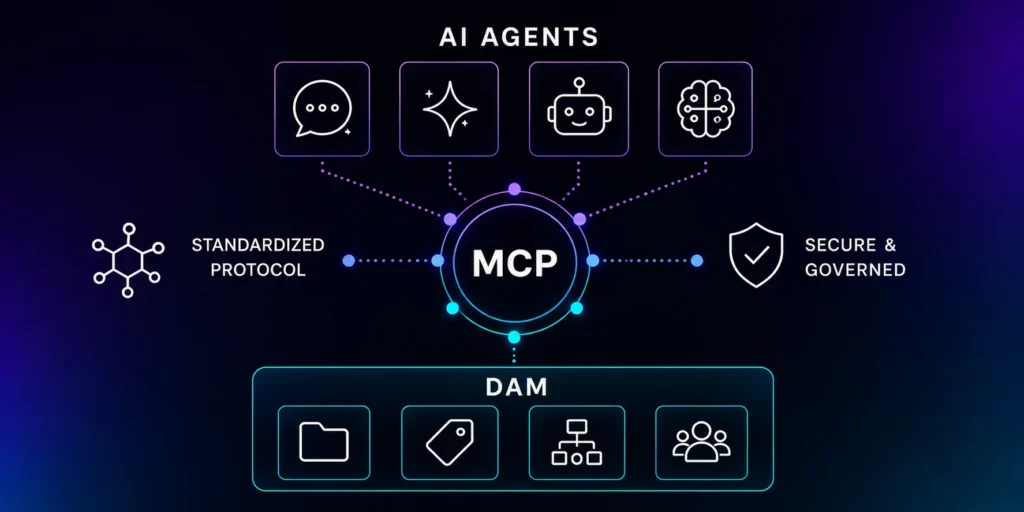
MCP provides a standardized way for AI agents to interact with enterprise systems like digital asset management platforms. It defines how context is shared, how permissions are enforced, and how data flows between systems and AI models. For organizations managing large volumes of content, this becomes especially important.
As content operations evolve, DAM is no longer just a storage layer. As outlined in Aprimo’s guide to digital asset management architecture, it acts as the foundation for structured, governed content to be used across any organization and its partners. MCP builds on that foundation to enable AI agents to access and use content in a controlled, scalable way.
TL;DR
- Model Context Protocol (MCP) defines how AI agents securely access enterprise systems like DAM.
- It enables structured, governed access to content, metadata, and DAM workflows.
- DAM becomes a critical system of action for AI agents interacting with content.
- MCP ensures AI-driven content access aligns with governance, permissions, and workflows.
- The future of content operations depends on connecting AI agents with DAM through standardized protocols.
What Is Model Context Protocol (MCP)?
Model Context Protocol is a framework that defines how AI models and agents access external systems and data sources in a structured and secure way. It standardizes how context is passed between systems, ensuring that AI interactions are consistent, traceable, and governed.
At a high level, MCP addresses a key challenge in tying together disparate AI systems.
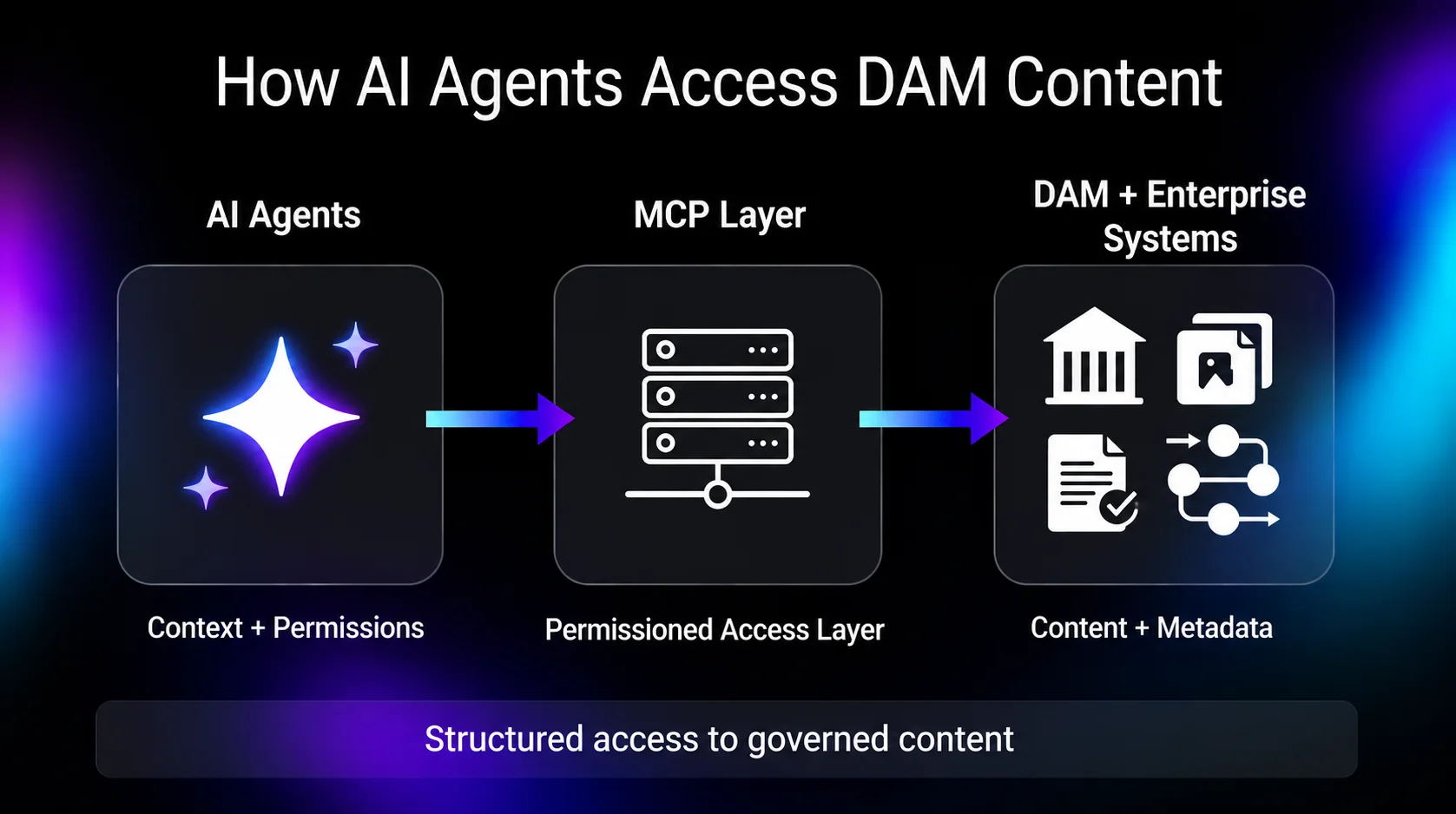
Most AI tools operate in isolation. They generate outputs based on prompts or triggers, but they do not have a reliable, governed way to access enterprise content. MCP changes this by enabling AI agents to retrieve context directly from systems like DAM, CMS, and PIM while respecting permissions and governance rules.
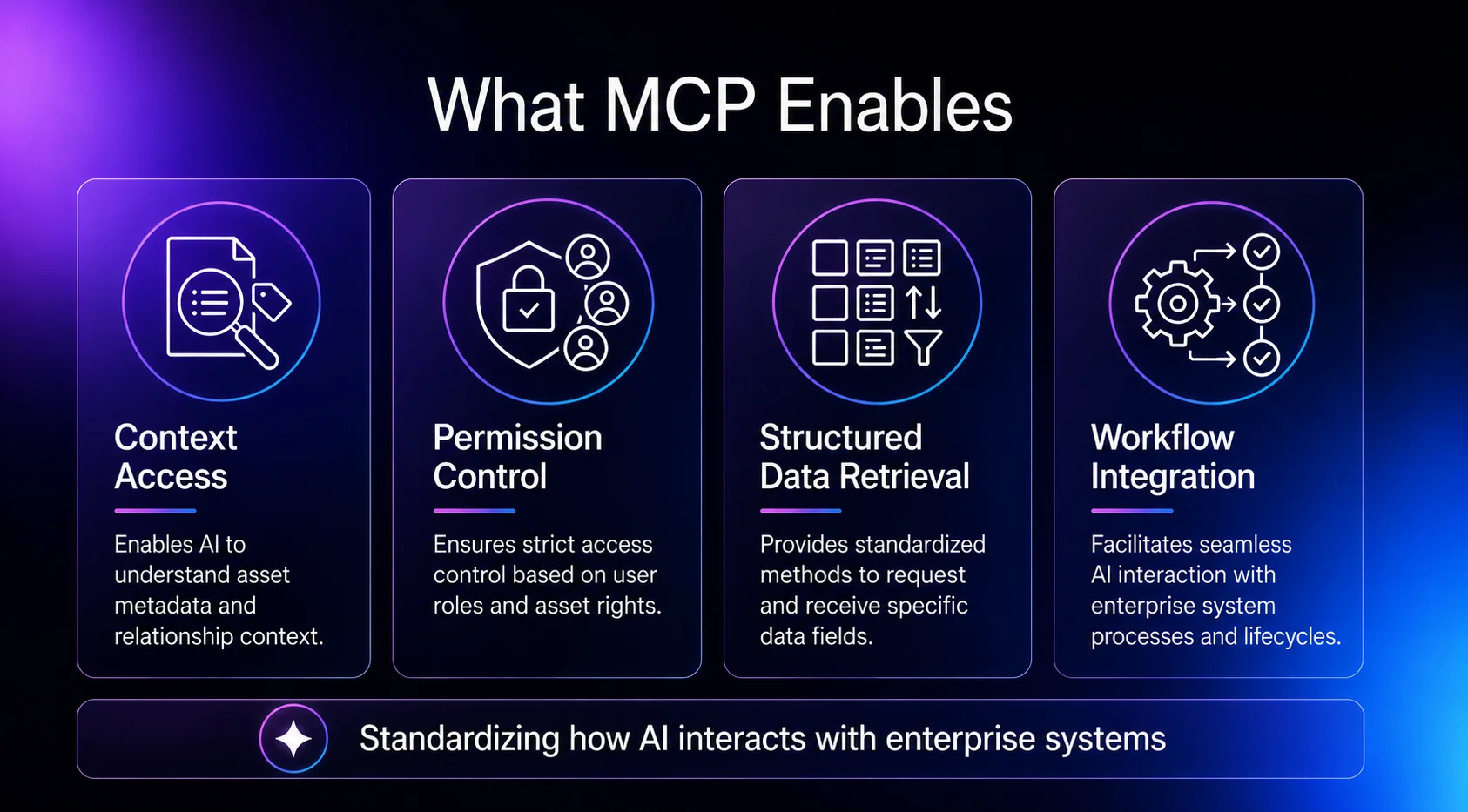
This means AI agents can:
- Access approved content from DAM
- Retrieve metadata and contextual information
- Understand and act based on asset status, rights, and usage rules
- Trigger workflows based on system-defined logic
By leveraging MCP, AI agents stop operating in silos in disconnected tools. Instead, they become integrated participants in content operations.
Why MCP Matters for Content Operations
Enterprise content operations depend on structure, governance, and consistency. As AI agents begin to interact with content at scale, these requirements become even more critical.
Without a protocol like MCP, AI-driven workflows can quickly become fragmented. Agents may access outdated assets, bypass approval processes, or operate without awareness of rights and compliance constraints. This introduces risk and undermines the value of AI.
As an example, an AI agent creating emails in a marketing automation tool might use an old version of the logo in an email and send it out. Given the marketing automation tool’s agents did not have access to the brand guidelines in the DAM system, how would they know not to use the outdated version of the logo?
MCP solves this by enforcing context.
It ensures that AI agents operate with awareness of content status, permissions, and metadata. This allows organizations to scale AI without losing control over content quality and governance. Now the agents in every part of your martech can easily access the approved logo library in your DAM system and only use the approved logos on all channels.
This method aligns closely with Aprimo’s perspective on using AI safely for brand governance and compliance, where governance must evolve alongside AI adoption. MCP provides the technical foundation that makes this possible.
How AI Agents Use MCP to Access DAM Content
AI agents rely on MCP to interact with DAM systems in a structured way. Instead of directly querying raw data, they request context through defined interfaces that include both content and its associated metadata.
This interaction typically follows a structured flow.
First, the AI agent identifies the task. This could be generating a campaign asset, recommending content, answering a question based on enterprise content, or enriching metadata. The agent then uses an MCP Server to request relevant context from the DAM system.
The DAM responds with governed data.
This includes approved assets, metadata, usage rights, and contextual information such as campaign, region, or audience. The agent uses this context to generate outputs or trigger workflows, ensuring that all actions align with enterprise rules.
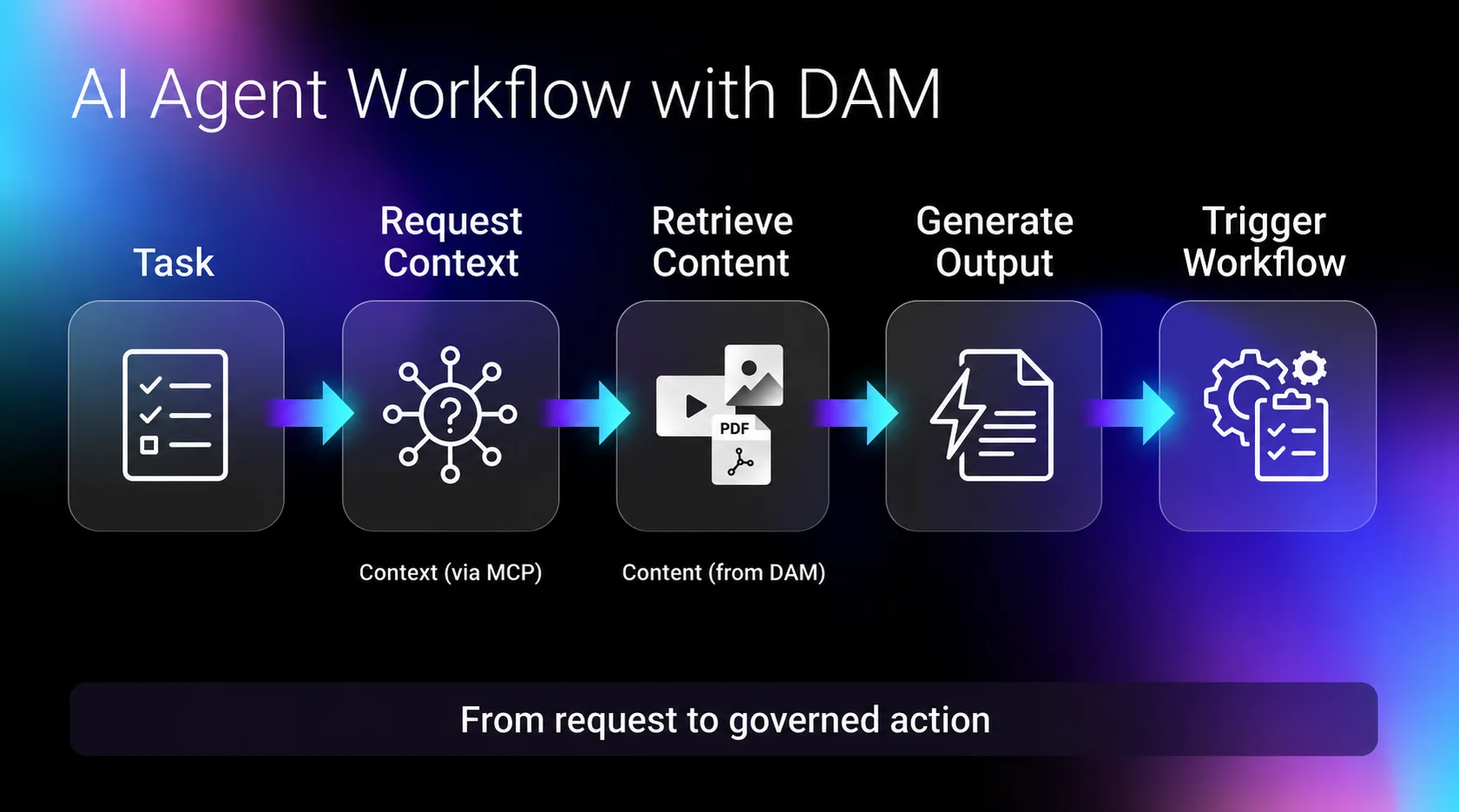
This process transforms DAM into an active participant in AI workflows.
Instead of being a passive repository, it becomes a source of governed intelligence that AI agents can rely on.
The Role of DAM as a Context Provider
In an MCP-driven environment, DAM plays a central role as a context provider. It does not just store and provide assets. It defines how those assets can be used, who can access them, and what rules apply to them. This makes it an ideal system for providing context to AI agents.
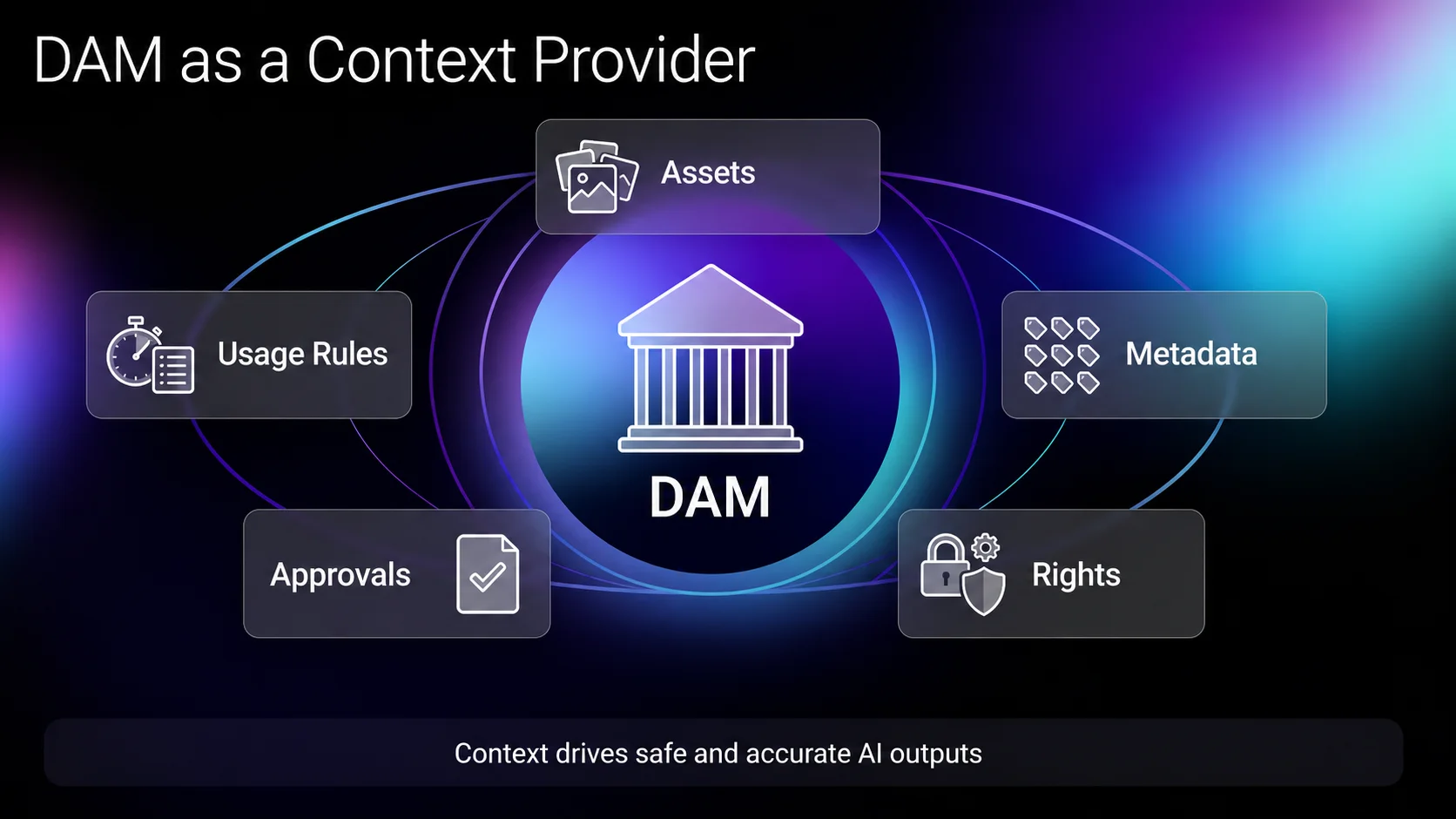
For example, when an AI agent retrieves an image from DAM (think of the logo example above), it does not just receive the file. It also receives metadata such as:
- Approval status
- Usage rights and expiration
- Brand guidelines
- Associated campaign or product
- Audience and channel context
This ensures that AI-generated outputs are aligned with governance requirements.
As highlighted in Aprimo’s article on managing digital rights and usage expiration in DAM, governance depends on making this information visible and actionable. MCP ensures that AI agents can access and use this information effectively.
MCP and Personalization at Scale
Personalization is one of the most important use cases for AI in content operations.
Delivering personalized experiences requires access to the right content, combined with real-time data about user behavior and context. MCP enables AI agents to access this information in a structured way.
By connecting DAM with personalization systems, MCP allows AI agents to:
- Retrieve relevant content for specific audiences
- Adapt messaging based on context
- Ensure content complies with brand and regulatory guidelines
- Deliver consistent experiences across channels
Governance and Security Considerations
One of the most important aspects of MCP is governance.
AI agents must operate within defined boundaries. They need to respect permissions, follow approval workflows, and comply with legal and regulatory requirements. MCP ensures that these constraints are enforced at the protocol level.
This includes:
- Role-based access control
- Metadata-driven permissions
- Auditability and traceability
- Enforcement of usage rights and expiration rules
Without these controls, AI adoption can introduce significant risk.
With MCP, organizations can scale AI while maintaining the same level of governance they expect from human users.
The Future of AI Agents and DAM
The combination of MCP and DAM represents a shift in how content operations will function.
AI agents will become more autonomous, handling tasks such as content creation, tagging, optimization, and distribution. MCP will ensure that these agents operate within a governed framework.
DAM will evolve from a content repository into a central intelligence hub.
It will provide the context that AI agents need to operate effectively, ensuring that content remains consistent, compliant, and aligned with business goals.
Organizations that invest in this architecture will be better positioned to scale AI-driven content operations.
Conclusion
Model Context Protocol is a critical enabler for the next generation of content operations.
It provides the structure and governance needed for AI agents to interact with enterprise systems like DAM. By defining how context is shared and enforced, MCP ensures that AI-driven workflows remain controlled, consistent, and scalable.
For organizations managing complex content ecosystems, this is not optional.
It is the foundation for connecting AI, content, and operations in a way that delivers real business value.
Learn more about Aprimo’s latest innovations including MCP Server.
FAQ
What is Model Context Protocol?
Model Context Protocol is a framework that defines how AI models and agents access external systems and data in a structured and secure way. It ensures that AI interactions are consistent, governed, and aligned with enterprise rules. It also enables organizations to standardize how context is shared across systems, reducing fragmentation in AI-driven workflows.
How does MCP work with DAM?
MCP allows AI agents to retrieve content, metadata, and contextual information from DAM systems. This ensures that AI-generated outputs are based on approved, governed content. It also helps maintain consistency by ensuring agents always reference the latest, authorized versions of assets.
Why is MCP important for AI agents?
MCP provides the structure needed for AI agents to operate within enterprise environments. It ensures that they respect permissions, follow workflows, and use content appropriately. This is critical as AI agents move from isolated tools to active participants in business operations.
How does MCP support content governance?
MCP enforces governance by controlling how AI agents access and use content. It integrates permissions, metadata, and workflows into the AI interaction process. This helps organizations maintain compliance, reduce risk, and ensure consistent use of approved content across channels.
What is the future of MCP in content operations?
MCP will play a central role in enabling AI-driven content operations. It will connect AI agents with enterprise systems, making content workflows more efficient, scalable, and governed. As adoption grows, it is likely to become a foundational standard for integrating AI into enterprise content ecosystems.