
Implementing a new Digital Asset Management (DAM) system often presents a dichotomy. On one hand, the promise of streamlined workflows, enhanced content governance, and accelerated delivery cycles is compelling. On the other, the reality of organizational resistance, entrenched habits, and the sheer inertia of existing processes can derail even the most well-intentioned rollouts. Technology alone cannot guarantee success; the human element, specifically how an organization adapts to a fundamental shift in its content operations, is paramount. Many initiatives falter not due to technical deficiencies but because leaders fail to adequately prepare their teams for profound changes in their daily work. Overcoming this friction requires more than just training sessions; it demands a strategic, proactive approach to change management that anticipates challenges and cultivates widespread adoption.
TL;DR
- Organizations often underestimate the critical need for a structured change management playbook when implementing Digital Asset Management (DAM) systems, leading to significant adoption challenges and underutilized platform capabilities.
- Effective change management for DAM requires a clear articulation of the value proposition to all stakeholders, addressing specific pain points and demonstrating how the new system directly improves daily workflows.
- Securing user buy-in for a Digital Asset Management platform hinges on comprehensive, role-specific training programs and visible executive sponsorship that underscores the strategic importance of the initiative.
- Integrating a new Digital Asset Management system into existing content operations necessitates a phased approach, mapping current processes to future states, and iteratively refining workflows based on user feedback to ensure seamless transitions.
- A well-executed DAM change management strategy significantly reduces operational friction, accelerates time-to-market for content, and fosters a more agile, data-driven content ecosystem across the entire enterprise.
Understanding Common Challenges in DAM Implementation
Successfully transitioning to a new Digital Asset Management system involves navigating a series of predictable challenges that extend beyond mere technical integration. These obstacles often stem from human factors, organizational culture, and misaligned expectations that can significantly impede user adoption and system efficacy. Recognizing these common pain points early allows organizations to proactively address them within their change management strategy.
One prevalent challenge is the ingrained resistance to new tools and processes. Marketing and creative teams, accustomed to their existing methods, even if inefficient, may view a new DAM as an added layer of complexity rather than a solution to their problems. This resistance can manifest as passive non-compliance, minimal engagement, or even active pushback, undermining the system’s potential.
Another significant hurdle is the lack of a clear, compelling value proposition communicated to end-users. If stakeholders do not understand how the DAM directly benefits their individual roles and streamlines their work, they will lack the motivation to embrace it fully. Without a tangible connection to their day-to-day responsibilities, a DAM system can quickly be perceived as a top-down mandate rather than an empowering tool.
Furthermore, inadequate training that does not cater to diverse user groups and their specific needs can leave users feeling frustrated and unsupported, leading to underutilization. Organizations frequently underestimate the time and resources required for comprehensive, ongoing training.
Definition: Digital Asset Management (DAM) change management encompasses the structured approach and systematic processes used to transition individuals, teams, and the entire organization from existing content workflows to new ones facilitated by a DAM system, ensuring successful adoption and sustained utilization.
Finally, integration complexities with existing technology stacks, such as creative tools, project management platforms, or content management systems, can introduce friction. If the DAM operates in isolation or creates new silos, users will be less likely to incorporate it into their established workflows, defeating its purpose. Addressing these challenges requires a deliberate and empathetic approach that prioritizes user experience and proactive communication.
Developing a Strategic Change Management Playbook for DAM
A strategic change management playbook for Digital Asset Management provides a structured roadmap for guiding an organization through the transition to a new system. This playbook synthesizes a clear vision, proactive communication, and robust support mechanisms to mitigate resistance and foster enthusiastic adoption. Its development ensures that the entire implementation journey is thoughtfully managed, from initial planning to post-launch optimization.
The initial phase involves clearly defining the vision for the DAM and articulating its strategic importance to the organization. This vision should extend beyond technical specifications, instead focusing on the tangible business outcomes and improvements the DAM will enable, such as faster content creation, improved brand consistency, or reduced compliance risks.
Identifying key stakeholders and their specific expectations or concerns early in the process is also vital. This includes executive sponsors who will champion the initiative, departmental leaders whose teams will be impacted, and end-users who will interact with the system daily. Engaging these groups allows their perspectives to shape the rollout strategy and helps generate early buy-in.
A critical component of this phase is conducting a thorough assessment of existing workflows and identifying areas where the DAM will introduce significant changes. This assessment informs the communication strategy and tailors training programs. The playbook also details the communication plan, which should be multi-faceted and continuous. Regular updates, town halls, and dedicated communication channels ensure transparency and address questions actively. The plan must clearly articulate the benefits of the new DAM to various user groups, using language and examples relevant to their daily tasks.
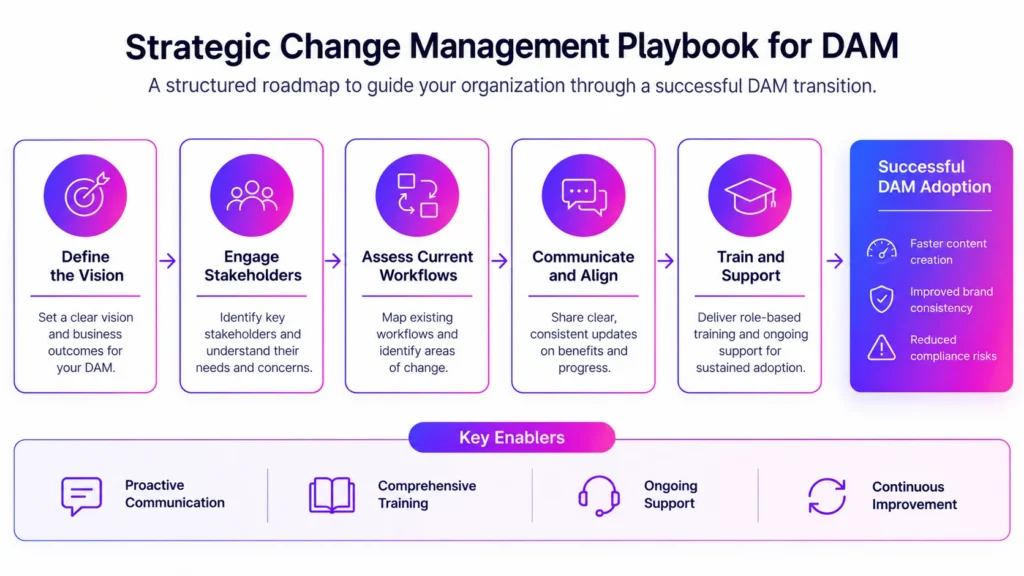
Furthermore, the playbook outlines a comprehensive training program, moving beyond basic system functionality to demonstrate how the DAM integrates into and improves existing workflows, offering different training formats to accommodate diverse learning styles and schedules. It concludes with a plan for ongoing support and feedback mechanisms to ensure sustained user engagement and continuous improvement of the DAM system.
Securing User Adoption and Building Internal Champions
Achieving widespread user adoption for a Digital Asset Management system goes beyond mere mandate; it requires active engagement and the cultivation of internal champions who advocate for the new platform. These champions become informal leaders, demonstrating the system’s value and guiding their peers through the transition. Building this advocacy begins with understanding user needs and demonstrating immediate, tangible benefits.
One foundational strategy is to identify potential early adopters across different departments who are naturally enthusiastic about new technology or process improvements. These individuals can be empowered with advanced training and tasked with contributing to pilot programs, providing valuable feedback, and refining the user experience before a broader rollout. Investing in comprehensive, role-specific training is equally crucial. Generic training modules rarely resonate; instead, bespoke sessions tailored to the specific tasks and workflows of different user groups ensure relevance and address their unique pain points directly. For example, a creative team’s training might focus on integrations with Adobe Creative Suite, while a marketing team’s training emphasizes content search and distribution.
Visible executive sponsorship also plays a substantial role in securing buy-in. When senior leadership actively champions the DAM initiative, communicates its strategic importance, and participates in launch events, it signals to the entire organization that this is a priority. This top-down endorsement validates the effort and encourages compliance and enthusiasm across all levels.
Furthermore, creating a feedback loop is essential. Provide clear channels for users to report bugs, suggest improvements, and ask questions. Regularly acknowledge and act on this feedback, demonstrating that user input is valued and actively shaping the system. This iterative approach builds trust and fosters a sense of ownership among users, transforming hesitant participants into enthusiastic advocates for the new DAM system.
Integrating DAM into Existing Content Operations: A Phased Approach
Integrating a Digital Asset Management system into an organization’s existing content operations is a complex undertaking that requires careful planning and a phased, iterative approach rather than a single, sweeping deployment. This strategy ensures minimal disruption, allows for continuous refinement, and maximizes the likelihood of seamless integration into established workflows. A phased rollout carefully manages the transition, addressing specific departmental needs sequentially.
The initial phase involves a thorough mapping of current content workflows and identifying all touchpoints where digital assets are created, stored, revised, approved, and distributed. This discovery process highlights inefficiencies in the current state and pinpoints where the DAM can deliver immediate value. With this understanding, a pilot program involving a specific department or a small, self-contained project can be launched. This allows the organization to test the DAM’s functionality, gather feedback from a limited user group, and refine processes in a controlled environment.
Lessons learned from the pilot are invaluable for optimizing the subsequent phases of the rollout. Key Steps for Phased DAM Integration:
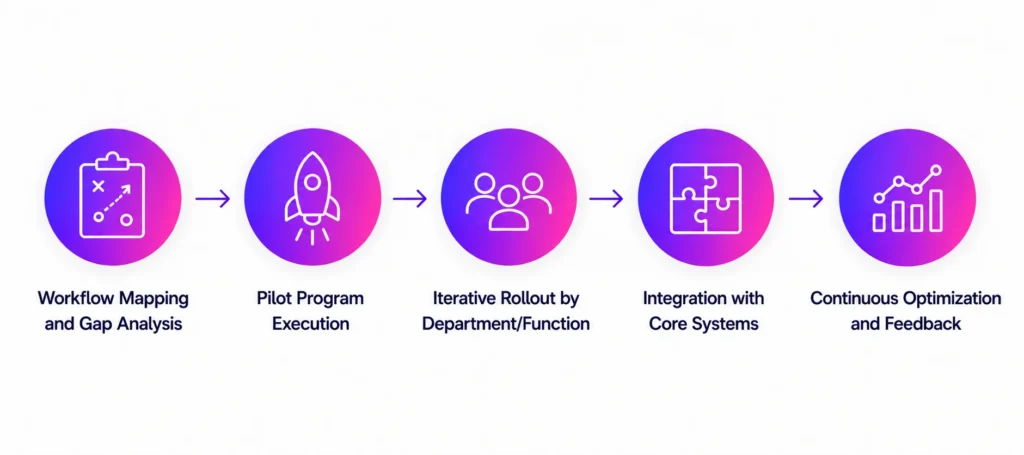
- Workflow Mapping and Gap Analysis: Document existing content creation, review, and distribution processes to identify bottlenecks and highlight where the DAM can resolve inefficiencies, ensuring a clear path to value for each stakeholder group.
- Pilot Program Execution: Deploy the DAM to a selected department or project team, providing targeted training and close support, thereby validating integration points and gathering initial user feedback for iterative improvements.
- Iterative Rollout by Department/Function: Expand DAM access to additional departments in successive waves, customizing training and support to address the unique requirements and workflows of each new user group as they onboard.
- Integration with Core Systems: Connect the DAM with other critical operational platforms, such as project management tools, content management systems (CMS), and creative suites, automating asset flow and reducing manual effort for users.
- Continuous Optimization and Feedback: Establish ongoing feedback channels and regularly monitor system usage, leveraging analytics to identify areas for process refinement and further enhancements to the DAM’s utility. Crucially, this phased approach allows for continuous feedback integration and refinement. Each phase presents an opportunity to learn, adapt, and improve the integration strategy before moving on to the next, building momentum and confidence across the organization. This contrasts sharply with a big-bang approach, which often overwhelms users and leads to implementation failures.
Measuring the Success of DAM Change Management Efforts
Measuring the success of Digital Asset Management change management efforts moves beyond simply tracking technical uptime; it measures the tangible impact on user behavior, operational efficiency, and business outcomes. This evaluation allows organizations to demonstrate ROI, justify further investment, and refine their strategies for continuous improvement. Effective measurement provides data-driven insights into adoption levels and the overall health of the DAM initiative.
Metrics for success fall into several categories, beginning with user adoption rates. This includes tracking login frequency, the number of active users, and the volume of assets uploaded, downloaded, or shared within the system. High and sustained engagement indicates successful integration into daily workflows. Beyond raw numbers, qualitative feedback gathered through surveys, interviews, and focus groups provides invaluable insights into user sentiment, pain points, and perceptions of the DAM’s value. Understanding “why” users adopt or resist the system is as crucial as knowing “if” they do.
Operational efficiency gains represent another critical measurement area. This involves comparing pre-DAM and post-DAM metrics for key processes, such as time-to-market for campaigns, asset search times, approval cycle durations, and the reduction of duplicate assets. For instance, a measurable reduction in the time it takes to find a specific brand-approved image for a marketing campaign clearly demonstrates the DAM’s impact. Additionally, metrics related to content governance and compliance, such as reduced instances of off-brand content usage or improved version control, reflect the DAM’s ability to enforce organizational standards.
Finally, organizations should track the overall business impact, such as cost savings from reduced redundant work, increased content velocity leading to more frequent campaigns, or improved brand consistency fostering stronger customer recognition. By establishing clear key performance indicators (KPIs) at the outset of the project and consistently monitoring them, organizations can effectively quantify the success of their Digital Asset Management change management strategy and continuously optimize its value over time.
Conclusion
A successful Digital Asset Management implementation is fundamentally an exercise in organizational change management. The technological capabilities of a DAM platform, while powerful, only unlock their full potential when an organization actively embraces new ways of working and integrates the system into its operational fabric.
By developing a comprehensive change management playbook, organizations can proactively address potential resistance, secure user buy-in, and systematically integrate the DAM into existing content workflows. This strategic approach ensures that the investment in a Digital Asset Management system translates into tangible improvements in efficiency, governance, and creative velocity.
Ultimately, a well-executed change management strategy transforms a technology deployment into a catalyst for organizational evolution, delivering sustained value and fostering a truly agile content ecosystem.
Ready to Modernize Your Content Operations?
Generate a tailored Digital Asset Management RFI based on your requirements, use cases, and business goals.

FAQ
Why do some organizations struggle with DAM adoption even with a robust platform?
Organizations often struggle with Digital Asset Management adoption because they prioritize technology over the human element, failing to address the behavioral shifts required from their teams. Resistance to change, insufficient user training tailored to specific roles, and a lack of clear communication regarding the DAM’s benefits can all undermine even the most advanced systems. Successful adoption hinges on proactive strategies that guide users through new processes and demonstrate tangible value to their daily tasks.
What is the role of communication in a DAM change management strategy?
Communication is a foundational pillar of any effective Digital Asset Management change management strategy, serving to inform, engage, and reassure stakeholders throughout the transition. A robust communication plan should include regular updates, clear explanations of benefits, opportunities for feedback, and dedicated channels for addressing concerns. Transparent and consistent messaging helps mitigate uncertainty and builds trust among users, facilitating smoother adoption.
How can user training be optimized for maximum effectiveness during a DAM rollout?
User training for a Digital Asset Management rollout is most effective when it is tailored, practical, and ongoing. Instead of generic sessions, training should be customized to the specific roles and workflows of different user groups, using real-world scenarios and hands-on exercises. Providing accessible resources, follow-up support, and refresher courses ensures users gain proficiency and confidently integrate the DAM into their daily operations.
What are the common pitfalls to avoid when implementing DAM change management?
Common pitfalls in Digital Asset Management change management include underestimating user resistance, failing to secure executive buy-in, and neglecting to establish clear communication channels. Organizations should also avoid one-time, generic training sessions, instead opting for continuous, role-specific education. Critically, neglecting to integrate the DAM with existing workflows or failing to measure adoption and impact can lead to underutilization and missed opportunities for efficiency gains.
How can marketing leaders effectively measure the return on investment (ROI) for their Digital Asset Management (DAM) change management initiatives?
Marketing leaders can assess the ROI of DAM change management by tracking key performance indicators such as accelerated content production cycles, reduced time spent searching for assets, and improved brand consistency across all campaigns. Quantifying the decrease in asset recreation costs and the increase in content reuse rates provides tangible evidence of operational efficiencies gained through successful DAM adoption. Furthermore, evaluating the impact on marketing campaign performance, including engagement rates and conversion improvements attributable to better asset utilization, demonstrates the strategic value to the business. Ultimately, a comprehensive ROI calculation considers both the financial savings and the enhanced effectiveness of marketing efforts facilitated by a well-managed DAM system.