

Marketing compliance often feels like a necessary burden, a complex set of hurdles designed to slow down creative initiatives and stifle innovation. While regulatory bodies and legal frameworks are essential for consumer protection and ethical business practices, the traditional approach to compliance frequently positioned it as a cost center or a bottleneck. This perception, however, is rapidly shifting., leading organizations will view marketing compliance not as an obstacle, but as a potent strategic lever, fundamentally integrating it with digital rights management to unlock significant competitive advantages. The challenge lies in transforming a reactive, manual process into a proactive, intelligent system that drives efficiency, ensures brand safety, and accelerates market responsiveness, rather than inhibiting it.
TL;DR
- Adopting advanced compliance and rights management strategies will transform what was once a mere risk mitigation exercise into a distinct competitive advantage for forward-thinking enterprises.
- Proactive integration of automated compliance workflows within robust digital asset management (DAM) platforms reduces review cycles and ensures consistent adherence to evolving regulatory standards.
- Leveraging AI-powered tools for content review and rights verification enables organizations to scale their marketing efforts efficiently while maintaining an impeccable compliance posture across all channels.
- Shifting from reactive compliance checks to a harmonized, predictive approach allows marketing teams to accelerate time-to-market for campaigns without compromising legal or brand integrity.
- Organizations embracing comprehensive compliance and rights management not only avoid penalties but also build consumer trust and market credibility, directly impacting long-term brand equity and expanded market share.
The Evolution of Marketing Compliance & Rights Management
By 2026, marketing compliance will evolve from a standalone, reactive function into a deeply integrated component of content operations and digital strategy. This transformation is driven by increasing regulatory complexity, the exponential growth of digital content, and the imperative for brands to maintain trust. Organizations must anticipate these shifts and embed compliance and rights management principles proactively across their entire content lifecycle to gain a sustainable edge.
Definition: Marketing compliance and rights management is the systematic process of ensuring all marketing materials adhere to relevant legal, industry, and brand guidelines, while also verifying and governing the legal permissions and usage terms for all included assets throughout their entire lifecycle.
The sheer volume of digital assets created, distributed, and repurposed demands a sophisticated, automated approach. Traditional manual reviews and siloed approval processes are no longer viable for maintaining timely compliance. The future emphasizes predictive analytics, AI-driven content analysis, and a centralized source of truth for all brand-approved assets and their associated rights. This comprehensive shift enables faster content velocity without compromising legal integrity or brand reputation. Forward-thinking companies are recognizing that compliance, when handled strategically, enhances brand credibility and minimizes financial and reputational risks.
AI and Automation: Reshaping Proactive Marketing Compliance
Artificial intelligence and automation are transforming marketing compliance from a manual, reactive process into a proactive, intelligent system. These technologies help organizations identify compliance risks earlier, enforce regulatory standards consistently, and manage governance across large content libraries. By reducing manual effort and human error, AI enables marketing teams to move faster without sacrificing compliance.
AI-powered tools can analyze text, images, and other creative assets for keywords, claims, visual elements, and rights issues that may require review. Instead of relying on time-consuming manual checks, organizations can automatically detect potential compliance concerns before content reaches the approval stage.
Automation then routes flagged assets to the appropriate legal, regulatory, or brand stakeholders for review. This streamlines approvals, shortens review cycles, and helps ensure that only compliant, rights-approved content is published. The result is faster campaign execution with greater confidence in every asset.
This proactive approach represents a significant shift from traditional review processes, where compliance issues were often discovered after publication, resulting in costly revisions, delays, or reputational risk. The comparison below highlights the differences between a traditional manual review process and an AI-accelerated compliance workflow.
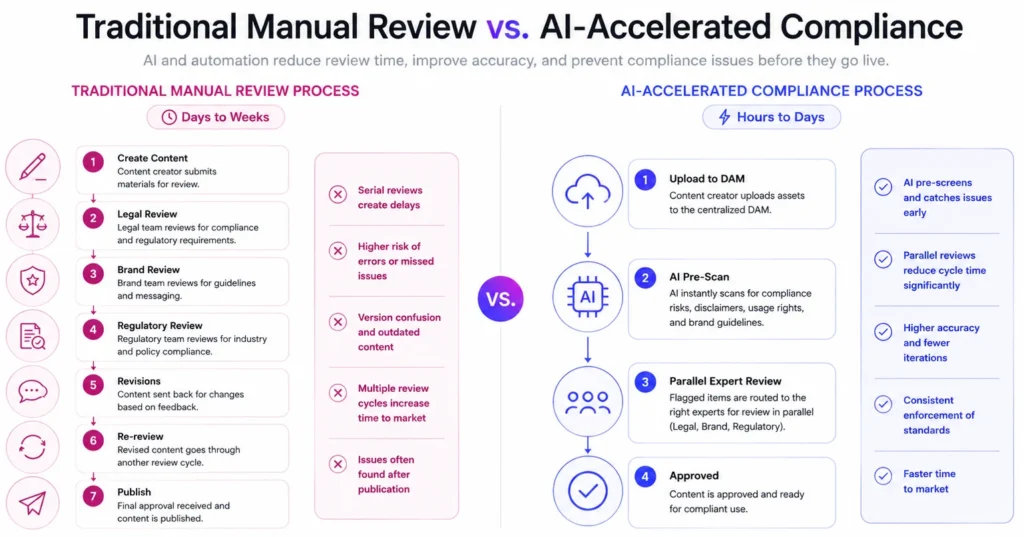
- Manual Review: A traditional process involves content creators submitting materials, which then enter a queue for legal, brand, and regulatory teams. Each review often happens serially, leading to significant delays. Version control can become problematic, with multiple iterations circulating and the risk of outdated or non-compliant versions slipping through.
- AI-Accelerated Compliance: Content creators upload assets to a centralized digital asset management (DAM) system. AI immediately pre-scans for compliance triggers, disclaimers, proper usage rights for images, and brand guideline adherence. Any potential issues are flagged in real-time or routed automatically to the correct reviewer, often with suggested revisions. This parallel processing and intelligent pre-screening dramatically reduces the total review time and ensures a higher degree of accuracy from the outset. Once approved, the asset is tagged with its compliance status and usage rights, making it readily available for compliant distribution and preventing unauthorized use. Furthermore, AI can learn from past compliance decisions, continuously refining its ability to detect nuanced risks and adapt to evolving regulatory landscapes, offering an unparalleled strategic advantage in maintaining consistent, compliant marketing operations.
Integrating Digital Rights Management for Holistic Compliance
Digital rights management (DRM) is an indispensable component of a holistic compliance strategy, extending beyond mere regulatory adherence to encompass the legal and commercial usage of all digital assets. Effective DRM ensures that every image, video, document, and piece of copy is used according to its licensing agreements, creator permissions, and brand standards. Without robust DRM, even perfectly compliant content might infringe on intellectual property, leading to legal disputes and brand damage.
Integrating DRM within a comprehensive digital asset management (DAM) system provides a single source of truth for all content and its associated usage rights. This means marketers can instantly verify if an image can be used in a specific region, for a particular duration, or across certain channels, directly at the point of content creation or deployment. This proactive rights management prevents costly mistakes and streamlines content reuse.
Beyond external regulations, internal brand guidelines also fall under this umbrella. DRM helps enforce consistent brand messaging, visual identity, and legal disclaimers, ensuring every touchpoint reinforces brand integrity. For instance, a financial services company must ensure that all advertisements include specific disclosures, while a pharmaceutical company must adhere to strict guidelines regarding claims and patient information. DRM, when integrated, automates the application and enforcement of these rules, greatly simplifying the compliance burden for marketers and reducing the risk of unintentional violations.
This unified approach moves beyond checking boxes to actively managing permission-based content use globally.
Compliance & Rights Management: From Bottleneck to Business Accelerator
Marketing compliance and rights management are often viewed as bottlenecks that slow creative processes. However, organizations can transform them into business accelerators by embedding compliance directly into agile marketing workflows. With automation and integrated processes, compliance becomes an enabler of speed rather than an obstacle. When executed effectively, it not only mitigates risk but also improves market responsiveness, strengthens brand credibility, and creates a competitive advantage.
Automating routine compliance checks and integrating rights management into content creation and distribution platforms significantly reduces time-to-market. Instead of waiting for lengthy manual legal reviews, marketers can rely on pre-approved templates, AI-powered content analysis, and rich rights metadata to create and launch campaigns with greater confidence and speed. This agility enables brands to respond quickly to market trends, capitalize on emerging opportunities, and stay ahead in fast-moving industries.
The greatest value comes from removing the friction traditionally associated with compliance. When marketers have immediate access to compliant, rights-approved assets and streamlined workflows, they can focus on creative execution instead of administrative tasks. This also reduces content fragmentation and helps ensure consistency across every channel, from social media to print.
Organizations that embrace this integrated approach turn compliance from an operational requirement into a strategic advantage. By combining governance with automation, they enable speed and safety to coexist—improving campaign performance while building stronger brand trust.
Metrics and ROI: Measuring the Impact of Proactive Compliance
Measuring the tangible impact of proactive compliance and rights management is crucial for demonstrating its strategic value beyond mere risk reduction. Organizations can quantify the return on investment (ROI) by tracking key metrics related to efficiency, cost savings, and brand integrity. This data-driven approach solidifies the argument for viewing compliance as an investment rather than an overhead. Key metrics to consider when evaluating proactive compliance initiatives:
- Reduced Review Cycle Times: Measure the average time taken for content to move from creation to full compliance approval. A significant reduction indicates improved efficiency and faster time-to-market.
- Decreased Compliance Violations: Track the number of reported compliance breaches, legal penalties, or brand guideline infringements. A lower incidence demonstrates effective risk mitigation and protects brand reputation.
- Cost Savings from Rework and Recalls: Quantify the expenses associated with correcting non-compliant content, reprinting materials, or re-launching campaigns due to errors. Proactive compliance minimizes these costly rectifications.
- Enhanced Content Reuse Rates: Monitor how frequently compliant, rights-approved assets are repurposed across different campaigns or channels. Higher reuse rates indicate efficient asset utilization and reduced creation costs.
- Audit Readiness and Process Efficiency: Assess the ease and speed with which an organization can produce auditable records of compliance decisions and asset usage. Efficient audit trails save significant administrative time and resources during regulatory inspections. Furthermore, by actively tracking these outcomes, businesses can continuously refine their compliance strategies, ensuring they remain agile and effective in a constantly evolving regulatory landscape.
Future-Proofing Your Brand with Advanced Compliance
Future-proofing your brand requires a proactive, adaptable approach to compliance and rights management. Rather than simply following today’s regulations, organizations should build scalable systems that can evolve alongside changing legislation, emerging technologies, and new market demands. Brands that invest in intelligent, flexible compliance frameworks today are better equipped to navigate the complexities of tomorrow.
Modern compliance strategies continuously monitor regulatory changes and adapt content workflows automatically. As new privacy laws or industry regulations emerge, advanced platforms can identify affected content, flag required updates, and help ensure new assets remain compliant by default. This proactive approach is far more efficient than manual processes, which are often slower, more costly, and more susceptible to human error.
Future-ready compliance also extends to new content formats and distribution channels. As augmented reality, virtual reality, interactive experiences, and other emerging media become more common, organizations must manage increasingly complex permissions, disclosures, and usage rights. A unified compliance platform helps govern these requirements while allowing marketing teams to continue innovating with confidence.
By building a scalable compliance infrastructure, organizations protect their brand, reduce future risk, and maintain the agility to embrace new opportunities. Compliance becomes more than a safeguard—it becomes a foundation for responsible innovation, enabling teams to move faster while preserving trust, governance, and brand integrity.
Conclusion
The era of viewing marketing compliance and rights management as a mere burden or a necessary evil is rapidly drawing to a close., organizations that have strategically invested in advanced, automated compliance frameworks will emerge with distinct competitive advantages. This involves leveraging AI, integrating digital rights management, and shifting from reactive checks to proactive, predictive enforcement. The transformation elevates compliance to an essential driver of efficiency, innovation, and brand trust. Ultimately, embracing this evolved perspective allows marketing teams to accelerate campaigns, reduce costs, and build deeper consumer confidence, positioning their brands for sustained growth and resilience in a continuously regulated and content-rich environment.
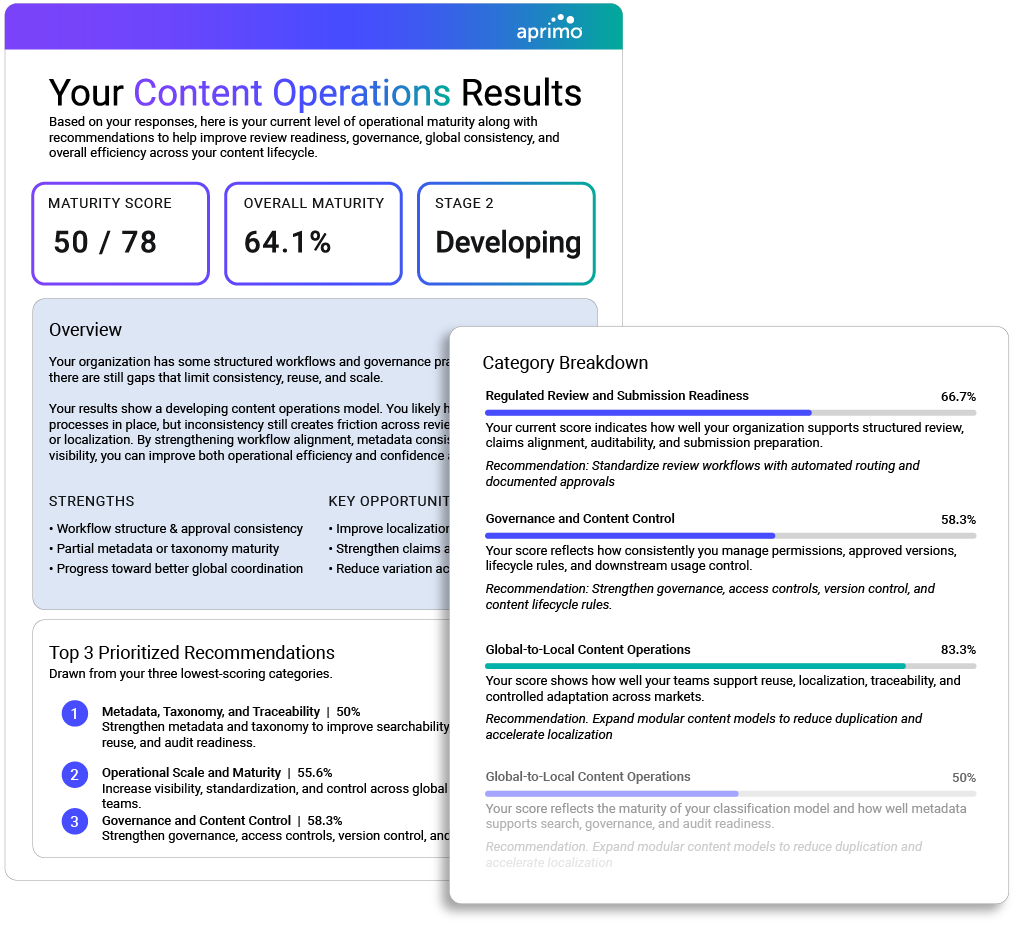
How Mature Are Your Content Operations?
Evaluate your organization’s content operations maturity, identify strengths and gaps, and receive prioritized recommendations tailored to your results.
FAQ
How do evolving data privacy regulations like GDPR and CCPA impact marketing compliance?
Evolving data privacy regulations like GDPR and CCPA significantly increase the complexity of marketing compliance by imposing strict rules on how personal data is collected, stored, and used in marketing activities. Brands must ensure all content, campaigns, and data processing practices are transparent, obtain proper consent, and provide clear opt-out mechanisms. Integrating these requirements into digital asset management systems allows for automated checks and ensures that marketing materials adhere to regional data protection laws, thereby mitigating legal and reputational risks.
Can marketing compliance truly become a revenue driver instead of just a cost center?
Yes, marketing compliance can become a revenue driver by transforming it from a reactive function into a strategic asset. By streamlining approval processes through automation and AI, brands can accelerate time-to-market for campaigns, capturing fleeting opportunities and enhancing responsiveness. Furthermore, a strong compliance posture builds consumer trust and enhances brand reputation, which directly translates into increased customer loyalty and potentially higher sales and market share over the long term.
How can small to medium-sized businesses (SMBs) effectively implement advanced compliance strategies?
SMBs can effectively implement advanced compliance strategies by starting with scalable, cloud-based digital asset management (DAM) platforms that offer integrated compliance features. Focusing on automating core review workflows, leveraging AI pre-screening where possible, and establishing clear internal guidelines can make these strategies manageable. Prioritizing the most impactful or highest-risk compliance areas first allows SMBs to build a robust framework progressively without overwhelming resources, ensuring they meet critical obligations while growing.
What challenges might arise when migrating from a manual compliance process to an automated system?
Migrating to an automated compliance system can present challenges, including initial data migration complexities, the need for comprehensive staff training on new platforms and workflows, and ensuring seamless integration with existing marketing technologies. Overcoming these requires careful planning, phased implementation, and clear communication to gain user adoption. Additionally, defining and configuring automated rules accurately is crucial to avoid unintended content flagging or missed compliance requirements during the transition period.
What is compliance & rights management and why does it matter for Compliance?
Compliance & rights management describes the practices and tooling teams use to plan, govern, and scale content operations across the enterprise. For Compliance, it directly affects speed to market, brand consistency, and the ability to measure content performance against revenue. Treating it as a strategic capability, not a tactical add-on, is what separates leaders from laggards in this space.