
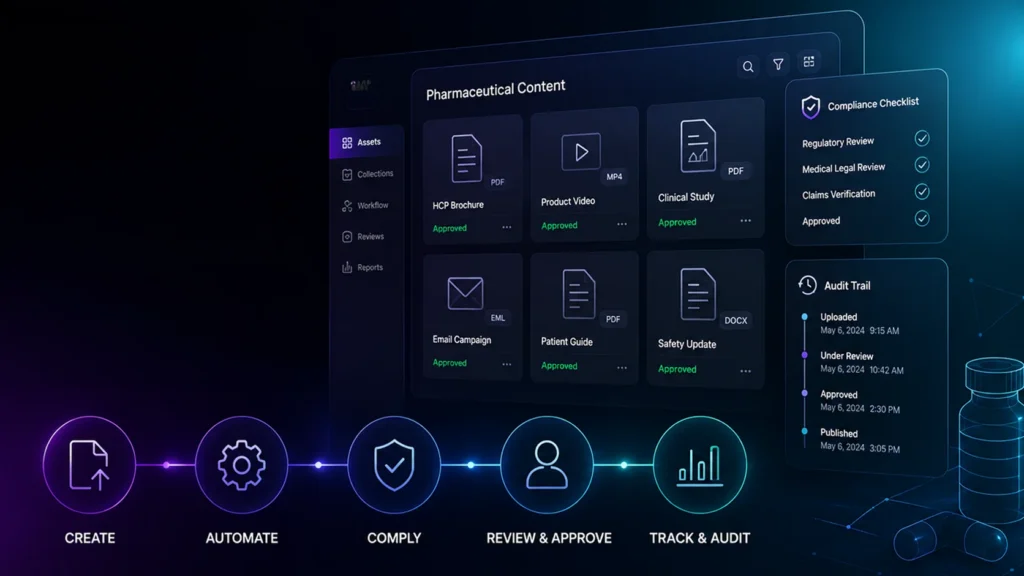
The pharmaceutical industry operates under an exceptionally demanding regulatory framework, where every piece of public-facing content, from promotional materials to patient information, is subject to intense scrutiny. This environment creates a pervasive tension for marketing and compliance teams: the need to disseminate vital information efficiently while ensuring absolute adherence to complex, ever-changing global guidelines. Without a meticulously designed and rigorously enforced content governance strategy, pharmaceutical companies face substantial risks, including hefty fines, product launch delays, and severe reputational damage. The challenge extends beyond merely approving individual assets; it demands an overarching system that ensures consistency, accuracy, and compliance across the entire content lifecycle, from ideation to distribution and archiving. Navigating this intricate landscape requires a clear understanding of regulatory demands and the strategic deployment of technology to transform compliance from a burden into a foundational element of operational excellence.
TL;DR
- Effective content governance is not merely an operational checkbox for pharmaceutical companies but a strategic imperative that directly mitigates regulatory risk and safeguards brand integrity.
- Implementing a comprehensive content governance framework enables pharmaceutical organizations to consistently meet stringent global regulatory requirements from agencies like the FDA and EMA.
- Technology platforms, specifically integrated marketing and content solutions, are indispensable for automating workflows, enforcing compliance, and maintaining an auditable trail for all pharmaceutical content assets.
- Failure to establish and maintain rigorous content governance practices within pharma can result in severe penalties, reputational damage, and significant delays in bringing essential medications to market.
- Proactive investment in sophisticated content governance tools and processes positions pharmaceutical firms to adapt swiftly to evolving regulatory landscapes, securing a competitive advantage in global markets.
The Unique Regulatory Challenges Facing Pharmaceutical Content
Pharmaceutical companies contend with a dense web of global, national, and local regulations governing the creation, approval, and distribution of all content. These regulations, issued by bodies such as the Food and Drug Administration (FDA) in the United States and the European Medicines Agency (EMA), dictate everything from claims substantiation and fair balance in promotional materials to precise labeling requirements for prescription drugs. The complexity is amplified by the sheer volume of content, its rapid obsolescence, and the need for region-specific adaptations, each of which must comply with local legal and ethical standards.
Definition: Content governance in pharma is the framework of policies, processes, roles, and technologies that ensures pharmaceutical content is created, reviewed, approved, distributed, and archived in compliance with regulatory requirements, ethical standards, and internal policies. It governs all content types—from promotional materials and scientific publications to patient education and social media—through standardized workflows, audit trails, and version control. By embedding compliance throughout the content lifecycle, pharmaceutical companies reduce regulatory risk, maintain content accuracy, and adapt to evolving industry regulations.
Building a Robust Content Governance Strategy for Pharmaceutical Compliance
A robust content governance strategy is the bedrock upon which pharmaceutical companies can build and sustain regulatory compliance, safeguarding their market access and public trust. Such a strategy goes far beyond simple workflow approvals, establishing a holistic framework that dictates how content moves from concept to retirement, always within defined legal and ethical boundaries. It creates clarity around responsibilities, processes, and the technological infrastructure necessary to support these operations consistently.
Effectively mitigating risk requires embedding compliance directly into the content creation process. This means defining clear guidelines for content development, mandating specific review stages, and establishing audit trails that capture every modification and approval. Moreover, content governance provides a single source of truth for all compliant assets, preventing the inadvertent use of outdated or unapproved materials. This centralized control is crucial for maintaining consistency across all channels and markets.
Without a clear governance strategy, content initiatives can quickly become fragmented, increasing the likelihood of errors that expose the company to regulatory penalties. It fundamentally transforms content management from a series of ad-hoc tasks into a structured, auditable operation.
An effective content governance strategy for pharmaceutical companies encompasses several critical areas:
- Policy Definition: Establishing clear and comprehensive policies that outline all regulatory requirements, internal ethical standards, and brand guidelines for every content type. These policies must be regularly reviewed, updated, and communicated to all relevant stakeholders to ensure consistent understanding and application.
- Role & Responsibility Clarity: Defining specific roles for content creators, medical-legal-regulatory (MLR) reviewers, compliance officers, and approvers, clearly delineating their responsibilities and accountability throughout the content lifecycle. This avoids ambiguity and streamlines decision-making, ensuring that every piece of content passes through the necessary expert oversight.
- Training & Education: Providing ongoing training to all personnel involved in content creation and management about current regulations, company policies, and the proper use of governance technologies. Continuous education ensures that the entire organization remains informed about evolving compliance requirements.
- Process Standardization: Implementing standardized workflows for content creation, review, approval, distribution, and archiving. These processes must be repeatable, auditable, and designed to incorporate all relevant compliance checkpoints. Automation within these workflows significantly reduces manual errors and accelerates time-to-market for compliant assets.
- Technology Integration: Leveraging integrated technology platforms to manage digital assets, automate workflows, enforce version control, and provide comprehensive audit trails. This includes systems for digital asset management (DAM), marketing resource management (MRM), and content information management systems (CIMS), which work in concert to support the governance framework.
- Performance Monitoring & Auditing: Regularly monitoring the effectiveness of the governance framework through audits and performance metrics. This allows for continuous improvement, identifying potential compliance gaps and refining processes to enhance overall regulatory adherence.

Technology’s Pivotal Role in Pharmaceutical Content Governance
Technology plays an indispensable role in enabling pharmaceutical companies to effectively implement and maintain robust content governance, transforming complex regulatory demands into manageable, auditable processes. Modern marketing and content platforms provide the infrastructure needed to automate compliance workflows, ensure version control, and generate comprehensive audit trails, all of which are critical for navigating the pharmaceutical regulatory environment. These tools move governance beyond manual checklists, embedding it directly into daily operations and significantly reducing the risk of human error.
Without specialized technology, managing the sheer volume and complexity of pharmaceutical content assets, along with their associated regulatory requirements, would be an overwhelming and error-prone undertaking. Solutions that integrate digital asset management (DAM) with marketing resource management (MRM) capabilities are particularly powerful. A DAM system, for example, serves as the single source of truth for all approved content, ensuring that only compliant, up-to-date assets are accessible by marketing and sales teams. This prevents the accidental use of expired or unapproved materials, a common source of compliance violations.
MRM functionality then layers on top of this by streamlining the entire content lifecycle, from initial brief to final distribution, incorporating all necessary legal and medical reviews directly into the workflow. This interconnectedness ensures that compliance is not an afterthought but an intrinsic part of every content-related activity.
Contrast this modern, integrated approach with legacy or fragmented systems, which often rely on manual approvals, email chains, and disparate file storage locations. In such environments, version control becomes a nightmare, audit trails are incomplete, and the risk of non-compliant content slipping through the cracks increases exponentially. A pharmaceutical company attempting to rely on a patchwork of generic tools will inevitably struggle with consistency, scalability, and the agility needed to respond to new regulatory mandates.
The efficiency gains from an integrated platform are not just about speed; they are fundamentally about reducing the surface area for compliance errors. This ability to centralize, automate, and track every content interaction is what makes advanced technology solutions non-negotiable for effective content governance in the pharmaceutical sector.
Key Components of an Effective Content Governance Framework for Pharma
An effective content governance framework in the pharmaceutical industry is built upon a foundation of clearly defined policies, repeatable processes, delineated responsibilities, and supportive technology, all orchestrated to ensure unwavering compliance. Such a framework is not a static document but a living system that adapts to evolving regulatory landscapes and internal content strategies. Its strength lies in its ability to embed compliance checkpoints at every stage, from initial concept to final archive.
Central to the framework is a robust content lifecycle management process that maps out every step an asset takes. This includes stages for content ideation, creation, internal review (by brand, legal, medical, and regulatory teams), external agency review, final approval, distribution across various channels (web, social, print), and eventual expiry or archival. Each stage must have defined owners, clear service level agreements (SLAs) for review times, and mechanisms for feedback and iteration.
Critically, the framework must also detail how content is localized for different markets, ensuring that regional nuances in regulations and cultural sensitivities are addressed without compromising global brand consistency or core medical claims.
The framework must outline specific guidelines for data privacy and security, especially when dealing with patient information or sensitive clinical data within content. This includes compliance with regulations such as HIPAA, GDPR, and other regional data protection laws. Asset metadata strategies are also vital; consistent application of metadata allows for efficient search, retrieval, and categorization of compliant content, linking assets directly to their associated claims, approvals, and usage rights.
Without these precise components, even the most well-intentioned compliance efforts can falter under the weight of growing content volumes and increasing regulatory oversight.
Preparing for Future Content Governance Regulations and Leveraging Technology
Pharmaceutical companies can prepare for future content governance regulations by embracing a forward-thinking approach that prioritizes flexible technology stacks and continuous process refinement. The regulatory environment is dynamic, with new guidelines emerging to address innovations in communication channels and data privacy, making an adaptive strategy essential. Instead of merely reacting to changes, proactive organizations leverage their governance frameworks to anticipate and integrate new compliance requirements smoothly.
Investing in scalable, cloud-based content and marketing platforms allows pharmaceutical firms to agilely adapt their governance processes without requiring extensive re-platforming with every new mandate. These platforms can be configured to incorporate new review steps, updated approval hierarchies, or revised metadata requirements as regulations evolve. For instance, the rise of AI-generated content necessitates new policies for review and attribution, and a flexible governance system can integrate these rules into existing workflows.
Furthermore, leveraging AI and machine learning capabilities within these platforms can help identify potential compliance risks in content early in the creation process, flag specific phrases or claims that require extra scrutiny, and even automate the tagging of content with relevant regulatory classifications. This moves the industry toward predictive compliance, where potential issues are addressed before they become costly problems.
Regularly reviewing and stress-testing the governance framework against hypothetical future scenarios, such as new data privacy laws or stricter advertising guidelines for specific therapeutic areas, allows companies to identify vulnerabilities and adjust their strategies before new regulations take effect.
This proactive stance not only ensures continuous compliance but also provides a distinct competitive advantage, allowing companies to accelerate compliant content to market faster than competitors grappling with more rigid or outdated systems.
Conclusion
Content governance in the pharmaceutical industry is not merely a compliance burden; it is a strategic asset that underpins market access, mitigates significant risk, and preserves brand integrity. By establishing clear policies, standardizing rigorous processes, and leveraging advanced content and marketing technology, pharmaceutical companies can transform regulatory adherence from a reactive necessity into a proactive strength. A well-executed governance strategy ensures that every piece of content, from patient education to promotional materials, is accurate, compliant, and auditable, navigating the complex regulatory landscape with precision. Ultimately, mastering content governance empowers pharmaceutical organizations to innovate and communicate effectively, delivering critical information while upholding the highest standards of safety and ethical responsibility.
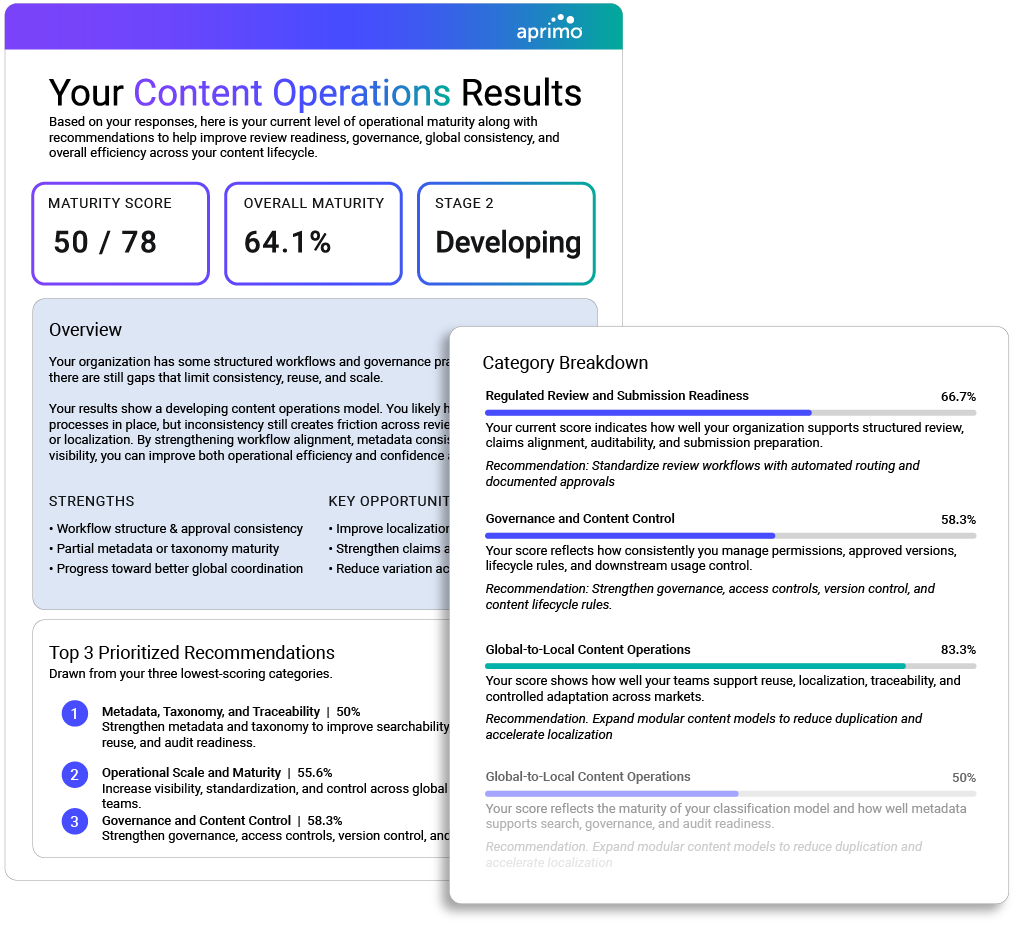
How Mature Are Your Content Operations?
Evaluate your organization’s content operations maturity, identify strengths and gaps, and receive prioritized recommendations tailored to your results.
FAQ
Which system integrations are most critical for a marketing leader to consider in a content governance platform for a seamless workflow?
For a truly unified marketing ecosystem, the platform must seamlessly integrate with your existing Medical, Legal, and Regulatory (MLR) review systems. Essential integrations also include deep connections to your customer relationship management and marketing automation platforms to enable personalized content delivery. Linking with your digital asset management and product information management systems is also fundamental for maintaining a single source of truth for content.
What is uncategorized and why does it matter for Marketing Leader?
Uncategorized describes the practices and tooling teams use to plan, govern, and scale content operations across the enterprise. For Marketing Leader, it directly affects speed to market, brand consistency, and the ability to measure content performance against revenue. Treating it as a strategic capability, not a tactical add-on, is what separates leaders from laggards in this space.
How do Marketing Leaders typically get started with uncategorized?
Most teams begin by auditing the current content lifecycle, mapping where requests originate, who approves them, and where work stalls. From there, they prioritize one or two high-volume workflows for automation and standardization before expanding. This phased approach builds internal trust and produces measurable wins that justify broader investment.
What ROI should Marketing Leaders expect from investing in uncategorized?
Realistic returns include faster campaign launches, fewer duplicated assets, and meaningful reductions in agency or production spend. Teams also report improvements in compliance and brand consistency that are harder to quantify but reduce real downstream risk. The largest gains come when uncategorized is connected to upstream planning and downstream performance data.
What are the most common pitfalls when scaling uncategorized?
The biggest mistakes are treating uncategorized as a pure technology purchase, skipping governance design, and rolling it out without persona-specific training. Without a clear operating model, even capable platforms fail to change how work actually gets done. Successful programs pair platform implementation with workflow redesign and named accountability for adoption.