
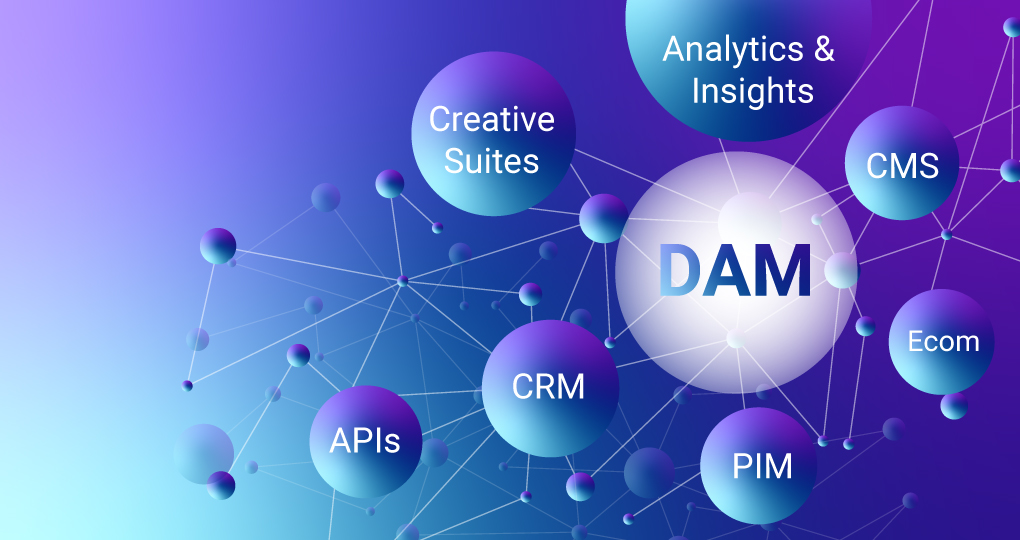
The Integration Challenge
Marketing and creative teams rely on a growing stack of specialized tools. Without smooth integration, content gets trapped between systems, slowing delivery and reducing visibility.
A strong DAM API ecosystem eliminates those gaps. It allows assets, metadata, and approvals to flow automatically between creative, marketing, and operational platforms. This keeps every team working from the same source of truth without endless manual uploads or file transfers.
TL;DR
A modern DAM should integrate effortlessly with the tools your teams already use—from creative suites and PIM systems to marketing automation and analytics. Look for platforms with open REST APIs, SDKs, and prebuilt connectors that reduce integration time. Aprimo stands out with a robust API layer, event-based architecture, and certified integrations across creative, martech, and enterprise ecosystems.
What Makes a Strong DAM API Ecosystem
A DAM’s API ecosystem determines how easily it fits into your organization’s technology environment. The most capable systems share several traits:
- Comprehensive REST APIs for managing assets, metadata, and workflows.
- Webhook or event support to trigger updates across connected systems.
- GraphQL or bulk endpoints for faster data exchange and synchronization.
- Open authentication standards such as OAuth 2.0 and SSO compatibility.
- Extensible SDKs and developer documentation to accelerate custom integrations.
- Marketplace connectors for plug-and-play links to creative, PIM, and martech platforms.
A well-designed API ecosystem reduces friction, automates processes, and scales with your stack.
Who Benefits from Open DAM Integrations
- Marketing Operations: Automates campaign workflows and connects creative output to marketing automation or CMS tools.
- Creative Teams: Syncs assets between DAM and design platforms such as Adobe Creative Cloud or Figma.
- E-commerce and Merchandising: Links assets with product data in PIM systems and marketplaces.
- IT and Architecture Teams: Reduces maintenance overhead through standard APIs and flexible authentication.
- Analytics and BI Teams: Access metadata and usage data directly for reporting and insights.
When integration works seamlessly, the DAM becomes the backbone of your content ecosystem.
What to Look for When Evaluating DAM APIs
Coverage and Depth of APIs
APIs should cover asset upload, retrieval, metadata editing, workflow management, search, and user provisioning. Check for consistent versioning and strong documentation.
Event-Driven Architecture
Systems that support webhooks or event publishing can notify other tools automatically when assets are approved, updated, or expired. This reduces delays and eliminates manual synchronization.
Authentication and Security Standards
Look for OAuth 2.0, SAML, or OpenID Connect support. APIs should inherit DAM permissions and respect role-based access controls to keep assets secure.
Prebuilt Connectors
Leading DAMs offer prebuilt integrations for creative, marketing, and commerce platforms. Common examples include Adobe, Microsoft 365, Salesforce Marketing Cloud, Sitecore, and Shopify.
Developer Experience
Comprehensive documentation, SDKs, and sandbox environments accelerate internal development and make long-term maintenance easier.
Extensibility
A flexible API should allow you to build new workflows or connect to internal tools such as ERP, CRM, or custom publishing systems.
How Aprimo Excels in Integration and APIs
Aprimo was designed as an open platform, making it easy to connect across marketing, creative, and enterprise environments.
Key capabilities include:
- Comprehensive REST and GraphQL APIs for managing assets, metadata, and workflows.
- Event-based integration model for real-time synchronization across systems.
- Prebuilt connectors for Adobe Creative Cloud, Microsoft 365, Salesforce, Sitecore, and others.
- Flexible authentication with OAuth 2.0, SSO, and enterprise identity providers.
- SDKs and developer tools that simplify integration with custom business systems.
- Cloud-native extensibility that scales across hybrid or multi-tenant environments.
Aprimo’s open architecture means your DAM can evolve alongside your tech stack instead of locking you into one ecosystem.
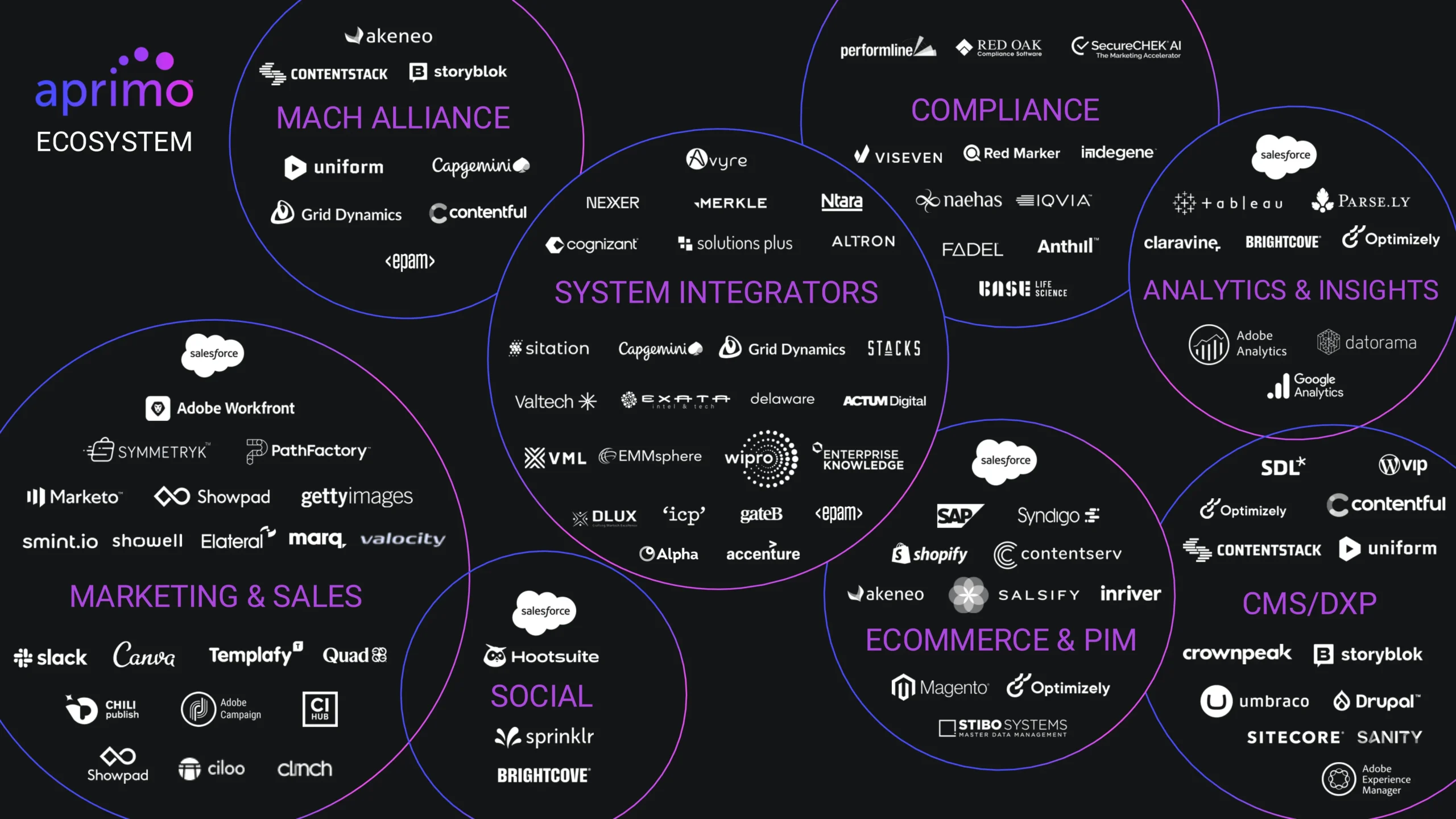
Why APIs and Integration Matter
Disconnected content systems slow delivery and fragment brand experiences. APIs turn a DAM into a connected service rather than an isolated repository. With automation and synchronization in place, content moves efficiently from creation to delivery, ensuring consistent data and faster time to market.
An extensible DAM future-proofs your investment by adapting to new tools, channels, and workflows without requiring full system replacement.
Closing Thoughts
When evaluating DAM platforms, prioritize those that treat integration as a core capability, not an add-on. APIs should enable easy connections to your existing stack and scale with your organization’s needs.
Aprimo offers one of the most complete API ecosystems in the DAM category, connecting people, processes, and platforms into a single, intelligent content backbone.
FAQ
What is a DAM API ecosystem?
It’s the collection of APIs, webhooks, SDKs, and connectors that allow a DAM to integrate with other systems in your tech stack.
Why are open APIs important for DAM?
They enable content and metadata to flow automatically between creative, marketing, and business systems, reducing manual work and errors.
Which platforms integrate most easily with DAM systems?
Common integrations include Adobe Creative Cloud, Microsoft 365, PIM tools, CMS systems, and marketing automation platforms.
How does Aprimo’s API ecosystem stand out?
Aprimo provides open REST and GraphQL APIs, event-based integrations, and prebuilt connectors that help organizations connect their entire content ecosystem without heavy development work.