The proliferation of digital content across diverse channels presents a significant challenge for marketing organizations: maintaining control over every iteration and ensuring accuracy. Content is a dynamic asset, constantly evolving through reviews, edits, and approvals. Without a disciplined approach, tracking these changes becomes a chaotic, error-prone endeavor, leading to potential compliance issues, brand inconsistencies, and wasted effort. Marketing leaders confront the tension between agile content creation and the absolute necessity of an unassailable audit trail. The fundamental problem lies not just in making changes, but in systematically managing and reporting on them.
TL;DR
- Implementing a robust digital asset management system profoundly enhances content version control by establishing automated tracking and a centralized, auditable record of every content iteration.
- Effective version control systems provide granular visibility into content lifecycles, enabling marketing teams to retrieve specific past iterations and understand the precise evolution of each asset.
- Comprehensive reporting functionalities are indispensable for demonstrating content compliance and auditability, offering transparent insights into who made changes, when, and why.
- Without stringent version control, organizations face significant risks, including legal liabilities stemming from using outdated or non-compliant assets, operational inefficiencies, and brand reputational damage.
- The strategic adoption of advanced content version control capabilities ensures continuous compliance, strengthens collaborative workflows, and mitigates substantial operational and legal enterprise risks over time.
Why Robust Content Version Control is Essential for Marketing Leaders
Robust content version control provides marketing leaders with the essential governance framework to safeguard brand integrity, ensure regulatory compliance, and optimize content workflows. It moves beyond simple file storage to offer a dynamic, auditable history of every content asset. This capability ensures that every published piece of content is the correct, approved version, reducing risk and improving operational efficiency.
Definition: Content version control is the systematic process of managing and tracking changes to digital content assets over time, creating a complete historical record of every modification, reviewer, and approval at each stage of the content lifecycle.
Lack of proper version control can quickly cascade into significant operational and reputational concerns. Imagine a global marketing campaign launched with an outdated product specification or a legal disclaimer that has not been approved for a specific region. These scenarios highlight the critical need for a system that not only tracks changes but also ensures that only the most current, compliant version is accessible and distributed. The complexity escalates with increasing team size, geographic distribution, and the sheer volume of content produced daily. Effective version control centralizes these processes, making them transparent and accountable.
How Digital Asset Management Systems Track and Manage Content Versions
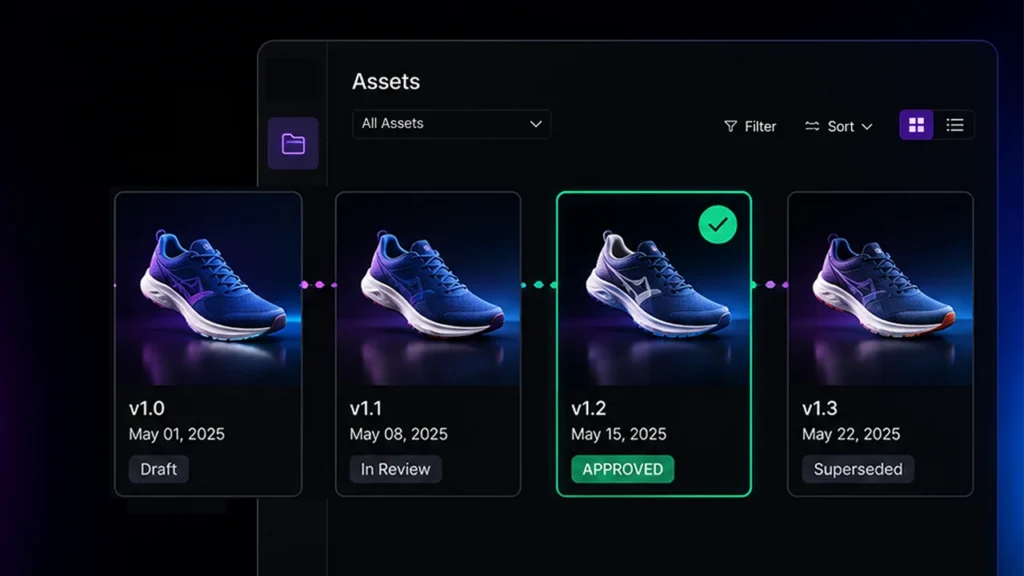
Digital asset management (DAM) systems inherently track and manage content versions by establishing a singular source of truth for every asset, recording metadata alongside each iteration. When a file is modified, a DAM system does not simply overwrite the old version; it creates a new version while retaining the previous one, along with a comprehensive audit log. This process is automatic and transparent to the user, ensuring that no historical data is lost. DAM platforms typically employ several mechanisms to achieve this:
- Automatically generated version numbers: Each time a user checks out, modifies, and checks in an asset, the system assigns a new, incremental version number. This creates a clear, sequential history of changes.
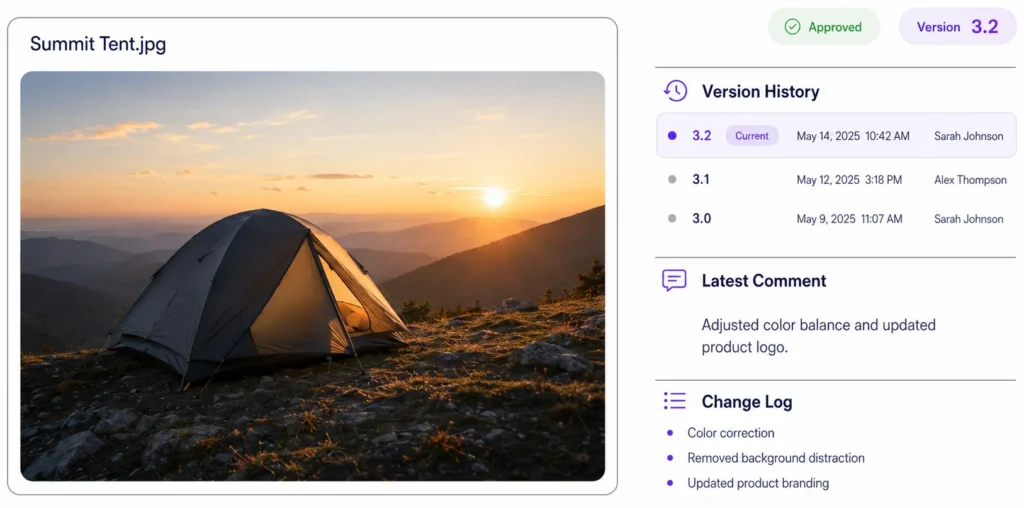
- Timestamping and user attribution: Every version is stamped with the date and time of modification, along with the identity of the user who made the change. This establishes accountability and traceability within collaborative workflows.
- Comment and change logs: Users can add comments to each version, detailing the specific modifications made or the reasons for a particular change. This contextual information enriches the audit trail.
- Rollback capabilities: A critical feature of robust DAM systems is the ability to revert to any previous version of an asset. This is invaluable when an error is discovered in a newer version or if an older version is needed for a specific purpose.
- Workflow integration: Version control is seamlessly integrated into content workflows, ensuring that assets undergoing review or approval are always the latest working versions, while previous stages remain archived. These automated features liberate marketing teams from manual file naming conventions (e.g.,’final_v2_approved_john.docx’) that are notoriously prone to error and confusion. By centralizing management, DAM systems ensure that all stakeholders are consistently working with the correct and most up-to-date content, significantly reducing the risk of errors and enhancing collaboration efficiency.
Essential Reporting Capabilities for Demonstrating Content Version Control and Compliance
Essential reporting capabilities within a DAM system provide irrefutable evidence of an asset’s journey, from creation to distribution, which is indispensable for demonstrating content version control and compliance. These reports offer granular insights into every modification, approval, and usage instance, transforming raw data into actionable intelligence. Without robust reporting, even the best version control system remains an internal operational benefit without the external validation required for audits or regulatory scrutiny.
Consider the distinct requirements that differentiate comprehensive version control reporting from basic asset tracking. Basic tracking might tell you how many times an asset was downloaded, but compliance reporting reveals who approved the specific version that was downloaded, and under what conditions. This degree of detail is crucial for industries facing strict regulatory guidelines, such as pharmaceuticals, financial services, or healthcare, where a single non-compliant asset can incur substantial penalties. These reports typically detail:
- Version History Summaries: Overviews showing the complete version lineage of an asset, including creation dates, modification dates, and associated users. Audit Trails: Detailed logs capturing every action performed on an asset, such as viewing, editing, sharing, and downloading, along with timestamps and user identities.
- Approval Workflows: Reports on the status, timelines, and personnel involved in content approval processes, confirming that all necessary sign-offs were obtained for each version. Usage and Distribution Reports: Data on which versions were published to particular channels, when, and by whom, ensuring that only approved content enters the public domain. These reports empower organizations to swiftly respond to audit inquiries, validate compliance with internal policies and external regulations, and identify potential bottlenecks or areas for improvement in content governance processes. The ability to generate these reports on demand provides a tangible demonstration of due diligence and operational transparency.
The Risks of Poor Version Control in Content Workflows
Poor version control in content workflows exposes organizations to a cascade of preventable risks, ranging from immediate operational inefficiencies to severe long-term legal and reputational damage. When content assets lack a clear, auditable history, teams invariably grapple with confusion, rework, and potential non-compliance across critical business functions. This absence of control undermines collaboration, dilutes brand messaging, and introduces significant vulnerabilities.
One immediate risk is the inadvertent use of outdated or incorrect content. Imagine a sales team presenting a product brochure with superseded pricing, or a public relations department releasing a press release with an unapproved corporate statement. Such mistakes not only damage professional credibility but can also lead to direct financial losses and legal challenges if the misinformation has adverse effects. Furthermore, without a definitive ‘source of truth,’ creative teams waste countless hours trying to locate the ‘final’ version of an asset or re-creating work due to lost edits. This directly impacts productivity and increases operational costs.
Beyond these operational concerns, the most critical risks stemming from poor version control are regulatory non-compliance and legal exposure. Industries with strict mandates regarding content accuracy and data retention, such as healthcare or finance, face substantial fines and reputational fallout if they cannot demonstrate exactly which version of a document was in circulation at a specific time. A lack of transparent change logs makes it nearly impossible to defend against claims of misrepresentation or to prove adherence to internal governance policies. Ultimately, inconsistent or incorrect content erodes customer trust and can inflict lasting damage on a brand’s reputation, making effective version control an imperative, not merely a best practice.
Maintaining an Auditable Trail of Content Changes for Compliance
Maintaining an auditable trail of content changes for compliance requires a systematic approach facilitated by a robust content management platform, ensuring every modification is logged and accessible. This approach extends beyond simple versioning to encompass a complete history of user actions, approvals, and distribution particulars. Organizations cannot merely track versions; they must be able to prove that specific versions met compliance standards at specific points in time. The cornerstone of an auditable trail is the immutable record of truth. This means that once a change is recorded, it cannot be altered or deleted without also creating a new, auditable record of that alteration. This immutability is crucial for legal defensibility. Furthermore, comprehensive audit trails integrate with user permissions, ensuring that only authorized individuals can make changes and that all actions are attributed. This layered security and transparency establish trust in the integrity of the content record. Creating an auditable trail involves several key components:
- Granular Permissioning: Control who can view, edit, approve, and publish content versions, ensuring only authorized personnel impact the asset’s lifecycle. Automated Workflow History: Every step in a content’s journey, from draft to final approval, is recorded, providing a timestamped log of each review and decision.
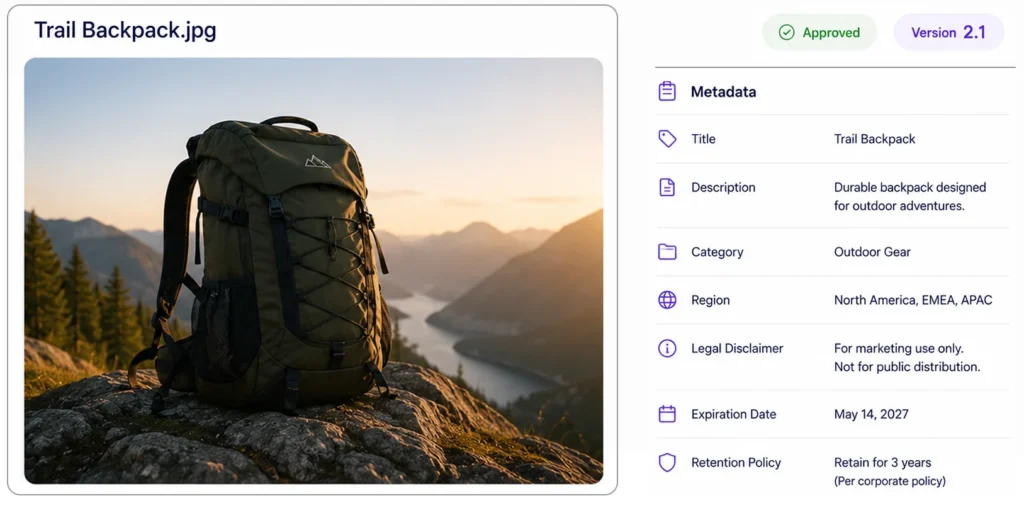
- Metadata Enrichment: Attaching metadata to each version, such as legal disclaimers, regional applicability, or expiration dates, enhances searchability and compliance verification. Retention Policies: Automated rules for how long different versions of content must be retained, supporting regulatory requirements and internal governance.
- Exportable Audit Reports: The ability to generate comprehensive reports detailing the full history of an asset, including all versions, changes, users, and timestamps, ready for audits or legal discovery. This holistic framework ensures that any content asset can be traced back to its origin, through all modifications and approvals, and its final public deployment, providing an unassailable record for compliance officers and external auditors alike. It transforms what could be a chaotic, fragmented process into a structured, verifiable, and secure operational pipeline.
Optimizing Collaboration While Ensuring Strict Version Control
Optimizing collaboration while ensuring strict version control hinges on implementing centralized platforms that facilitate seamless teamwork without compromising the integrity of content versions. The goal is to enable multiple contributors to work on a single asset concurrently or sequentially, always knowing they are interacting with the correct version. This requires a delicate balance between accessibility for collaboration and rigorous control for accuracy and compliance.
Traditional approaches to content collaboration often involve emailing files back and forth, leading to ‘version proliferation’ where multiple unsynchronized copies of the same asset exist. This inevitably results in errors, wasted time merging disparate changes, and confusion over which version is truly ‘final.’ A robust content management strategy, typically leveraging a DAM, addresses this by providing secure check-in/check-out functionalities. When a user checks out an asset, it becomes locked for editing, preventing others from making concurrent changes that could lead to conflicts or overwrites. Other users can still view the asset but cannot modify it until it is checked back in.
Modern systems incorporate features like in-context annotation and commenting, allowing collaborators to provide feedback directly on the asset without altering the core file. This keeps all discussions and decisions tied directly to the relevant content, enhancing transparency and reducing miscommunication. Version branching and merging capabilities, though more common in software development, are also finding parallels in advanced content operations, enabling parallel development paths for variations of an asset before consolidating them into a master version. By integrating these tools, organizations can foster a highly collaborative environment where creative energy is channeled effectively, yet the authoritative history and control over each content version remain absolutely inviolable.
Conclusion
Effective content version control and reporting are no longer optional best practices for marketing organizations; they are foundational requirements for operational resilience and risk mitigation. The ability to meticulously track every change, attribute authorship, and audit the entire lifecycle of a digital asset provides an indispensable layer of governance. This discipline ensures not only regulatory compliance but also upholds brand consistency and empowers efficient, collaborative content creation. Marketing leaders who prioritize robust content version control capabilities are better positioned to navigate complex regulatory landscapes, protect their brand’s integrity, and confidently scale their content operations without compromising accuracy or accountability. Embracing these advanced systems transforms a potential vulnerability into a strategic advantage, securing content integrity for the future.
Experience AI-Powered Content Operations
See how Aprimo’s AI-powered Librarian Agents automatically enrich content with metadata, improve discoverability, strengthen governance, and unlock greater content reuse across the entire content lifecycle.
FAQ
What is uncategorized, and why does it matter for Marketing Leader?
Uncategorized describes the practices and tooling teams use to plan, govern, and scale content operations across the enterprise. For Marketing Leader, it directly affects speed to market, brand consistency, and the ability to measure content performance against revenue. Treating it as a strategic capability, not a tactical add-on, is what separates leaders from laggards in this space.
How do Marketing Leader typically get started with uncategorized?
Most teams begin by auditing the current content lifecycle, mapping where requests originate, who approves them, and where work stalls. From there, they prioritize one or two high-volume workflows for automation and standardization before expanding. This phased approach builds internal trust and produces measurable wins that justify broader investment.
What ROI should Marketing Leader expect from investing in uncategorized?
Realistic returns include faster campaign launches, fewer duplicated assets, and meaningful reductions in agency or production spend. Teams also report improvements in compliance and brand consistency that are harder to quantify but reduce real downstream risk. The largest gains come when uncategorized is connected to upstream planning and downstream performance data.
What are the most common pitfalls when scaling uncategorized?
The biggest mistakes are treating uncategorized as a pure technology purchase, skipping governance design, and rolling it out without persona-specific training. Without a clear operating model, even capable platforms fail to change how work actually gets done. Successful programs pair platform implementation with workflow redesign and named accountability for adoption.
How does uncategorized fit into a broader Uncategorized strategy?
Uncategorized is the operational backbone that makes a broader Uncategorized strategy executable at scale. It connects strategy decisions to the daily work of creators, reviewers, and channel owners, ensuring that intent does not get lost between planning and delivery. Teams that integrate it tightly with analytics close the loop between strategy, execution, and measured outcomes.