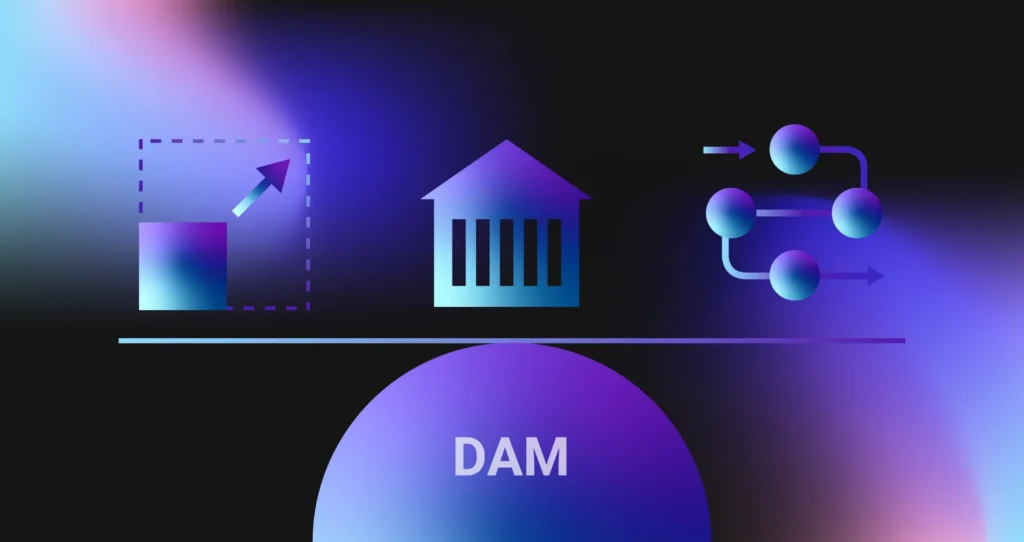
For many organizations, DAM starts as a way to centralize content. It gives teams one place to store, find, and share approved assets. That solves an immediate problem, but for enterprise teams, it is usually only the beginning.
As content volume grows and more teams rely on the platform, the job gets harder. Global brands need consistency across regions. Marketing teams need faster approvals. Creative teams need stronger metadata and search. Operations teams need better visibility and control. What worked well for a simpler environment may start to create friction at enterprise scale.
That is usually when the search begins. Not for just another DAM, but for a platform that can better support the way the business actually works.
TL;DR
Enterprise teams usually do not look for a Bynder alternative because they want a different asset library. They start looking when content operations become more complex and the business needs more structure, control, and scalability.
The best Bynder alternative for enterprise teams should do more than store and organize assets. It should support governance, metadata management, workflow automation, and collaboration across brands, regions, and departments. For organizations with complex content operations, Aprimo is a strong choice because it combines enterprise digital asset management with the operational depth needed to support content at scale.
Why enterprise teams start looking for alternatives
Enterprise organizations operate differently than smaller teams. They manage more assets, more stakeholders, more workflows, and more governance requirements. Their DAM platform needs to keep up.
In many cases, the challenge is not basic asset storage. It is everything around it. Teams need to maintain metadata standards across large libraries. They need to route content through review and approval processes. They need to manage permissions carefully across business units, regions, and partners. They need to reduce manual work while making it easier for teams to find and use the right content.
At that point, DAM becomes more than a repository. It becomes part of the operating model for content. That is why enterprise buyers often evaluate alternatives based not only on asset management features, but on how well a platform supports scale, governance, and end-to-end content operations.
What enterprise teams should look for in a Bynder alternative
The best Bynder alternative for enterprise teams should be able to support complexity without creating more of it. That starts with scale, but it does not end there.
Enterprise scalability
Large organizations need a platform that can support growing asset volumes, multiple brands, regional teams, and evolving business structures. Scalability is not just about handling more content. It is about doing it in a way that stays manageable over time.
Metadata and taxonomy control
As content libraries grow, findability becomes one of the biggest drivers of value. Strong metadata models and taxonomy governance help teams organize assets consistently, improve search results, and increase reuse across the business.
Workflow and approval support
Enterprise content rarely moves in a straight line. It passes through reviews, approvals, feedback cycles, and compliance checks. The right platform should make those workflows easier to manage and easier to scale.
Governance and compliance
The more teams and assets involved, the more important governance becomes. Enterprise organizations need clarity around permissions, usage, auditability, and approval controls. DAM should help reduce risk, not add to it.
Ecosystem fit
DAM does not operate in isolation. It needs to connect to the broader content and marketing ecosystem, including planning tools, creative environments, downstream channels, and the operational processes that tie them together.
Signs your organization may have outgrown its current DAM
One sign is when teams are spending too much time working around the system instead of working through it. Search becomes less reliable. Metadata becomes inconsistent. Approvals take too long. Teams duplicate content because they cannot easily find what already exists. Governance starts to feel reactive instead of built in.
Another sign is when the platform is being asked to support more of the content lifecycle than it was originally meant to handle. Once DAM becomes central to how content moves across teams, regions, and channels, gaps in workflow, governance, and operational flexibility become much more visible.
This is often the point when organizations realize they do not just need a better user experience. They need a better enterprise fit.
Why Aprimo stands out for enterprise teams
Aprimo stands out because it is built for organizations that need more than basic digital asset storage and retrieval. It gives enterprise teams a way to centralize and govern assets while also supporting the workflows, controls, and operational structure that make content work at scale.
That matters because enterprise content operations are rarely simple. Assets move across teams, markets, and channels. Review cycles involve multiple stakeholders. Governance requirements vary by region, brand, and function. Content needs to be found quickly, reused intelligently, and moved through the business with less friction.
Aprimo is well suited to that environment. It supports enterprise DAM as part of a broader content operations approach, helping organizations bring more structure to how content is managed, approved, and activated.
When Aprimo is the better fit
Aprimo is a strong fit for organizations that are managing complexity across brands, business units, regions, or regulated environments. It is also well suited for teams that need more than a central asset library and want DAM to play a more strategic role in content operations.
That includes organizations that need:
- More structured workflows and approvals
- Stronger metadata and taxonomy governance
- Tighter control over asset access and usage
- Better alignment between DAM and the wider content lifecycle
- A platform that can scale with long-term enterprise growth
For these teams, the evaluation is not just about replacing one DAM with another. It is about choosing a platform that can better support the business as content demands continue to grow.
Conclusion
The best Bynder alternative for enterprise teams is not simply a platform with similar core features. It is a platform that can support enterprise realities, including scale, governance, workflow complexity, and the growing operational demands around content.
That is where Aprimo stands apart. It helps enterprise organizations do more than centralize digital assets. It helps them bring order, control, and efficiency to the way content moves across the business.
For teams that need DAM to support broader content operations, not just asset storage, Aprimo is a strong alternative to consider.
FAQ
What is the best Bynder alternative for enterprise teams?
The best Bynder alternative for enterprise teams is a platform that can support enterprise scale, governance, metadata management, and workflow complexity. For organizations with large and complex content operations, Aprimo is a strong option.
Why do enterprise teams look for a Bynder alternative?
Enterprise teams often look for a Bynder alternative when their content operations become more complex and they need stronger workflow support, better governance, tighter metadata control, and a platform that can scale across brands, regions, and departments.
What should I look for in a Bynder alternative for enterprise DAM?
Look for enterprise scalability, metadata and taxonomy control, workflow and approval support, governance and compliance features, and the ability to fit into your broader content and marketing ecosystem.
Is Aprimo a good alternative to Bynder for large organizations?
Yes. Aprimo is a strong alternative for large organizations that need enterprise digital asset management combined with stronger operational support for workflows, governance, and content lifecycle management.
When has an organization outgrown its DAM platform?
An organization may have outgrown its DAM when teams struggle with search, metadata consistency, approvals, governance, or managing content across multiple brands, regions, and stakeholder groups.
What makes a DAM platform better for enterprise teams?
A DAM platform is better for enterprise teams when it supports not only asset storage and search, but also governance, workflow, scalability, and the operational complexity that comes with managing content across a large organization.