
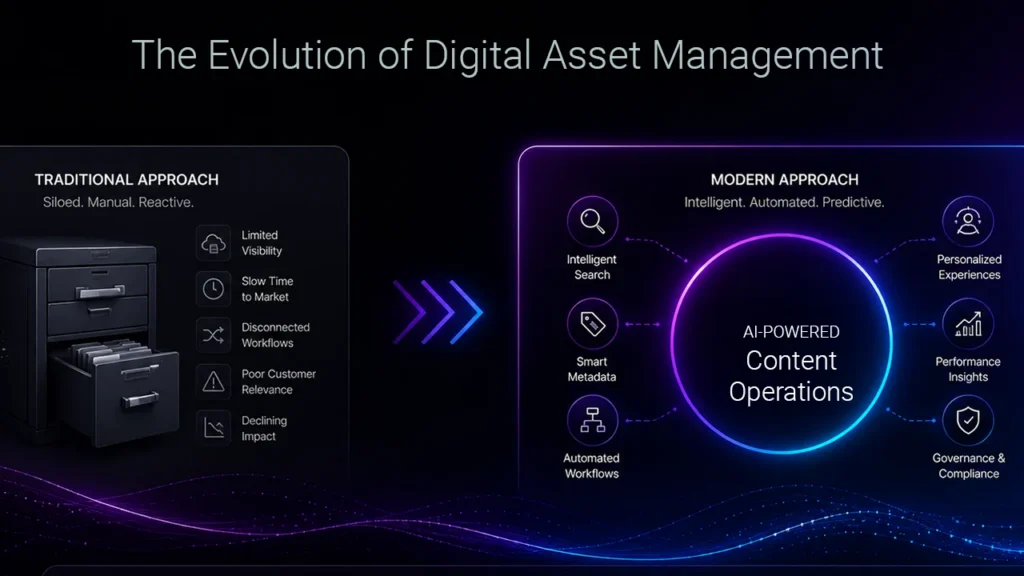
The landscape of consumer engagement has undergone a profound transformation, moving beyond simple transactional interactions to demand highly personalized, on-demand experiences. This shift is not merely a preference but an expectation, driven by pervasive digital connectivity and an abundance of choice. Organizations that fail to recognize and respond to these fundamental changes risk obsolescence. The challenge lies not just in understanding what consumers want, but in developing the operational frameworks and technological backbone to deliver it consistently and at scale. Adapting to this new reality requires more than incremental adjustments; it demands a strategic re-imagining of marketing processes and content workflows to ensure continued relevance and engagement. This era of rapid change, often termed ‘Digital Darwinism,’ tests the fundamental agility of every brand.
TL;DR
- Brands face a critical imperative to evolve marketing strategies and technological infrastructures rapidly, as consumer behavior shifts fundamentally alter engagement paradigms, necessitating proactive adaptation.
- Modern Digital Asset Management (DAM) systems are indispensable for cultivating content agility, enabling organizations to efficiently create, manage, and distribute personalized experiences across diverse channels at scale.
- Ignoring the accelerating pace of digital evolution and consumer demand for authentic, relevant interactions directly jeopardizes market relevance and competitive standing for organizations in every sector.
- Strategic deployment of integrated marketing operations platforms fundamentally transforms asset workflows, ensuring consistent brand messaging and compliance while maximizing content impact across global markets.
- Organizations that embrace robust industry solutions and adaptive content strategies will secure significant advantages in market share and customer loyalty, achieving sustained growth in a perpetually dynamic digital economy.
How Evolving Consumer Behavior Reshapes Marketing Challenges
Consumer behavior has evolved dramatically over the last decade, marked by a pervasive demand for instant gratification, authentic engagement, and hyper-personalized experiences across an ever-expanding array of digital touchpoints. This presents marketers with the complex challenge of delivering consistent, relevant content at scale, while also maintaining brand integrity and navigating fragmented attention spans.
The traditional linear customer journey has been replaced by a fluid, multi-directional path, compelling brands to anticipate needs and engage proactively, rather than reactively. This necessitates a fundamental re-evaluation of content strategy and distribution models.
Consumers now wield unprecedented power, equipped with information and social platforms that amplify their voices and influence purchasing decisions. They expect brands to understand their individual preferences, provide value beyond the product itself, and uphold ethical practices. This behavioral shift has accelerated the need for marketers to move away from broad-stroke campaigns towards highly segmented, data-driven approaches.
The proliferation of devices, from smart speakers to wearables, further fragments the customer experience, making unified brand communication a significant hurdle.
Definition: Digital Darwinism refers to the phenomenon where organizations that fail to adapt their processes, technologies, and strategies to particularly in consumer behavior, face a significant risk of decline or irrelevance.
This evolution demands advanced capabilities in data analytics, content creation, and real-time delivery. Marketers must now contend with:
- Fragmented Attention: Consumers juggle multiple screens and platforms, requiring content to be concise, engaging, and contextually relevant to capture and retain attention.
- Demand for Personalization: Generic messaging is increasingly ignored; consumers expect experiences tailored to their specific needs, preferences, and past interactions.
- Omnichannel Expectations: Customers expect a seamless experience whether interacting with a brand via website, social media, email, or in-store, requiring integrated content strategies.
- Visual Content Dominance: The rise of video, infographics, and interactive content means static text alone is often insufficient to capture engagement and convey complex messages.
- Emphasis on Authenticity and Transparency: Brands must foster genuine connections and demonstrate transparency in their operations and values to build trust with a discerning audience.
The Strategic Role of Digital Asset Management in Adapting to Change
A modern Digital Asset Management (DAM) system plays a crucial role in helping brands adapt to the rapid changes in consumer behavior by serving as the central nervous system for all marketing content. It enables organizations to efficiently store, organize, find, and distribute every digital asset, ensuring consistency, compliance, and speed to market, which are all critical for agile marketing operations.
By centralizing assets, DAM platforms eliminate content silos and provide a single source of truth, empowering marketing teams to collaborate more effectively and respond quickly to dynamic market demands. Without a robust DAM, content chaos proliferates, stifling creativity and impeding timely, relevant customer engagement.
The strategic value of DAM extends beyond mere storage; it is about activating content for impact. For instance, in the financial services sector, rapid dissemination of compliant marketing materials across various channels while ensuring brand consistency is paramount. A DAM ensures that approved assets are readily available for personalization and distribution, drastically reducing time-to-market for campaigns. It also provides version control and audit trails, which are crucial for regulated industries like finance and government, preventing the use of outdated or non-compliant materials.
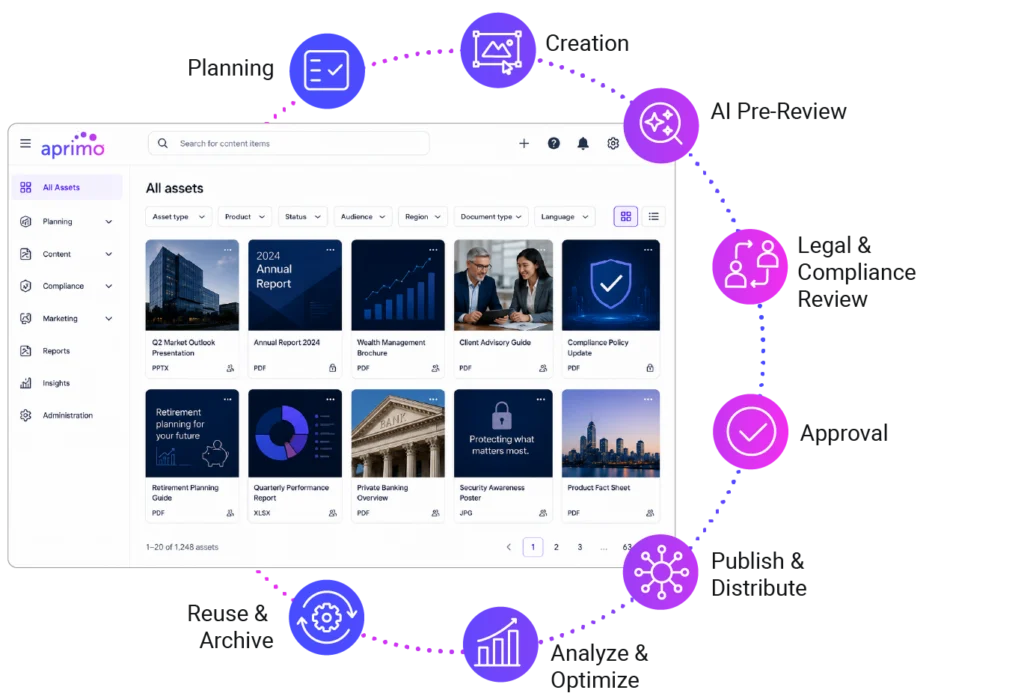
The ability to quickly adapt and repurpose assets for different audiences and platforms is a hallmark of a thriving brand in the digital age. Effective DAM implementation directly supports content agility, allowing marketers to:
- Quickly locate and deploy brand-approved assets across all channels.
- Automate mundane tasks, freeing up creative teams for higher-value work.
- Track asset performance to inform future content strategy.
- Facilitate content reuse and repurposing, maximizing the value of existing assets.
- Ensure brand consistency by providing a single source of truth for all brand elements.
Achieving Content Agility with Integrated Marketing Operations
Organizations achieve content agility, a cornerstone of navigating Digital Darwinism, through the strategic integration of Digital Asset Management within a broader marketing operations platform. This integration enables seamless content workflows from ideation to distribution and analysis, ensuring that marketers can respond swiftly and effectively to evolving consumer demands. Without such a unified approach, content creation and deployment become fragmented, slow, and prone to inconsistencies, severely hampering a brand’s ability to maintain relevance.
A truly agile content infrastructure empowers teams to collaborate globally, adapt campaigns in real-time, and personalize experiences at scale, which are non-negotiable capabilities in today’s market. Consider the inherent difference between a standalone DAM and an integrated marketing operations suite. A standalone DAM excels at asset management, providing a robust repository for digital content. However, an integrated platform extends this capability by embedding DAM functionality into a comprehensive workflow that includes planning, project management, campaign execution, and performance analytics.
This holistic approach means that an asset is not just stored; its entire lifecycle is managed, from initial brief and creative development through legal review and final distribution across owned, earned, and paid channels. This comprehensive oversight is critical for industries with stringent compliance requirements, such as legal or government sectors. The combined power of these platforms ensures every piece of content serves a strategic purpose and can be adapted instantly to changing conditions, fostering genuine agility.
An integrated approach also facilitates smarter content reuse and repurposing. Instead of creating new assets for every campaign, teams can quickly adapt existing, approved content for different contexts, audiences, and channels. This greatly reduces production costs and speeds up time-to-market, allowing brands to maintain a consistent presence and voice across disparate touchpoints. The ability to rapidly iterate on content based on performance data further enhances agility, allowing marketers to optimize campaigns dynamically rather than waiting for post-mortem analysis.
Key Platform Features Addressing Modern Digital Marketing Demands
Modern marketing platforms must incorporate a suite of advanced features to effectively address the current demands of digital marketing, including AI-powered capabilities, robust workflow automation, and comprehensive analytics. These features collectively empower marketers to streamline operations, enhance personalization, and gain deeper insights into content performance, which are all vital for maintaining a competitive edge. Without these capabilities, organizations struggle to keep pace with consumer expectations and the sheer volume of content required for effective engagement. Aprimo’s platform specifically empowers marketers to stay ahead of Digital Darwinism by providing a cohesive ecosystem for content operations, financial planning, and campaign execution. Integrating DAM capabilities with broader marketing resource management (MRM) ensures all aspects of the marketing lifecycle are synchronized. Key features that directly address modern demands include:
AI-Powered Content Intelligence
Artificial intelligence (AI) features within a marketing platform automate tasks, provide predictive analytics, and enhance content discoverability. AI can automatically tag and categorize assets, transcribe audio and video, and even suggest relevant content for specific campaigns. This not only saves significant time but also ensures that assets are consistently organized and easy to find, preventing duplicated efforts and accelerating content delivery across various teams, including those in federal agencies.
Robust Workflow Automation
Automation ensures that content moves efficiently through creation, review, and approval processes, eliminating bottlenecks and reducing manual overhead. Automated workflows can route assets to the appropriate stakeholders for legal review, creative feedback, or brand approval, ensuring compliance and consistency. This capability is paramount for global brands operating in multiple markets with diverse regulatory requirements, allowing them to scale operations without sacrificing control.
Comprehensive Brand and Rights Management
Maintaining brand consistency across all touchpoints is non-negotiable. A robust platform centralizes brand guidelines, logos, and approved creative assets, making it easy for all users to access and apply the correct branding elements. Additionally, rights management features track asset licenses and usage restrictions, preventing costly legal infringements and ensuring that content is used appropriately across different channels and regions.
Advanced Analytics and Reporting
Understanding how content performs is critical for optimizing future strategies. Integrated analytics provide insights into asset usage, engagement rates, and return on investment. Marketers can track which assets are most effective, identify underperforming content, and make data-driven decisions to refine their approach. This feedback loop is essential for continuous improvement and for demonstrating the value of marketing efforts to stakeholders. These integrated functionalities provide a powerful framework for marketers to not only manage the complexity of modern digital campaigns but also to innovate and engage consumers more effectively, ensuring long-term brand vitality and market leadership.
The Risks of Not Adapting to Evolving Consumer Behavior
Organizations that fail to adapt to evolving consumer behavior and marketing technology face severe risks, including diminished market share, damaged brand reputation, and eventual obsolescence. Stagnation is not a sustainable strategy; it inevitably leads to a decline in customer engagement and competitive disadvantage. The cost of inaction far outweighs the investment required for modernization, impacting everything from revenue generation to talent retention. Brands that ignore these shifts essentially resign themselves to a reactive posture, perpetually behind agile competitors.
One significant risk is the erosion of customer loyalty. Consumers who encounter outdated content, inconsistent messaging, or cumbersome digital experiences will quickly seek alternatives. In an era where choice is abundant, loyalty is earned through consistent value and positive interactions, not assumed.
Furthermore, a failure to embrace new marketing technologies, such as AI-powered DAM systems, results in operational inefficiencies. These inefficiencies manifest as slower content production cycles, increased resource allocation for manual tasks, and a reduced ability to personalize interactions, all of which detract from the customer experience and inflate operational costs. The consequence is a widening gap between what customers expect and what the brand delivers, leading to frustration and defection.
The long-term impact extends to brand equity and market relevance. Brands perceived as irrelevant or behind the times struggle to attract new customers and retain existing ones. This perception can severely damage reputation and make it harder to differentiate in crowded markets. The inability to leverage data for personalized engagement means missed opportunities to connect with specific segments, leading to wasted marketing spend and a diluted message.
Ultimately, the refusal to adapt to Digital Darwinism transforms into a strategic liability, pushing brands to the periphery while more agile competitors capture market leadership. The investment in robust industry solutions is not merely an upgrade; it is a fundamental defense against irrelevance.
Conclusion
The imperative for brands to adapt to Digital Darwinism is undeniable, driven by seismic shifts in consumer behavior and the relentless pace of technological advancement. Organizations that embrace integrated marketing operations and robust industry solutions are best positioned to thrive, leveraging content agility to deliver personalized, relevant experiences at scale. Conversely, those that cling to outdated approaches risk losing market relevance and customer loyalty. The strategic integration of a powerful Digital Asset Management system within a comprehensive marketing operations platform is no longer a luxury but a foundational requirement for sustained growth and competitive advantage. Brands must view this evolution not as a challenge to be endured, but as an opportunity to redefine engagement and solidify their position in a dynamic digital future, ensuring they can perpetually meet evolving demands through adaptive content strategies.
Ready to Modernize Your Content Operations?
Generate a tailored Digital Asset Management RFI based on your requirements, use cases, and business goals.

FAQ
What are the common pitfalls organizations encounter when modernizing their marketing technology stack?
Organizations often encounter several pitfalls when modernizing their marketing technology stack, including insufficient change management, lack of integration between new and existing systems, and underestimation of the training required for adoption. A common error is prioritizing technology over strategy, implementing tools without a clear understanding of how they will solve specific business challenges or integrate into existing workflows. Another pitfall is failing to secure executive buy-in, which can lead to resistance and incomplete adoption across departments.
What is the difference between a standalone DAM and a comprehensive marketing operations platform?
A standalone Digital Asset Management (DAM) system primarily focuses on storing, organizing, and distributing digital assets, serving as a central repository for creative content. In contrast, a comprehensive marketing operations platform integrates DAM capabilities within a broader suite of tools that manage the entire marketing lifecycle, from planning and budgeting to campaign execution and performance analysis. This integrated approach provides end-to-end workflow management, encompassing project management, resource allocation, and advanced analytics alongside asset management, offering a holistic view of marketing efforts.
How can brands ensure legal and regulatory compliance when distributing content globally?
Ensuring legal and regulatory compliance for global content distribution requires robust rights management features, localized content variants, and clear approval workflows within a marketing operations platform. Brands must leverage systems that track asset licenses, usage restrictions, and regional legal requirements, ensuring only approved and compliant content is deployed in specific markets. Automated workflows can route content for legal review in each target region, minimizing compliance risks and preventing costly legal infringements while maintaining brand consistency across diverse regulatory landscapes.
What role does data governance play in effective content strategy?
Data governance plays a foundational role in effective content strategy by establishing clear standards and processes for managing data accuracy, security, and accessibility, directly impacting content relevance and compliance. Robust data governance ensures that the insights used to inform content personalization are reliable and ethically sourced, building consumer trust and preventing misinformation. It also safeguards sensitive customer data, aligning content efforts with privacy regulations and minimizing legal risks associated with data misuse, thereby strengthening overall brand integrity and strategic effectiveness.
How do industry solutions help businesses navigate the complexities of modern marketing?
Industry solutions provide specialized tools and strategies designed to address the unique challenges and opportunities within specific sectors. These tailored approaches ensure that marketing efforts are not only relevant but also highly effective in reaching target audiences and achieving business objectives. By focusing on particular industry needs, organizations can streamline operations, enhance competitive advantage, and achieve significant return on investment through optimized marketing initiatives.